


Fuel panic buying slashes ride-sharing income
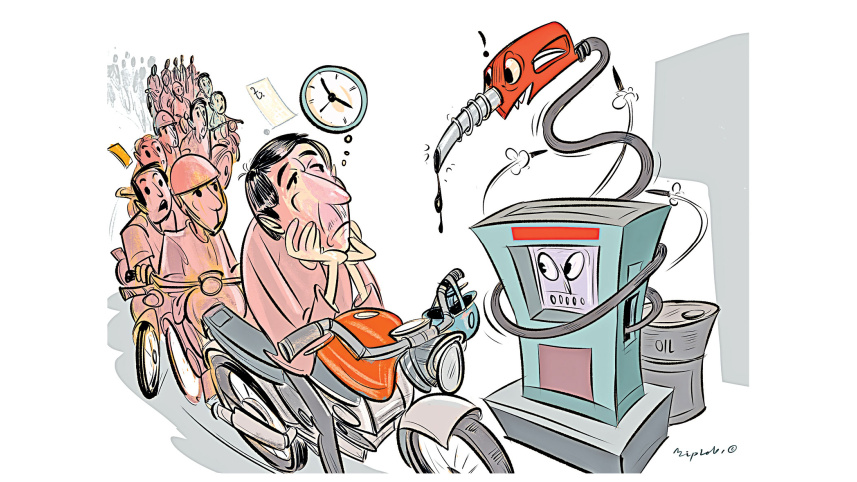
US-Israel’s war on Iran has rattled global energy markets, and gig workers such as ride-sharing bikers and car drivers in Dhaka are feeling the strain on the streets.
For them, long queues at petrol pumps and limits on fuel purchases are cutting into daily earnings. Over the past week, motorists across the capital have been waiting for hours at filling stations amid fears that the war could choke oil supplies to Bangladesh.

Authorities, however, say the country has adequate reserves. Even so, panic buying has spread, and temporary rationing has followed.
Ramadan has made the situation tougher. Working hours are already shorter during the month of fasting, so time lost in a fuel queue can mean most of the day disappears.
Mustafa Kamal, a bike driver from the northern district of Dinajpur who now lives at Mohammadpur in the capital, said the queues have started eating into his work hours.
“Normally, I need five to ten minutes to get diesel,” he said. “But yesterday it took over 30 minutes because there was a long queue.”
Kamal considers himself fortunate. He said many drivers wait far longer as refuelling pump staffers are limiting sales to two litres per customer.
He does not use ride-sharing apps and instead picks up passengers directly from the roadside. He has not yet suffered a major financial blow, but fewer refuels mean fewer trips.
“If I can take five litres, it is manageable,” said Kamal. “But when pumps allow only two litres, it becomes difficult because I have to come back again and stand in line.”
Over the years, ride-sharing bikers in Dhaka have complained that their earnings are shrinking as the number of motorbikes on the road rises and competition intensifies. Demand has taken another hit in the past two years as battery-run rickshaws have spread rapidly across the city.
Against this backdrop, fuel rationing has emerged as the latest blow.
Shamsul Islam, another ride-sharing biker, said he spent nearly three hours waiting for fuel on Friday last week and only got Tk 200-worth of fuel.
Even on a relatively better day in the past week, he added, the wait can still stretch to about an hour.
“Before this crisis, I could earn up to Tk 1,200 on a good day; now it has come down to Tk 800. The time spent in queues is reducing the number of trips,” said Islam.
He hopes the rush ahead of Eid al-Fitr will help recover some of those losses, as people move around the city for shopping and family visits. “But if I cannot get adequate fuel, the travel rush, one of the most profitable times for us, will also bring no benefit.”
The disruption hit some riders out of nowhere.
Biker Hridoy Bala said he first heard about the problem on social media on Thursday last week. That evening, around 8 pm, he went to a petrol pump and was told there was no oil.
After arguing with attendants at a station at Rampura along with other buyers, he managed to buy fuel worth Tk 500 after waiting about 30 minutes. The following days were more difficult.
“On Monday after iftar, most pumps were closed, and I could not get fuel,” he said. The next morning, he arrived at a station at 6:30 am and waited nearly two and a half hours.
“When two hours are spent just for getting fuel, the time available for taking passengers shrinks a lot.”
 For all latest news, follow The Daily Star's Google News channel.
 Bangladesh imports most of its fuel. People familiar with the industry say the disruption is driven largely by panic buying rather than an actual shortage. Authorities introduced purchase limits after fears spread that the Middle East conflict could affect shipments.
Motorcycles were initially capped at two litres per day. After complaints from ride-sharing bikers, Bangladesh Petroleum Corporation (BPC) increased the limit to five litres daily for app-based riders in metropolitan areas.
Despite the change, queues remain long at many stations across the capital.
Among car drivers working with ride-sharing platforms, the experience varies depending on fuel type.
Drivers using compressed natural gas (CNG) report fewer problems, while those depending on petrol or diesel say it is becoming harder to operate normally.
Md Fakhruddin, a car driver working with on-demand ride-sharing platform Pathao, said he recently arrived at a pump at Mirpur-12 only to find there was no gas and had to search for another station.
Abdul Kader, an Uber driver who uses both compressed natural gas and fuel, said uncertainty over supply has kept him off the road on some days because he cannot refill the tank.


Comments