


Finance company bill placed in parliament
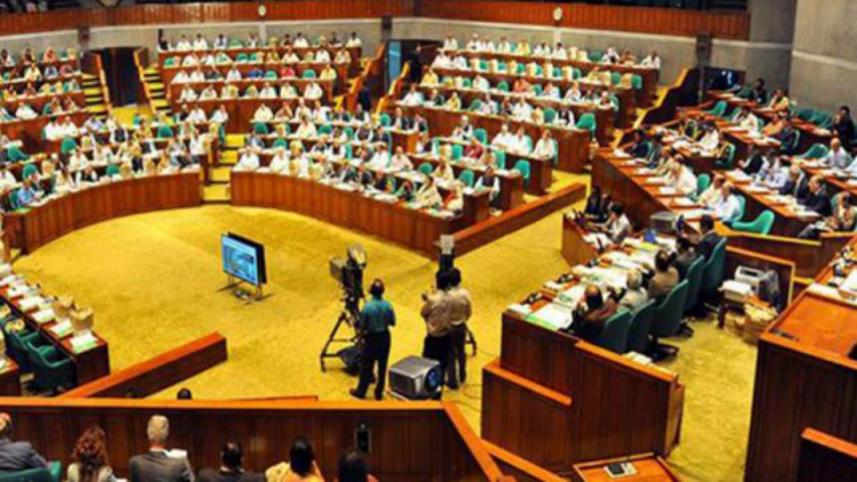
The Finance Companies Bill, 2023 was placed in parliament yesterday aiming to curtail the practice of people defaulting on loans from non-bank financial institutions (NBFIs) in the country.
Law Minister Anisul Huq, in absence of Finance Minister AHM Mustafa Kamal, placed the bill which was sent to the parliamentary standing committee on the finance ministry.

The parliamentary watchdog was asked to submit its report before the House within three working days.
The bill will be replacing an existing law formulated in 1993.
According to the bill, a person can be termed as a wilful defaulter for three reasons, one which is if the person does not repay the loan on time despite having the ability.
The same can be said to refer to a person who uses the loan for reasons other than that cited and if the documents submitted for the loan are later identified to be fake.
If the money is not paid within two months of the end of the loan tenure, a criminal case can be filed against the wilful defaulter. The defaulter will not be able to go abroad and that person's trade license will be cancelled.
There was no directive in the existing law regarding interest waiver.
The bill says full interest can never be waived, cost of funds must be recovered and any partial waiver will require Bangladesh Bank's permission.
In some cases, fines have been increased.
Under the existing law, NBFIs have to pay a fine of Tk 10 lakh if they provide loans in violation of rules. It has been amended and increased to a maximum of Tk 50 lakh.
According to the bill, no person or any of that person's family members can directly or indirectly purchase more than 15 percent of the shares of a financial institution either individually or jointly.
Any excess share must be transferred within two years of the bill coming into force. Failure to do so will result in forfeiture of the excess share.
However, these provisions will not apply to government-owned finance companies.
According to the bill, no NBFI can have more than two directors from the same family.
Moreover, there can be a maximum of two directors from one family if they own more than 5 percent of the shares.
 For all latest news, follow The Daily Star's Google News channel.
Comments