


Beef up efforts for trade benefits: experts
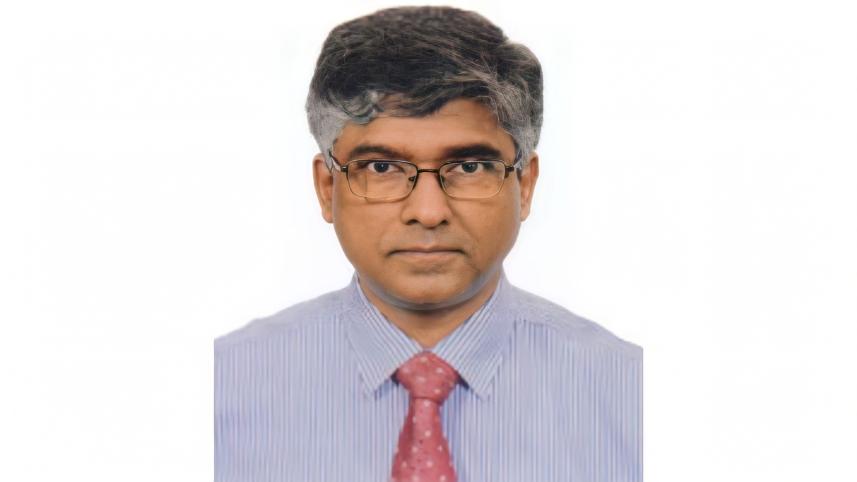
Bangladesh will have to double its manufacturing capacity and seek new international support measures (ISMs) to ensure the steady growth of the economy after graduating from the grouping of the least-developed countries in 2026, according to a noted economist.
"The 100 economic zones could be a game-changer for attracting foreign direct investment after graduation," Mustafizur Rahman, a distinguished fellow of the Centre for Policy Dialogue, said yesterday.

He was speaking at the virtual launch of the "UNCTAD LDC Report 2021".
Regarding ISMs, Rahman said that Bangladesh should demand more concessional and less stringent loans from international bodies.
"Bangladesh has performed really well to fulfill all three conditions for smooth graduation, but if the benefits enjoyed as an LDC are extended for at least seven or eight more years, it will be good for the country."
Besides, a number of LDCs have asked for a 12-year extension of the duty benefits after graduation, he added.
On December 16 last year, a group of LDCs led by Chad demanded the extension of the tariff benefits offered by the World Trade Organisation (WTO) considering the severe economic fallouts of Covid-19.
To secure the EU's GSP+ facility after graduation, Bangladesh will have to comply with 32 international conventions, which include protecting the environment, improving human and labour rights, and ensuring good governance.
The Generalised Scheme of Preferences Plus (GSP+) facility provides developing countries with a special incentive to pursue sustainable development and good governance. The EU cuts its import duties to zero on more than two-thirds of the tariff lines of the exports from the developing nations.
The country should also prepare for the expiry of the TRIPS waiver for the pharmaceuticals industry after 2026, Rahman said.
The benefit under the Agreement on the Trade-Related Aspects of Intellectual Property Rights (TRIPS) has been granted to LDCs up till December 31, 2032.
Rahman suggested that Bangladesh should join hands with the global initiative to secure TRIPS waiver in regards to Covid-19 vaccine production.
India and South Africa initiated the move. Another 100 countries backed it. "So, Bangladesh should also join in," he said.
Bangladesh may get an extension on tariff benefits for a few more years after graduating to a developing country as the negotiations are underway, said Commerce Secretary Tapan Kanti Ghosh.
Here, the extension of tariff benefits means the continuation of duty-free exports from the LDCs to developing and developed countries.
It is expected that countries will take a decision on the extension at the WTO's ministerial meeting to be held in Geneva between November 30 and December 3.
"We have been negotiating for a 12-year extension. However, the extension may be given halfway through this period, meaning that we would get a six-year extension," Ghosh said.
"Still though, that would be good for us," he added.
Ghosh sought cooperation from EU nations so that Bangladesh can secure the GSP Plus status.
He said there are six sub-committees under the principal secretary of the prime minister that are working to identify the challenges and their remedies after LDC graduation.
 For all latest news, follow The Daily Star's Google News channel.
 Rolf Traeger, chief of the LDC section of the UN's Conference on Trade and Development (UNCTAD), said LDCs had been hit hard by the ongoing pandemic.
As a result, these countries will not be able to fulfill their targeted social and environmental goals.
Moreover, their domestic resource mobilisation is also not enough to address the challenges stemming from the fallouts of Covid-19.
"They need ISMs to address their challenges. So, $15 billion may be given for them," Traeger said.
Giovanni Valensisi, economic affairs officer of the UNCTAD, described Bangladesh's graduation as rapid and resilient.
The country needs to maintain the momentum of its structural transformation, although some of the factors, such as education, were badly affected by Covid-19.Moreover, Bangladesh needs to maintain the momentum of its infrastructure as well as labour reforms and employment in different sectors such as agriculture.
The country needs $66.3 billion every year to implement the Sustainable Development Goals, Valensisi added.
Mia Seppo, the UN resident coordinator (UNRC), chaired the event. Mazedul Islam, an economist of the UNRC office, moderated the session.
Comments