
St Martin’s closes for tourists from today
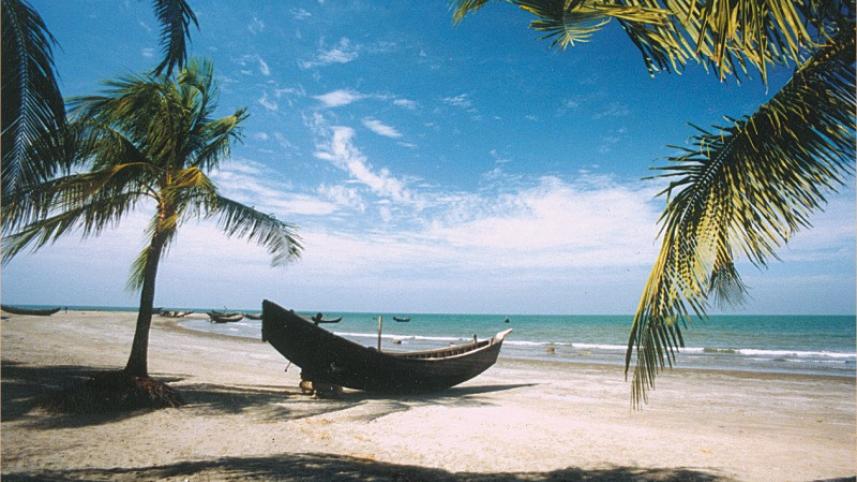
St Martin’s Island, the country’s only coral island located in the north-eastern part of the Bay of Bengal, will remain closed to travellers for nine months from February 1 as part of a conservation measure.
As a result, tourists staying on the island are returning to their respective destinations on January 31 and February 1.
 For all latest news, follow The Daily Star's Google News channel.
 Although Saint Martin’s was opened to tourists for three months from December to January, overnight stays were permitted for only two months. In addition, the daily number of tourists was capped at 2,000, and entry without prior registration was not allowed.
Due to these restrictions, the local tourism business has suffered significantly.
Delwar Hossain, a local tourism entrepreneur, said business owners incurred losses during the shortened season.
Earlier, the government announced a nine-month suspension of tourism activities on St Martin’s Island in the interest of environmental protection.
According to a decision by the Ministry of Environment, Forest and Climate Change, tourism activities for the current season will officially end on Saturday. Consequently, no tourist vessels will operate to the island from Sunday.
Although tourists are usually allowed to visit Saint Martin’s from October 1 to March 31 each year, the travel period was reduced this year up to January 31 due to environmental risks.
Cox’s Bazar Additional District Magistrate Imran Hossain Sajib said the last tourist vessels would sail to Saint Martin’s today. “No tourist ships will be allowed to operate from Sunday. However, if the government revises its decision later, necessary measures will be taken accordingly,” he added.
Under government directives, lighting on the beach at night, playing loud music and organising barbecue parties were prohibited. Entry into the protected forest area, as well as the collection and sale of key fruits, were also completely banned.
Strict instructions were issued to prevent harm to biodiversity, including sea turtles, birds, corals, king crabs, snails and oysters. All types of motorised vehicles, including motorcycles, were prohibited on the beach.
Carrying single-use plastics, including polythene, was strictly restricted, while tourists were advised to bring reusable water flasks.
According to the administration, the prolonged absence of tourists will help corals, sea turtles, birds and other marine species recover their natural habitats. The long-term decision aims to restore biodiversity damaged by excessive tourist pressure and unregulated activities.
Authorities expressed hope that the initiative to protect the environment and biodiversity would play a positive role in maintaining the ecological balance of Saint Martin’s Island.
Meanwhile, local business owners said they had invested heavily in the tourism sector with expectations of a longer season.
However, tourism activities came to a halt after just three months.
Businessmen and residents have demanded that Saint Martin’s be opened for at least five months annually with a controlled number of tourists.
Comments