


Avoid new taxes on everyday food for ordinary people

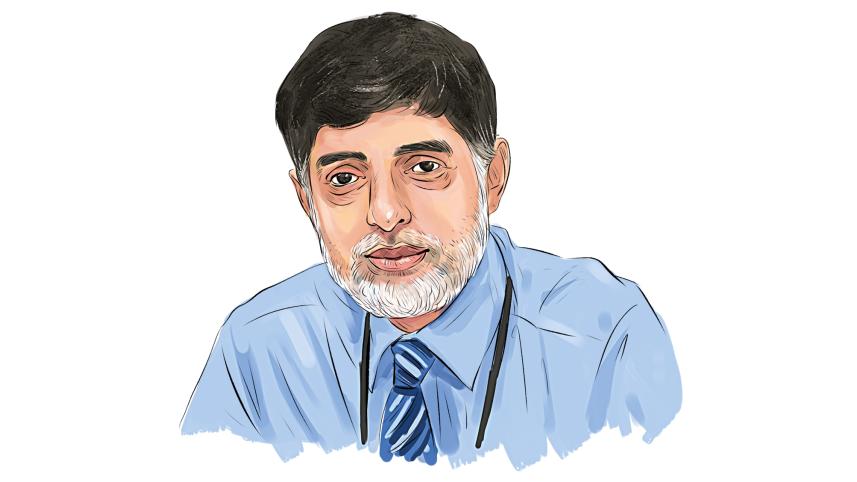
The upcoming national budget should avoid imposing any new taxes on food products consumed by ordinary people, said Ahsan Khan Chowdhury, chairman of PRAN-RFL Group, one of the country’s largest food and beverage companies.
“I respectfully request the current government not to impose any new taxes on ordinary consumers. A five-taka biscuit is not a luxury item; for many people, it is a basic necessity,” he said in an interview with The Daily Star.

Chowdhury said any additional taxes on businesses ultimately increase costs for consumers.
“Whenever additional taxes are imposed on businesses, there is no option but to pass the burden on to consumers,” he added.
He urged the government not to repeat past mistakes and called for greater consultation with businesses before making policy decisions.
Balancing tax collection with industry-friendly policies is necessary to sustain economic growth. Past tax incentives had helped local industries expand. Taxes on refrigerators have increased from 8 percent to 35 percent despite being basic household products. If these benefits are withdrawn, we will not be able to supply appliances to consumers
“I am a businessman and a provider of jobs in the country. Before making decisions that affect our lives, please talk to us first and understand our difficulties,” Chowdhury said.
“Just as we work with the aim of helping consumers, you should also take the same approach. I know the government has good intentions, but sometimes there may be a lack of information,” he added.
“We sincerely urge the government not to place any tax burden on the poor. Instead, let us work together to keep taxes as low as possible and make the country more affordable and liveable.”
INDUSTRY INCENTIVES AND TAX REFORMS
Chowdhury said balancing tax collection with industry-friendly policies is necessary to sustain economic growth, adding that past tax incentives had helped local industries expand.
He noted that taxes on refrigerators have increased from 8 percent to 35 percent despite such appliances being basic household products.
“If these benefits are withdrawn, we will not be able to supply appliances to consumers,” he said.
He also warned that sharp price hikes, including a reported 30 percent increase in refrigerator prices, could reduce consumer demand significantly.
According to him, a low-tax, high-consumption approach would encourage spending and eventually improve the country’s tax-to-GDP ratio.
He stressed that tax reforms should be designed carefully through consultations with economists, think tanks, the National Board of Revenue, and the private sector instead of being introduced hastily.

GREATER FOCUS ON AGRICULTURE
Chowdhury said agriculture should receive greater priority in the national budget, noting that support is currently concentrated mainly on fertiliser and diesel subsidies.
 For all latest news, follow The Daily Star's Google News channel.
 He called for a shift from traditional farming to value-added and technology-driven agriculture, similar to models followed by the Netherlands, to make the sector more modern and profitable.
He also suggested focusing on export-oriented “star products” such as tomatoes, mangoes, chillies, turmeric and coriander.
Highlighting the importance of agro-processing, he said value addition could significantly reduce post-harvest losses.
“Value addition, such as turning potatoes into fries or powder, can significantly reduce waste,” he noted.
Chowdhury said PRAN-RFL Group established factories near farming areas to reduce transport-related losses. He cited a reduction in mango wastage from around 20 percent to nearly zero after factories were set up in Natore and Godagari.
He also mentioned a 300-acre modern fish farm in Moulvibazar using IPRS (In-Pond Raceway System) technology to support processed fish production and minimise post-harvest losses.
EXPORT DIVERSIFICATION AND LDC GRADUATION
On Bangladesh’s graduation from least developed country status, Chowdhury stressed the need for free trade agreements with other countries to remain competitive in markets such as Asean.
He said Bangladesh has strong potential for export diversification and still has room for growth compared to economies like Vietnam.
According to him, people’s mindset remains one of the main barriers to progress.
He said PRAN-RFL Group is expanding into non-traditional export products, including shoes, handmade bags, furniture, electronics, bicycles, sleeping bags and toys, adding that the company now exports around 150 to 200 products.
Chowdhury also highlighted efforts to revive closed industries, including reopening a factory in Rajshahi after 35 years, creating around 5,000 jobs.
BUSINESS ENVIRONMENT IMPROVING
Chowdhury said PRAN-RFL Group operates across many sectors and aims to maintain steady growth while presenting itself as a unified organisation.
He said the business environment became difficult after the ouster of the Awami League government in August 2024 due to regulatory and labour-related challenges, but conditions have since improved.
“Overall, the situation is better than before,” he said.
He added that the government has remained in regular contact with business leaders to understand their concerns.
According to Chowdhury, the country also faced challenges due to political transitions and conflicts in the Middle East, but the current administration is making efforts to move the economy forward.
He said the prime minister held a meeting lasting more than three and a half hours with business leaders.
“Immediate solutions were provided for issues that could be resolved. For other matters, responsibility was assigned to specific individuals,” he said.
He added that discussions covered the NBR, ports, logistics, fuel, branding Bangladesh, future industries, exports and the overall business environment.
The prime minister also focused on agriculture, particularly development plans for North Bengal and increasing fruit production and region-specific crops for local and export markets.
FUEL PRICES, INFLATION AND EXPORTS
Chowdhury said that despite concerns over the US-Israel war on Iran, the government ensured fuel supply, allowing factories to continue operations.
He acknowledged that fuel price increases raise business costs but said such adjustments are part of economic reality.
To manage rising costs, he said the company reduced profit margins instead of fully passing the burden on to consumers.
According to him, producers, dealers and retailers have all shared sacrifices to maintain stable prices and ensure an affordable supply.
He also said rising raw material prices for products such as soap and detergent are creating additional pressure and stressed that controlling inflation and reducing government expenditure should remain priorities.
Chowdhury suggested shifting towards a consumption-based economy, citing India’s approach of reducing VAT during economic crises rather than relying heavily on import duties.
He also highlighted high port-related costs, including miscellaneous fees and demurrage charges, and said improving truck logistics and lowering taxes and import duties would strengthen export competitiveness.
MIXED EXPORT PERFORMANCE IN MIDDLE EAST
On exports to the Middle East, Chowdhury said performance has been mixed.
He said sales in the United Arab Emirates dropped from previous monthly levels of around $2 top $3 million, while exports to Qatar and Kuwait were affected by shipping disruptions through the Strait of Hormuz.
However, business in Saudi Arabia remained stable, and operations in Oman continued without interruption.
Despite the challenges, Chowdhury expressed confidence in recovery, highlighting the adaptability of the workforce, which shifted its focus to handling alternative products such as eggs, onions and potatoes when needed.
He added that plans are underway to send an additional 300 skilled workers to Middle Eastern countries to support future growth.
Comments