


The fading appeal of the Eid magazine
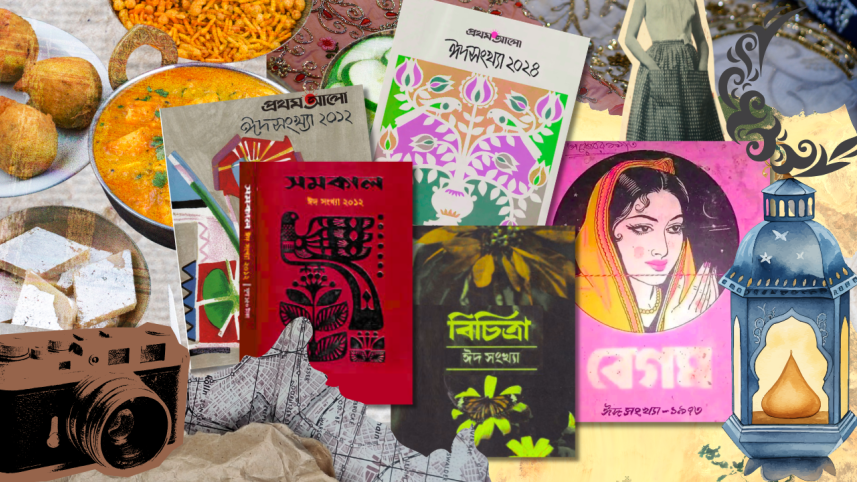
I still remember the distinct, heavy thud on the floor outside our house at the wake of the morning. Usually arriving sometime around the 20th of Ramadan, it was the Prothom Alo Eid Shonkha. It wasn't just a magazine; it was an emotion. For those of us who grew up before smartphones completely destroyed our attention spans, the Eid shonkha/Eid magazine used to be a festival in itself. You could literally smell it before opening the cover—a sharp, almost intoxicating mix of fresh ink, cheap binding glue, and the irresistible aroma of freshly printed paper. It was always a competition among our siblings on who got to read the magazine before anyone else.
It seems almost absurd now, the idea of dedicating entire weeks to reading a single publication. But that’s exactly what we did. Older millennials and those of us on the older edge of Gen Z would spend the better part of the month anticipating these volumes. We carved out hours to sit with dense serialized novels, psychological thrillers, and pages of poetry that, frankly, we didn't always fully understand at that time. In the incredibly slow, languid hours between Zuhr and Asr, preparing to read the shongkha was an exercise in itself. And we loved it.
 For all latest news, follow The Daily Star's Google News channel.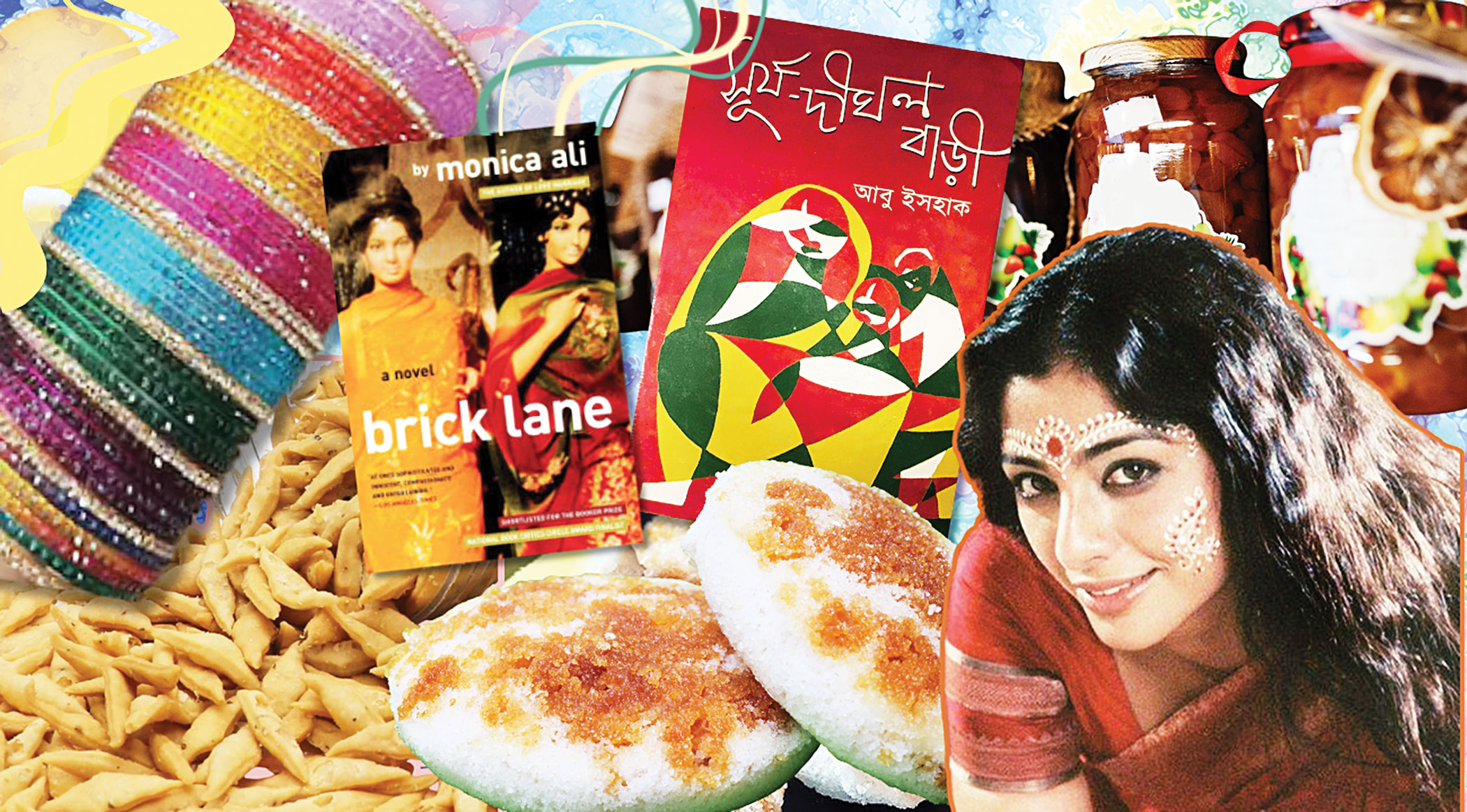
But these editions were not only literary. They encompassed the whole of the Bangali culture in bits and pieces. In many ways, they served as the aesthetic roadmap for the Bangali middle class. Long before Pinterest boards and Instagram FYP, the Eid shongkha dictated what we wore. Teenagers would huddle over the glossy lifestyle inserts, intensely debating the best cut of a panjabi collar or the embroidery on a salwar kameez. I remember the innocent ritual of tearing out a page, carrying it through the suffocating, chaotic alleys of Gausia, and handing it to an already overworked dorji. "Make it exactly like this," we’d say. The master tailor would squint at the glossy paper, and somehow translate that two dimensional photo into our festive reality.
This tactile utility spilled into the kitchen too. Mothers and aunts didn't just casually browse the recipe sections, they studied them. Shahi Mughal-inspired roasts and complicated Bangali desserts were attempted on Eid, inspired from the recipes of the magazine; usually leaving the magazine pages permanently stained with oil and turmeric. Those grease spots essentially became vivid memories and a source of happiness to millions like us. And when you finally exhausted the fiction and the recipes, there were the back pages. The tricky puzzles, the thinking riddles, the Sudoku grids that were rarely solved alone. It was a collective, post-iftar exercise usually done with our cousins.
Today, that specific structure of feeling is mostly gone. I suppose it’s partly because social media has almost entirely removed the concept of anticipation. We just don't need to wait anymore. If you want a recipe for shahi rezala, a 60-second YouTube shorts gives it to you instantly. Need outfit inspiration? A dozen hyper-curated looks are already on your feed. While this convenience is undeniably helpful, it seems to have quietly stripped away the innocent ritual and happiness we used to get from the physical handling of the Eid magazines.
Nobody really waits for the Eid shonkha fiction now. Why sit with a dense, three-hundred-page volume when the internet offers an endless stream of entertainment? It’s likely that our collective attention spans have nosedived a bit too much. The puzzles at the back hold zero appeal when your phone has a dozen games to hit your dopamine receptors perfectly.
The magazines are still printed, sure. You still see them stacked at the local newsstands. But their cultural gravity has faded. We traded the heavy, ink-stained pages for the infinite, weightless scroll. Looking back, I think what we actually miss isn't necessarily the stories themselves, but how they used to make us feel, how the anticipation of it used to unite family members, bring joy to the faces of our siblings when they found their outfit inspiration from it or our mothers when they found a must try recipe for Eid or maybe just how it used to give us the space to share our laughter and joy together.
Iftehaz Yeasir Iftee, a student at IBA, University of Dhaka, is a featured poet in the global anthology Luminance under the pseudonym Brotibir Roy.
Comments