


West keeps Syria options open
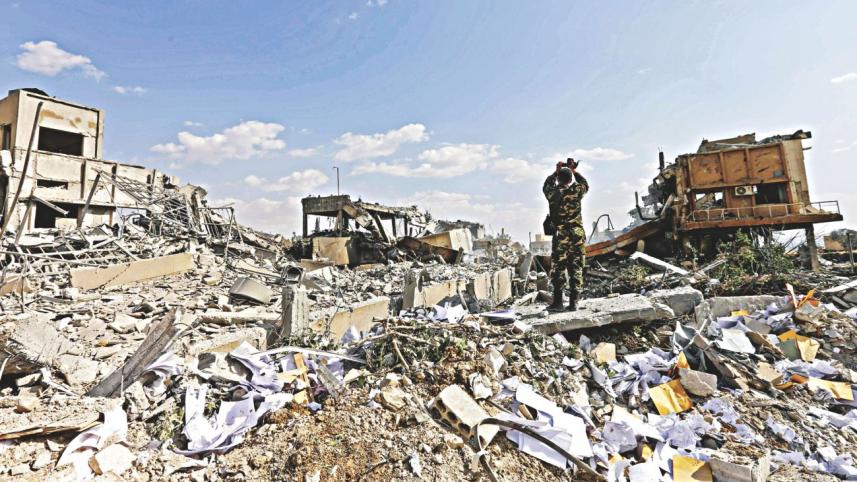
Western powers have no plans for further missile strikes on Syria but will assess their options if Damascus uses chemical weapons again, Britain's foreign minister said yesterday as debate raged over the legality and effectiveness of the raids.
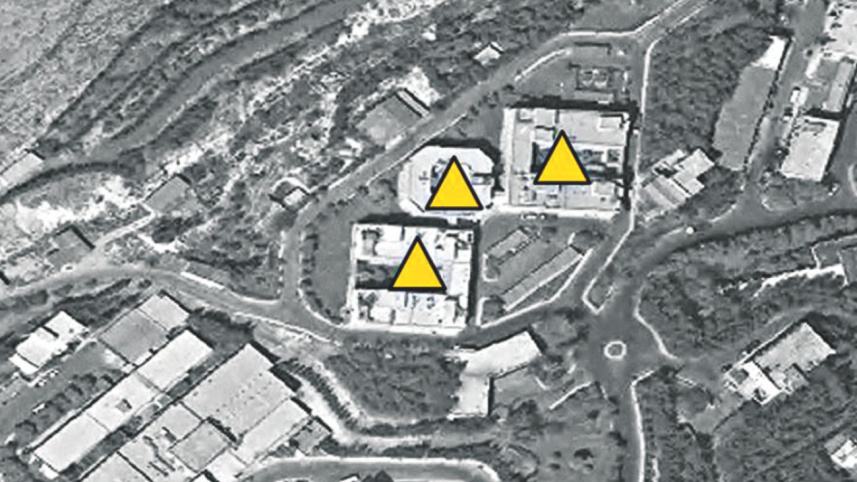
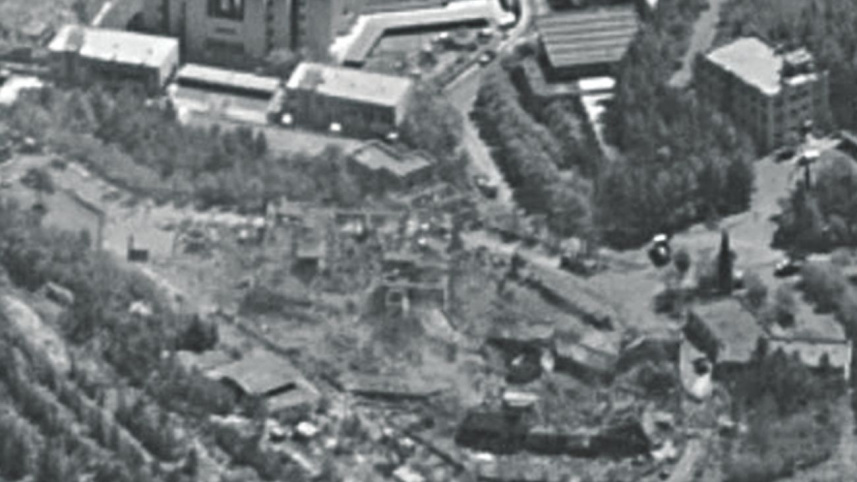
US, French and British missile attacks struck at the heart of Syria's chemical weapons programme on Saturday in retaliation for a suspected poison gas attack a week ago, and the three countries insisted they were not aimed at toppling President Bashar al-Assad or intervening in a seven-year civil war.

The bombings, hailed by US President Donald Trump as a success but denounced by Damascus and its allies as an act of aggression, marked the biggest intervention by Western countries against Assad and his ally Russia, whose foreign minister Sergei Lavrov called them "unacceptable and lawless".
Speaking to Iran's President Rouhani by telephone yesterday, Russian President Vladimir Putin said "if such actions, carried out in violation of the United Nations Charter, are repeated, that would inevitably provoke chaos in international relations," according to a statement from the Kremlin.
In Damascus, Syria's deputy foreign minister Faisal Mekdad met inspectors from the global chemical weapons watchdog OPCW for about three hours in the presence of Russian officers and a senior Syrian security official.
The inspectors were due to try to visit the site of the suspected gas attack. Moscow condemned the Western states for refusing to wait for their findings before attacking.
As he left the hotel where the meeting took place, Mekdad declined to comment to reporters waiting outside.
British Foreign Secretary (Minister) Boris Johnson defended Prime Minister Theresa May's decision to take part in the attack, saying it was to deter further use of chemical weapons.
"This is not about regime change … This is not about trying to turn the tide of the conflict in Syria," he told the BBC.
"There is no proposal on the table at the moment for further attacks because so far thank heavens the Assad regime have not been so foolish as to launch another chemical weapons attack."
"If and when such a thing were to happen, then clearly with allies we would study what the options were," he said, echoing US ambassador to the United Nations, Nikki Haley, who told an emergency Security Council meeting that Trump told her that if Syria uses poisonous gas again, "The United States is locked and loaded."
Asked if this meant Assad could carry on using barrel bombs and other means in the war provided he did not use chemical weapons, Johnson said that that was the "unhappy" consequence.
Assad was determined "to butcher his way" to an overwhelming victory and only the Russians could pressure him to come to the negotiating table in Geneva, Johnson said.
British opposition leader Jeremy Corbyn said that the legal basis used to support the British role was debatable, adding that he would only support action backed by the UN Security Council.
"I say to the foreign secretary, I say to the prime minister, where is the legal basis for this?" Corbyn said in an interview with the BBC.
The Western countries blame Assad's government for a suspected poison gas attack in Douma on April 7 that killed up to 75 people. Russia, whose ties with the West have sunk to levels of the Cold War-era, denies any gas attack in Douma and said Britain staged it to whip up anti-Russian hysteria.
RESILIENCE
In Damascus, Assad told a group of visiting Russian lawmakers that the Western missile strikes were an act of aggression, Russian news agencies reported.
Syria released video of the wreckage of a bombed-out research lab, but also of Assad arriving at work as usual, with the caption "Morning of resilience" and there were no immediate reports of casualties.
 For all latest news, follow The Daily Star's Google News channel.
 The Russian agencies quoted the lawmakers as saying Assad was in a "good mood", had praised the Soviet-era air defence systems Syria used to repel the Western attacks and had accepted an invitation to visit Russia at an unspecified time.
Russian Foreign Ministry official Vladimir Ermakov struck a apparently conciliatory tone yesterday, saying Washington would want to maintain a dialogue with Moscow about strategic stability after the raids, Russian media reported.
Comments