


WHO dampens hope of Covid vaccine soon

The World Health Organization yesterday said it did not expect widespread immunisation against the coronavirus until mid-2021, despite growing expectations in the US and beyond that a vaccine could be released within weeks.
 For all latest news, follow The Daily Star's Google News channel.
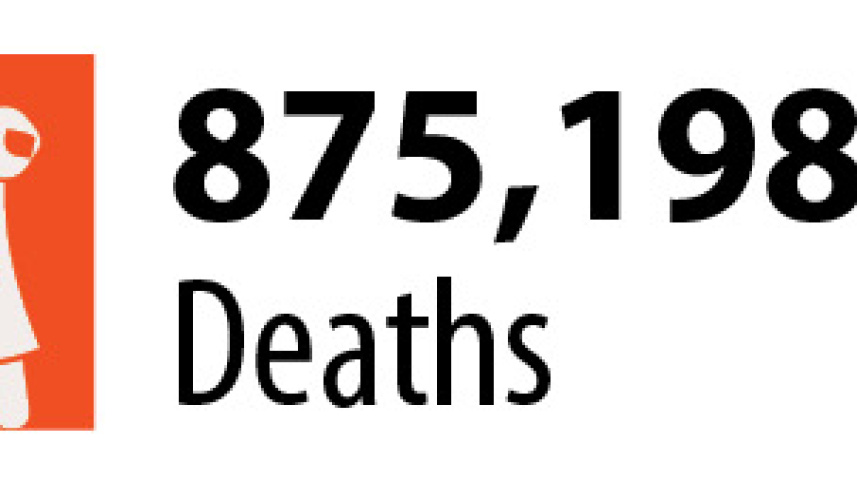
 Across the world, governments are hoping to announce a vaccine as soon as possible and roll out treatments for Covid-19, which has killed nearly 870,000 people and infected well over 26 million.
The UN health agency welcomed the fact that a "considerable number" of vaccine candidates had entered final stage Phase III trials, which typically involve tens of thousands of people.
"We know of at least six to nine that have got quite a long way with the research already," WHO spokeswoman Margaret Harris told reporters in Geneva.
However, she stressed, "in terms of realistic timelines, we are really not expecting to see widespread vaccination until the middle of next year".
Under normal procedures, test administrators must wait for months or years to verify that vaccine candidates are safe and efficacious.
But as the pandemic continues to take a devastating toll, there has been massive pressure to roll out a vaccine quickly.
It was revealed this week that Washington has urged US states to get ready for a potential coronavirus vaccine rollout by November 1, sparking concerns President Donald Trump's administration is rushing to begin distributing a vaccine before the November 3 elections.
The US Food and Drug Administration has also raised the possibility that a vaccine might be given emergency authorisation before the end of trials.
The FDA has faced allegations from the medical community, which it has denied, that it is bowing to political pressure from Trump, who is trailing Democratic challenger Joe Biden in the polls.
NO CUTTING CORNERS
The worry is that, for emergency use approval, the bar for ruling a vaccine safe and effective is lower than that for normal full approvals.
Several pharmaceutical company executives stressed Thursday the importance of sticking to high testing norms, vowing not to cut corners on safety and efficacy standards, even as they race to bring coronavirus vaccines and treatments to market.
According to the WHO, 34 vaccine candidates worldwide are currently in the various phases of being tested on humans, while a further 142 are in pre-clinical evaluation.
According to results published yesterday by The Lancet medical journal, Russia's "Sputnik-V" Covid-19 vaccine produced an antibody response in all participants in early-stage trials.
Soumya Swaminathan, the WHO's chief scientist, told reporters earlier this week that the UN agency was working with experts around the world, including at the FDA, to clarify the criteria for declaring a vaccine candidates safe and efficacious.
"We'd like to see a vaccine with at least 50 percent efficacy, preferably higher," she said.
INTERNATIONAL INQUIRY
Meanwhile, an international panel looking into the global response to the pandemic vowed to uncover how it was able to spread worldwide.
"This is a strong panel poised to ask the hard questions," said former Liberian president Ellen Johnson Sirleaf, co-chair of the Independent Panel for Pandemic Preparedness and Response (IPPR), which will take over the heavily criticised World Health Organization-led response.
As the death toll rose, the IPPR said its members would have unfettered access to the WHO's files.
The WHO "made it clear that their files are an open book. Anything we want to see, we see," said former New Zealand prime minister Helen Clark, who co-heads the panel with Sirleaf.
INDIA CASES NEAR 4M
India reported a daily jump of 83,341 infections yesterday, taking its tally to 3.94 million, health ministry data showed, as Asia's worst-hit country closes in on Brazil as the world's second most affected nation from the virus.
The ministry said 1,096 people died from Covid-19, taking the toll to 68,472.
Brazil topped four million cases with 124,600 deaths, second only to the US. There were almost 44,000 new cases over the previous 24 hours alone, and 834 fatalities.
However, some experts saw a silver lining in the statistics -- the South American giant could be on the verge of improvement.
New Zealand recorded its first Covid-19 death in more than three months in a man in his 50s.
Health officials say the man was part of a second-wave cluster of infections that emerged in the biggest city Auckland last month, ending a spell of 102 days free of community transmission in the South Pacific nation.
Meanwhile, Amnesty International said more than 7,000 health care workers have died of the virus worldwide, including more than 1,300 in Mexico alone, the most for any country.


Comments