


Covid-19 cases, deaths slow

The coronavirus pandemic is still raging worldwide, but fresh World Health Organization data indicates its pace is easing in most regions, with the biggest slowdown seen in the hard-hit Americas.
 For all latest news, follow The Daily Star's Google News channel.
 More than 1.7 million new cases and some 39,000 new deaths were recorded last week, the WHO said in a situation report published late Monday.
The numbers for the seven-day period ending on August 23 mark a five-percent decrease in new Covid-19 cases globally and a 12-percent drop in new deaths compared to a week earlier.
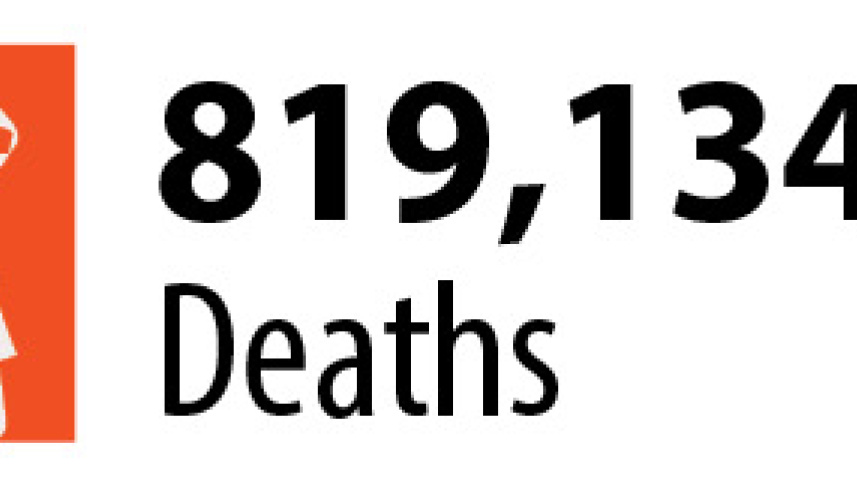
Despite the slowdown, the fresh numbers pushed the global total since the start of the pandemic to well over 23 million cases and more than 813,000 deaths.
Millions of South Korean students were ordered back to online classes yesterday and Mexico launched a nationwide televised schooling programme, highlighting the deepening crisis for children worldwide.
The school closures were part of new measures in many parts of the world to halt the disease. The United Nations estimates at least 60 percent of the global student population has been impacted by school closures across more than 140 countries.
The UN health agency said all regions registered declines in new numbers of cases, with the exception of Southeast Asia and the Eastern Mediterranean.
The Americas remain by far the hardest-hit in the pandemic, accounting last week for half of all newly reported cases and 62 percent of deaths.
But the region also saw the biggest slowdown, with the number of new cases decreasing 11 percent and new deaths falling 17 percent from a week earlier, driven in part by reduced transmission reported from the United States and Brazil -- the world's two worst-affected countries, the data showed.
The WHO meanwhile cautioned that several countries and territories in the Caribbean had reported large increases in cases, and suggested this could be linked to growing tourism.
WHO's Southeast Asia region -- the second-most affected -- accounted for 28 percent of all new cases and 19 percent of all new deaths reported globally last week, with both categories swelling four percent compared to a week earlier, the data showed.
India continues to report the vast majority of confirmed cases and deaths in that WHO region, with 455,000 new cases last week. That brought its total to well over three million and with more than 6,700 new deaths pushed its toll up to over 56,700.
In the Eastern Mediterranean region too the number of cases continued to climb last week, rising four percent from a week earlier, but new deaths in the region dipped for the sixth week in a row.
Meanwhile in Europe, where the number of new cases has been steadily climbing in recent weeks, the pace slowed slightly, by one percent last week, the data showed.
New fatalities in Europe continued to slow, falling a full 12 percent compared to a week earlier.
ONLINE, TV CLASSES
All schools and kindergartens in the greater Seoul region were told yesterday to return to online learning as authorities battled multiple coronavirus clusters.
Another 280 infections were reported yesterday, taking South Korea's total to almost 18,000.
"The alarming emergence of mass infections since August is turning up as infections of our students and staff members," Education Minister Yoo Eun-hae told reporters.
In Mexico, around 30 million children began a new school year on Monday with lessons via television in a nationwide experiment in distance learning.
The government has teamed up with four private television stations to broadcast classes across the Latin American country, which has recorded more than 60,000 deaths from the virus.
Anxiety about the pandemic was fuelled yesterday by an announcement from researchers in Hong Kong that they had identified what they said was the first confirmed case of Covid-19 reinfection, raising questions about the durability of immunity.
The patient, a 33-year-old man living in Hong Kong, tested positive in March but after two negative tests was found to be positive again in August.
Microbiologist Kelvin Kai-Wang To, lead author of the study, told AFP: "Covid-19 patients should not assume after they recover that they won't get infected again."
DISASTER FOR HOLIDAYMAKERS
Months of lockdowns to stem the spread of the virus have taken a huge toll on the global economy, with millions losing their jobs and business shutting their doors.
Australian airline Qantas said yesterday it would cut almost 2,500 more jobs on top of 6,000 already announced, just days after the firm posted a huge annual loss.
Airlines have been clobbered by a collapse in tourism as nations keep their borders closed.
Indonesian holiday island of Bali said yesterday foreign tourists would not be allowed to visit for the rest of 2020, scrapping a previous plan to open up from next month.
But the pandemic has not spelled disaster for all holidaymakers.
One pair of Japanese honeymooners stranded in Cape Verde by the pandemic have been named unlikely ambassadors for the tropical paradise's Olympic team at next year's Tokyo Games.
Rikiya and Ayumi Kataoka found themselves marooned in Cape Verde when the country's airport shut down.


Comments