


BOOK REVIEW: NONFICTION / Imagining Africa in Bengali fiction and verse
9 July 2025
Mowtushi Mahruba’s Africa in the Bengali Imagination: from Calcutta to Kampala, 1928-73 is a distinctive and pioneering work on the way the continent led to creative writing in English as well as Bengali over the decades
9 July 2025
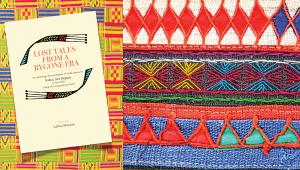
BOOK REVIEW: FICTION / A priceless fictional heirloom
23 April 2025
There are any number of ways one can approach Rahat Ara Begum’s collection of short stories, 'Lost Tales from a Bygone Era: An Anthology of Translation of Urdu Stories', assembled, contextualised, and published in this book by her loving grandchildren and their siblings
23 April 2025

Remembering Prof Kazi Shahidullah
27 March 2025
Friendship with Shahid bloomed over shared interests, studies, & sports at Dhaka University.
27 March 2025

BOOK REVIEW: POETRY AND NONFICTION / Poetry for our times and a poet’s new frontier
15 May 2024
Inevitably, Kaiser Haq’s The New Frontier and Other Odds and Ends in Verse and Prose is about the poet, his poetic predilections, and situatedness at this time of human existence. In many ways it is typical of the verse we have come to expect from our leading poet in English for a long time now, but in other ways it articulates his present-day concerns in new and striking poetic measures.
15 May 2024

POETRY / Anonto prem
10 May 2024
I wove necklaces of lyrics/ Which you'd wear beautifully
10 May 2024

POETRY / Shedin dujone dulachinu bone
10 May 2024
You know how that day the wind brought out/ The crazy thoughts I had in me all the while.
10 May 2024

BOOK REVIEW: NONFICTION / A peripatetic poet’s pleasing musings
3 April 2024
The title of this book suggests that it is based in Bengal but it really meanders deftly across time and space, more often than not in “mazy motion”.
3 April 2024

POETRY / Be a tree
15 March 2024
Be a tree
Get wet in sorrow’s shower and you’ll recover.
From envy’s scorching sun gather strength
15 March 2024
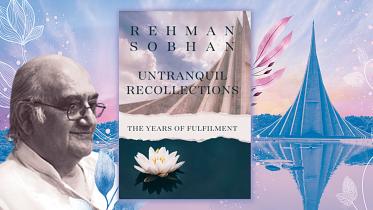
Rehman Sobhan’s recollections of the road he took towards December 16, 1971
The title of the first of Professor Rehman Sobhan’s two-part memoir suggests that it is about his “years of fulfilment”; the subject matter of its sequel therefore would be about the “untranquil” years that followed.
7 February 2024

18th century British women writers and their Indian others
The postcolonial and feminist lenses Chatterjee deploys in his discussion of the works of the selected women writers seem to suit his analysis of the works of these "enlightenment" period British women writers, for their biases, fixations, and anxieties often come into view then.
10 January 2024

Diasporic delusions
Self-confidence shaken, some shattered memories in their side bags
24 November 2023

Shokoruno Benu Bajaie Ke Jai
Who is the one playing such a plaintive tune on a flute
6 October 2023

Remembering Melville in his bicentenary year
Melville's critics, inevitably, panned him for what he had characterised self-deprecatingly and in his frustration as his fictional "botches," although his works were rarely that.
29 August 2023
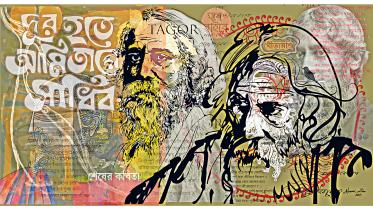
Rabindranath Tagore’s ‘Gora’: From notions of purity to an all-embracing Bharatborsho
Rabindranath Tagore’s Gora, written between 1907 and 1909, reveals the ways in which Tagore addresses the all-important issues of his time—national identity formation, the coming together of people over time, and obstacles or barriers put in the way of the progress of a nation. The novel captures Tagore’s fascination with envisioning a future based on human amity or moitri, one where the powerless and the dispossessed transcend the barriers of division and distrust.
4 August 2023

War and peace and poetry and poets
How can you talk about peace without taking into account war? Both are subjects not only of Tolstoy’s great novel but also of the two founding epic poems of Greek as well as Indian literature.
24 March 2023

In Memory of Jibanananda Das
By 1954 Jibanananda Das, after years of neglect, was beginning to gain increasing attention as a poet all over Bengal—East or West—and had a steady teaching job after a long, long time. Indeed, in 1953 he had been awarded the Rabindra-Smriti Puroshkar for his book of verse, Banalata Sen. In May, 1954 his Jibanananda Dasher Shreshto Kobita came out from a reasonably good publishing house, collecting his best poems.
21 October 2022
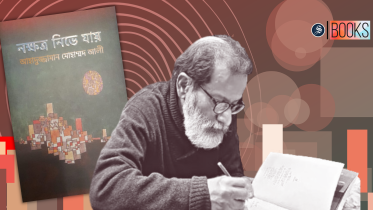
Ahaduzzaman Mohammad Ali's 'Nakhshatra Nivey Jai': Poems well worth waiting for
A series of poems also reflect his ecological sensitivity to the machine in the garden and snakes and hyenas imperiling forests and rivers and Dhaka—the city he has lived in for most of his life.
12 October 2022
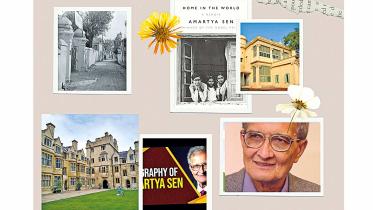
Home in the World: The Autobiography of a Well-Known Bengali
The dust jacket cover of Amartya Sen’s absorbing and remarkable memoir shows him as a young boy, with his sister and a cousin at home, looking out at the world. An apt cover image of a fittingly titled book about someone who would be always taking in the world as he went all over
16 September 2022
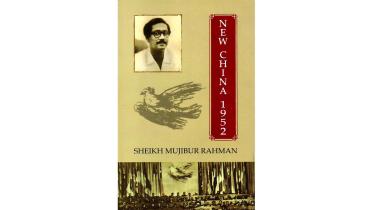
Bangabandhu’s 1952 trip to New China
“The truth is—here is a new country, new people and new modes of behaviour. It appears that there is newness in the air, everywhere” (New China, 143)
14 August 2022

A history of this subcontinent, woven in jute
The book reveals how in mid-19th century colonial East Bengal jute first emerged “as a global commodity”
6 July 2022
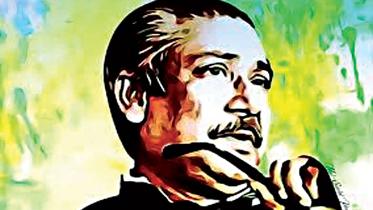
Bangabandhu and Bangladesh’s Landscapes
Bangabandhu Sheikh Mujibur Rahman was rooted in the land and loved Bangladesh’s natural features. He wanted them to be as they were—green, open spaces full of water bodies and flora and fauna.
25 March 2022

Jibanananda Das’ “Ananto jibon jodi pai ami”
If I get to live forever— then forever, I’ll be all alone—
If I return to the paths of the world, I’ll see green grass
Sprouting—will see yellow grass scattering— the sky
Whitening in the morning—like a tattered munia bird,
Breast blood-stained in the evening—again and again I’ll see stars
And view a strange woman untying braided hair and leaving
Alas, her face devoid of traces of the setting sun’s soft glow
25 February 2022
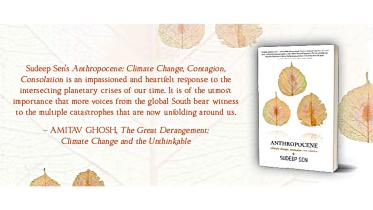
Pandemic Musings Anthropocene: climate change, contagion, consolation
Sudeep Sen’s Anthropocene is the third work on the subject by an Indian writer that I have come across in recent years, but it is truly sui generis.
19 November 2021
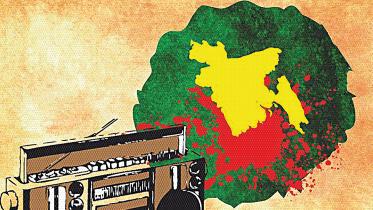
Scenes from a Radio-Active Age
As my siblings and I grew up in the first half of the 1960s, the radio set was the most sought-after device in our house. Till Baba bought a television set for us towards the end of the decade, it was our main source of entertainment, news and small talk.
5 November 2021

Paradisal Libraries
Younger people might find this too dated, but I will stick by what Jorge Luis Borges once said: “I have always imagined that Paradise will be a kind of a Library!”
1 October 2021
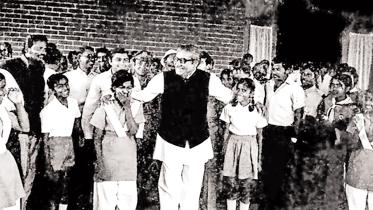
Empathy and Bangabandhu
Empathy, the Wikipedia entry on the word tells us, includes “caring for other people and having a desire to help them; experiencing emotions that match another person’s emotions; discerning what another person is thinking or feeling; and making less distinct the differences between the self and the other.
13 August 2021

Reflections on University of Dhaka convocation speeches: Part II
The second volume of Dhaka University: The Convocation Speeches, 1948-1970 (Dhaka University Publications, 1989), assembled assiduously by Emeritus Professor Serajul Islam Choudhury, is an important publication like the first one for anyone trying to understand Dhaka University’s extraordinary role in the genesis and identity formation of Bangladesh.
28 July 2021
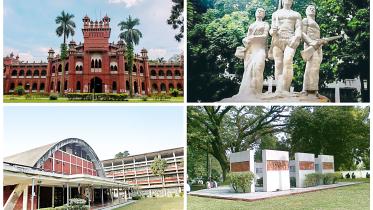
The University of Dhaka and the Birth of Bangladesh
In Dhaka University: the Convocation Speeches, a volume compiled with an introduction by Serajul Islam Choudhury in 1988, we read that DU was established by the British as a "splendid imperial compensation" for the Muslims of East Bengal (Choudhury, 26). They had wanted the current rulers of India to make up through it for the loss they felt they had suffered because of the reunion of Bengal in 1911.
2 July 2021