50 years on it still echoes, "You talkin’ to me?"

Cities, over time, learn how to grow louder than their inhabitants, and what accumulates is a peculiar modern condition -- proximity without intimacy, movement without arrival, noise without communion.
One may live surrounded by millions and still negotiate daily with an empirical emptiness -- a silence that survives even in conversation.

Modern life, for all its connectivity, keeps inventing new architectures of loneliness.
And this loneliness is not romantic. It is the daily grind. It settles into routines, commutes, screens and habits, making isolation feel administrative rather than tragic. People become present everywhere and rooted nowhere. The city turns into a choreography of bodies that pass without truly intersecting.
It is here, in this moral and emotional surplus of urban civilisation, that certain works of art refuse to remain decorative. They linger because they diagnose.
Half a century ago, one such diagnosis arrived quietly. Not as philosophical mantra but as cinema -- Martin Scorsese’s “Taxi Driver”.
It simply placed a man inside a car and allowed the city to speak through him. In doing so, it transformed a taxi into a chamber of reflection and a nocturnal metropolis into a psychological text. The film, released on February 8, 1976, was ostensibly about New York, yet it was already rehearsing something broader -- how modern cities manufacture spectators of their own lives.
As Taxi Driver turns fifty in 2026, its relevance feels less commemorative than unsettling.
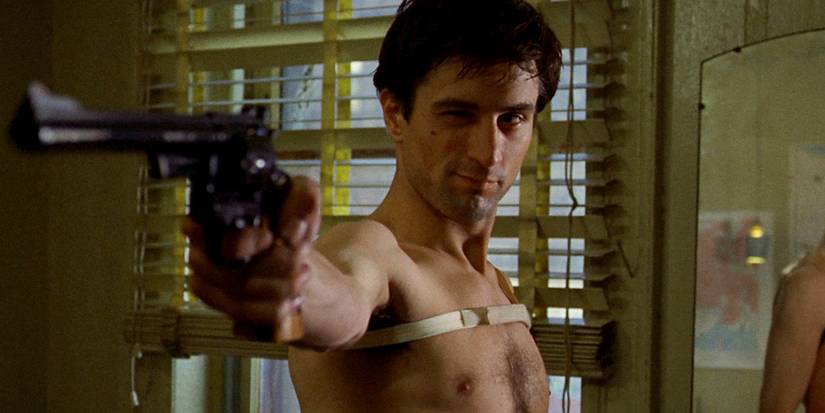
More a question rather than a character
Protagonist Travis Bickle (Robert DeNiro) prowled a metropolis convulsed by post-war malaise, political fatigue and moral confusion. He was never meant to be liked. He was meant to be recognised, cautiously, may be even uncomfortably -- as a question rather than a character.
“Loneliness has followed me my whole life,” he confesses, and in that admission sits the film’s true centre of gravity.
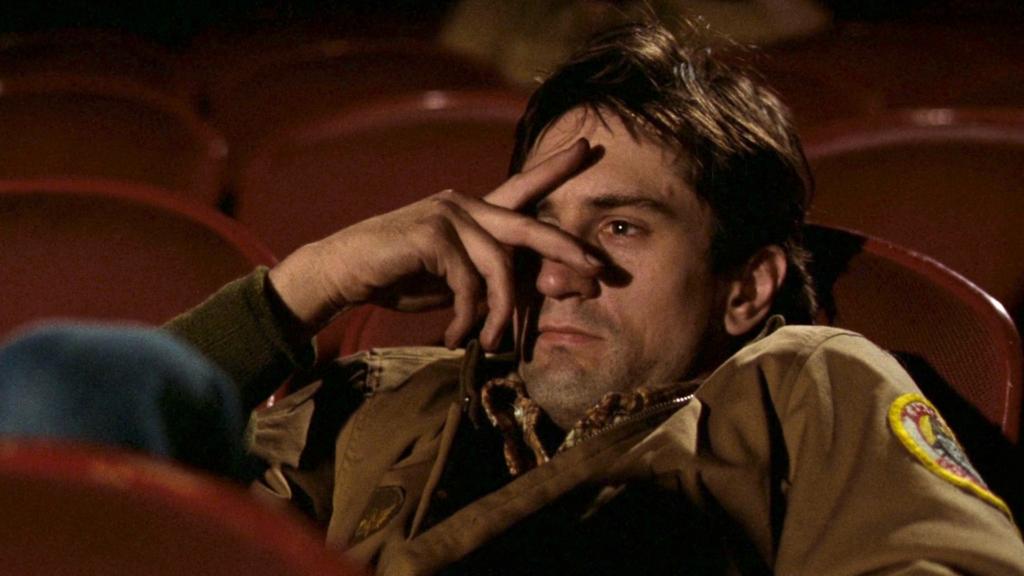
Not spectacle, not violence, but metaphysical isolation. The kind that survives traffic, crowds and endless interaction. Travis drove through neon decay. We scroll through digital glare. The instrument changed; the condition remained intact.
Cab as confessional
What draws one towards Travis is not his volatility but his inquiry into meaning. He is a soldier who returned from war, but more profoundly, he is a man returned to himself with no map. His journal becomes his philosophy. His cab becomes his confessional. He surveys the city not merely as scenery but as symptom.
“All the animals come out at night,” he mutters, and beneath the provocation trembles a deeper anxiety -- what happens when society loses its moral grammar?

Scorsese’s quiet genius lies in framing alienation as a civic problem, not merely a personal defect.
Travis is not born monstrous. He is sculpted by neglect, noise, rejection and the slow corrosion of empathy. He watches, absorbs and eventually convinces himself that he must act. That belief is the film’s philosophical danger. It interrogates how private despair, when left unexamined, mutates into public rupture.
Penury of aloneness
 For all latest news, follow The Daily Star's Google News channel.
 Travis’s tragedy is not that he sees too much, but that he sees alone.
“Someday a real rain will come and wash all this scum off the streets.” Taken literally, it alarms. Taken symbolically, it endures. Every generation dreams of a rain that rinses confusion, injustice, vanity and spiritual fatigue.
Modernity prefers spectacle over coherence. We live amid exhibition, outrage and velocity. Travis’s yearning, distorted as it becomes, begins in a recognisable place -- the desire for moral legibility. Not destruction or chaos, but a feeling that the world might still make sense.
In this way, Travis becomes less a violent anomaly and more a crooked mirror of modern yearning. His danger lies in believing purification must be imposed rather than cultivated. Yet the hunger beneath it remains universal: to rescue dignity from noise.
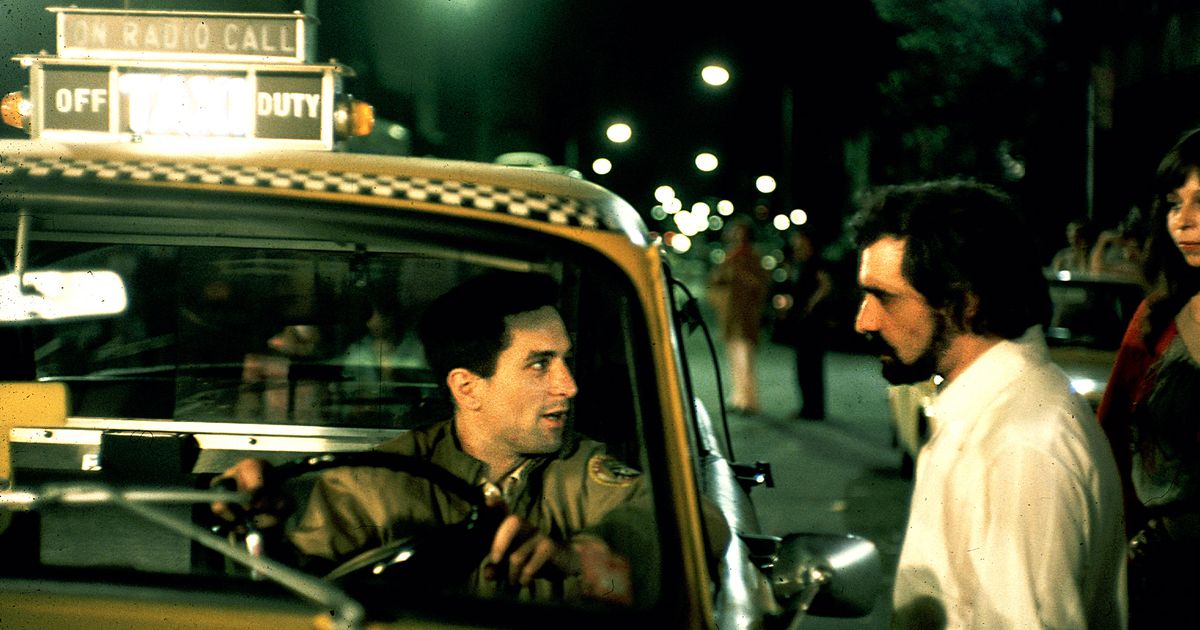
“I’m God’s lonely man,” Travis writes, trembling between delusion and vulnerability.
The line aches because it reveals what modernity often disguises: the craving to be seen without becoming a spectacle.
Scorsese never romanticised Travis. He anatomised him. The camera drifts with him not to celebrate, but to interrogate.
“Taxi Driver” is less about violence than about perception. Who are we when nobody is watching, and worse, when everybody is watching but nobody truly sees?
The film refuses to age politely because it is not a period piece.
It is a psychological document. Its taxi is not transport but a vessel of thought. Its city is not New York alone, but any metropolis where people coexist without necessarily connecting.

The mirror still asks
“You talkin’ to me?” Travis asks his reflection, half parody, half prayer. It has become iconic, even comic, but philosophically it devastates.
He is testing existence itself. Am I visible? Am I real? Am I enough to confront myself?
Five decades later, from a different latitude and temperament, one does not recognise oneself in Travis’s extremities but in his unease, his vigilance, his stubborn desire to matter.

He is neither hero nor villain. He is a symptom with a soul.
In 2026, with the world louder and lonelier at once, that question still waits for an answer.
And perhaps that is why Taxi Driver -- flawed, fractured and fifty years old, still rides beside us. It is a reminder that modernity, for all its speed, still struggles to teach the human soul where to park.

Who really wrote what you loved in Bonolota Express?

Robert Redford, Hollywood’s ‘Sundance Kid’, rides into the sunset at 89

The rise and fall of Chattogram’s single-screen cinema halls

Govt wants to make film industry self-reliant: Arafat
The evolution of horror on Bollywood silver screen

The comfort of rereading old books

Riverdale can be anytime, anywhere

How you too can nearly, almost, probably become a Jedi Knight