


Despite Nobel, Colombia peace process in danger
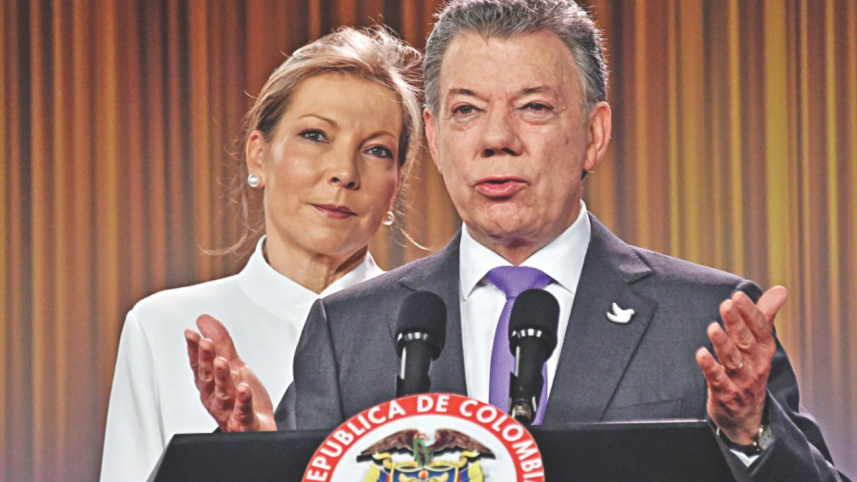
Colombian President Juan Manuel Santos's Nobel Peace Prize gives the country's troubled peace process a major boost, but saving a deal voters recently rejected still won't be easy, analysts say.
The prize closed out a roller-coaster week for Santos, who suffered a major defeat Sunday when Colombians narrowly voted against his signature achievement as president, a peace deal with the Revolutionary Armed Forces of Colombia (Farc).

Santos, who has staked his legacy on ending the country's half-century conflict, has sought to battle back by opening talks with the deal's top opponent, his predecessor and former boss, Alvaro Uribe.
He scored a small victory in the wake of the Nobel announcement, when government and Farc negotiators said they had agreed to discuss changes to the deal and continue a bilateral ceasefire.
But Santos will still have to pull off a difficult balancing act. Uribe, the right-wing hardliner leading opposition to the deal, claims the rejected agreement would have given the rebels impunity for their crimes and put Colombia on the path of "Castro-Chavismo" -- a reference to the far-left governments of Cuba and Venezuela.
Santos has warned the country is in a "very dangerous limbo" as it scrambles to salvage the peace process. In the referendum's aftermath, he had said the army would halt its ceasefire with the Farc at the end of the month if the impasse were not settled.
The ceasefire is currently worth little more than the paper it's printed on -- which is to say not much -- said Jorge Restrepo, head of the Conflict Analysis Resource Center in Bogota.
Now that the peace deal that established the ceasefire has failed, "it means the conflict starts again," he said.
 For all latest news, follow The Daily Star's Google News channel.
Comments