


Looking into the ethos of self-help books
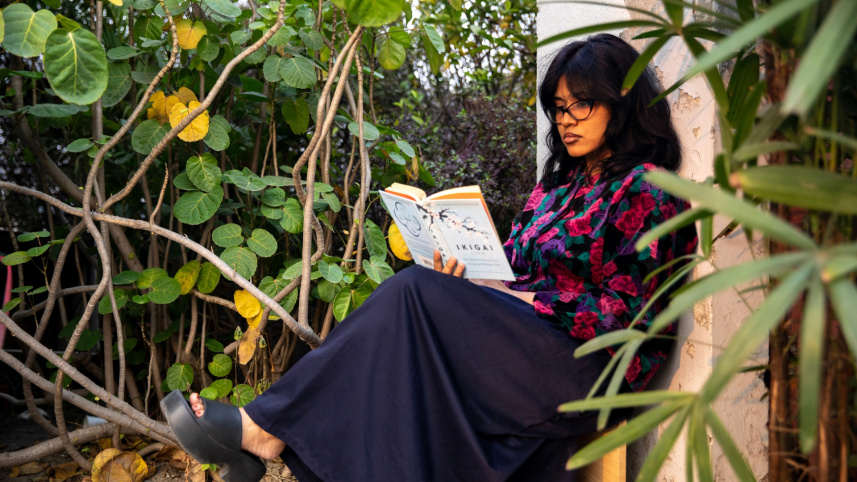
Walk into any bookshop, and you’ll encounter the same promise repeated in different fonts: your life can be optimised, streamlined, or upgraded. All it takes is the right book. Titles like Atomic Habits, Rich Dad Poor Dad, Ikigai, Steal Like an Artist, or Surrounded by Idiots assure us that fulfilment, wealth, creativity, or clarity are just a framework away.
Life is messy, contradictory, and often unfair. Self-help books offer order, breaking down living into systems, habits, and rules. In a world that feels overwhelming, this reduction can bring a sense of relief. However, in these books, complexity is flattened, structural realities are obscured, and human experience is reduced to tidy formulas. Much of what passes for insight is common sense: get more sleep, move your body, set boundaries, focus on what you can control, and be kinder to yourself.

To stretch these truisms into 300 pages, they are padded with rebranded concepts, anecdotes, and motivational fluff. Habits are not formed in a vacuum; they are shaped by class, disability, trauma, culture, and chance. Yet many self-help texts speak as if everyone starts from the same baseline and has the same margin for error. When success is framed as the inevitable outcome of the “right” mindset or routine, failure becomes a personal moral flaw.
If the system didn't work, you likely followed it incorrectly.
This reflects something broader about our cultural shift. Self-help literature is the perfect product for late capitalism. Feeling anxious? That's a personal failing requiring better habits, not a reasonable response to economic precarity, the climate crisis, or social fragmentation. Can't find purpose? Buy a book about Japanese philosophy; don't question whether your job is meaningless or your community has dissolved. The genre takes problems that might demand collective action or structural change and redirects them inward, toward personal responsibility and self-management.
We live in a fast, individualised, solution-orientated world, where problems are expected to be fixable. Self-help literature mirrors this logic of productivity culture, treating the self as a project to be optimised and measured. You are encouraged to audit your time, your thoughts, your relationships, and your emotions.
This is not to say self-help is useless or malicious by default. Many readers genuinely find comfort, motivation, or a sense of agency in these books. For someone emerging from chaos, a checklist can be a lifeline, offering structure and stability. The problem arises when these tools are mistaken for universal truths, or when personal optimisation is treated as a substitute for social change.
So how might we engage more healthily with self-help literature? First, recognise it for what it is: not an instruction manual for living. Extract what resonates, discard what doesn't, and don't let any author convince you they've decoded human existence. It also helps to read laterally. Pair self-help with other forms of reading: history, sociology, fiction, philosophy – literature that explores ambiguity, provides context, and sits with difficult questions rather than rushing to answers.
Most importantly, resist the idea that a good life can be fully systematised. Human beings are inconsistent, relational, and embedded in worlds they did not choose. You cannot checklist your way out of grief, audit yourself into authentic relationships, or optimise your path to meaning. These books sell the fantasy that life's complexities can be solved through individual willpower and the right mental models, as if we're all just poorly programmed machines awaiting the correct software update. But sometimes, wisdom lies in sitting with ambiguity, sharing burdens, and accepting that being human is not a productivity problem to be solved.
Perhaps the most honest self-help book would be one that admits life is complicated, change is hard, there are no universal answers, and that's okay. It would be a short book. It probably wouldn't sell.
Nuzhat is a compulsive doodler and connoisseur of bad early aughts television. Send her recommendations at nuzhat.tahiya@gmail.com
 For all latest news, follow The Daily Star's Google News channel.
Comments