


Together, we can save our pride – the tigers of the Sundarbans
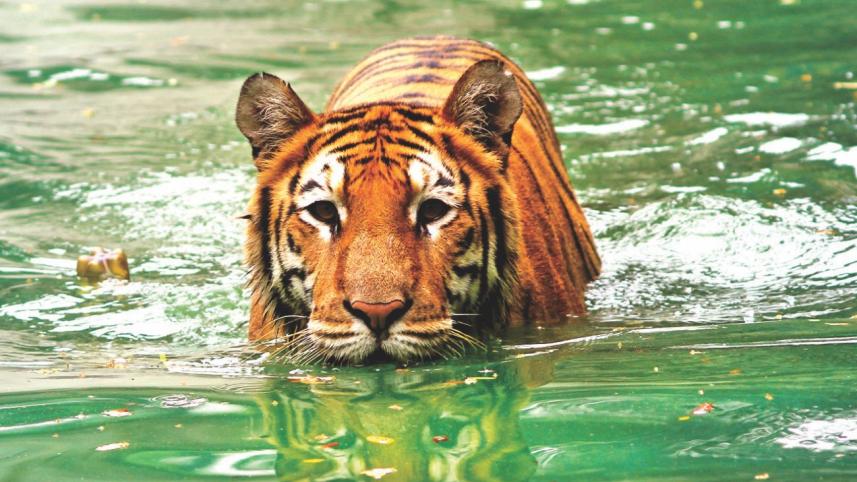
Sleek and graceful, powerful and exotic, the tiger is the very definition of “Bangladeshi mega fauna.” A powerful symbol of Bangladeshi pride and heritage, tigers are deeply embedded in our culture. From being the symbol of the hugely popular national cricket team to adorning Bangladesh's currency notes, this regal feline is part of Bangladesh's identity.A hundred years ago, Bengal tigers roamed in many parts of Bangladesh. Although the numbers have reduced significantly, currently around 100 tigers, the Sundarbans is still a stronghold for tigers.
If we cannot still conserve the last population of tigers, the Sundarbans’ ecosystem will be at risk and one sixty million people of Bangladesh will have nothing left to feel proud of being a 'nation of tiger'. The last chance is not yet over. Conserving the Sundarbans and it biodiversity by protecting the tigers with the united efforts of the government, business sector, other stakeholders and the general mass; has now become the demand of the time.It is not an easy task. But with a little bit of everybody's support, we can make a whole lot of difference.

Most of us view conservation solely in terms of individual species. This limited view of conservation stops us from considering the big picture. We forget that the species we are trying to save from extinction live in an ecosystem where each species makes a unique and significant contribution. As a result, we fail to consider the complex interrelationships and direct benefits that are shared between us humans and these ecosystems. The Bengal tiger is an umbrella species. When they thrive, they ensure the survival of thousands species of flora and fauna of the Sundarbans. As one of the largest ecosystems in Bangladesh, the Sundarbans works as one of our largest life support systems. Its green mangrove wall shields millions of people from natural disasters and contributes to their livelihoods. To survive and prosper, Bangladesh needs a healthy, flourishing Sundarbans forest. Our security, our economy, our very survival depends on this ecosystem thriving and growing. So by saving tigers, we are actually protecting the Sundarbans. This ultimately benefits the entire country and all of us. So it's not just about saving the tigers, it's about protecting our future.
Currently, WildTeam works with local communities, government and other conservation institutions to help save tigers in the Sundarbans. WildTeam undertakes research on tigers and the mangrove ecosystem, increases vigilance against wildlife crime and helps build capacity of the Bangladesh Forest Department and communities. Under the leadership of Forest Department, WildTeam implementing the USAID's Bengal Tiger Conservation Activity (Bagh), with technical support from the Smithsonian Institution and Bangladesh Centre for Advanced Studies. WildTeam has been striving to unite a range of strategic partners including other relevant agencies of the Government of Bangladesh, private sector, NGOs and local communities. Just recently, WildTeam organised a “Greater Dialogue for a Greater Cause” to raise awareness on tiger conservation among the private sector and harness motivate to engage in this worthy cause.
We live in an era where 53 of the 100 largest economies in the world are not countries but private corporations. This is an age where one individual commercial organisation alone can reach 4 billion customers – nearly 60 percent of our global population. In order for tigers to be saved, private corporation support isn't just needed- it is a necessity. It is only when we combine and leverage our individual strengths that we can forge the extraordinary change to save our tigers.
Over the past two decades, businesses have stepped into the breach and they have changed the way environmentalists approach conservation. Combining business acumen and a steely focus on efficiency and results, Unilever and the World Wildlife Foundation have saved over one million trees from destruction in Brazil and Indonesia. Coca Cola has teamed up with environmentalists to protect the polar bear and its habitat through the Arctic Home Campaign in Canada and the United States.Emirates is showcasing its commitment to animal conservation by painting endangered animals on its new, state of the art A380 jets.
What can you do? Businesses that operate in Bangladesh, both national and foreign, are needed to raise awareness of this important issue. You can also support a wide variety of activities that directly benefit the tigers and the Sundarbans. For example, you can help to build a research station near the Sundarbans to continue researching and monitoring the tiger population. Support groundpatrolling to ensure protection from wildlife crime, support Community Patrol Group (CPG) and Village Tiger Response Teams (VTRT), sponsor national and local level campaign events to raise mass awareness, join livelihood programs for the local communities to reduce livelihood dependency on the Sundarbans, or develop cause marketing campaign - to raise awareness and fund for tiger conservation.
Most of us are well aware of what is causing the decline in numbers of wild tigers: illegal poaching; illegal wildlife trade; loss of quality habitat. As an important member of the business and social community in this country, private sector's participation, active interest and support are crucial to restoring, reconnecting and managing the Sundarbans into one continuous corridor of protected area to benefit humans and wildlife. You have the power to help us safeguard Bangladesh's precious tiger population and their habitat by taking a stance with WildTeam. Your commitment will aid in raising awareness and funds to protect our tigers. Our priority is to ensure that the small population of tigers left in the Sundarbans is able to survive and flourish. This is a massive undertaking, and your support is vital to its success.
The writer is Programme and Partnership Management Specialist, WildTeam.
Photo: Sayam U. Chowdhury
 For all latest news, follow The Daily Star's Google News channel.
Comments