


Unveiling the truth about ‘71 genocide and mass rape
In the post-1971 era, a lot of data about Pakistan-sponsored murders, assaults, rapes, and other activities have surfaced. However, they have never come out of professional or scientific research. These have surfaced from random interviews, stories, confessions, and individual experiences. We know around 30 lakh people have been martyred in the liberation war. Considering the fact that these figures may sometimes be a myth, it can be affirmed that the information regarding widespread mass murders is true.
There are around five thousand small and big slaughterhouses in the country; some went out of count. Amongst these, we have marked around 1200 killing sites and mass graves. From the data collected in such slaughterhouses, one can conclude about the perpetrators who killed those lakhs and lakhs of Bengali people. After gaining independence, the new government of Bangladesh announced that around 2 lakh women were assaulted by the Pakistani forces during the war, which is an understatement, as it was based on a gross assumption-based calculation.
Sweden’s Uppsala University conducted research that found three figures of 2, 3, and 4 lakh, and also concluded that most of these assaulted women were Muslims. Dr Davis of Australia mentioned the figure of rape victims as 450,000, but later, as per research conducted by a professional team in Bangladesh, the total count of rape victims and assaulted women was thought to be more than 467,000, because some Hindu women as well as Muslim women were out of the calculation.
This research lasted from 1991 to 2002 in 42 districts and their police stations. The essence of 629 out of countless interviews revealed the fact that, at a minimum, 467,000 women were assaulted in ’71. The team of doctors and experts, including a forensic anthropologist, could find the details of 629 such women who were alive during the interviews and staying in the country. The research further showed that amongst these assaulted women, 56.50% were Muslims, 41.44% were Hindus, and 2.06% were Christians or from other minority communities.
As per the Bangladesh Documents published by the Foreign Affairs Ministry of India, between March and the end of May 1971, there had been 6.971 million Hindu refugees registered in India. Those who came in that period had been attacked during the deplorable Operation Searchlight and assaulted either by the Pakistani forces or their accomplices in Bangladesh.
As per statistics, among them there were 871,000 Hindu families who fled to India at that time. And there had been around 2,625,000 female refugees over the age of ten in those families. If even one out of ten of them were violated by the perpetrators, then the number of victims among refugees was 262,500.
The most conservative calculation cannot make it less than 2 lakh Hindu women and girls, who never came back to Bangladesh. As rape was a weapon of war and the intention of war and genocide was to eliminate Hindus by attacking them in every way, the figure of 3 million came up by the state. In this context, if somebody says this number is a myth, then it is to be understood that in no historical genocide were there headcounts or any numbering of body bags.
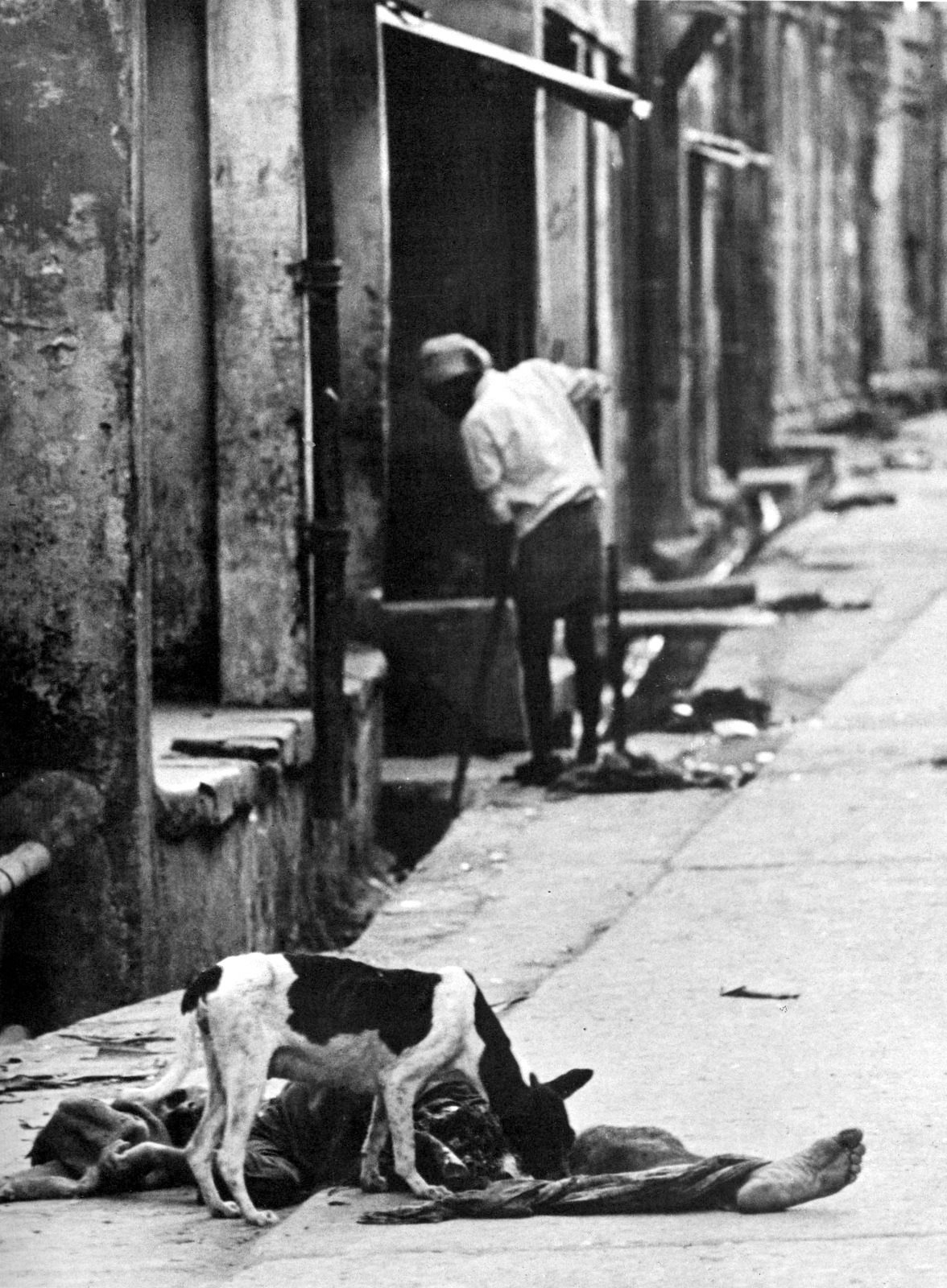
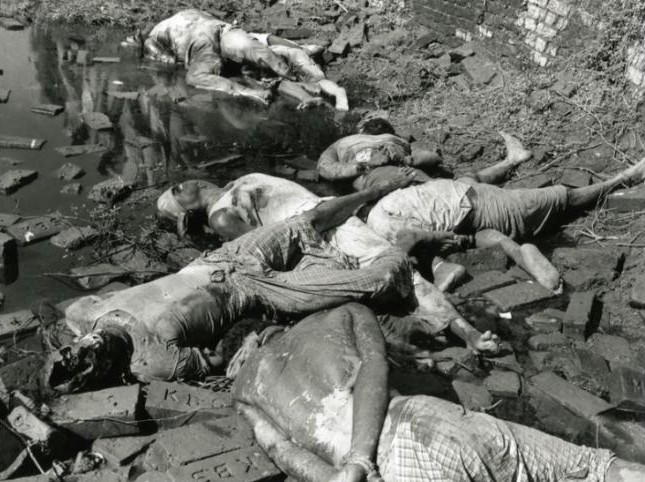
In Bangladesh, just after liberation, as war veterans and members of law enforcement authorities, we found 5000 mass graves and came to know from eyewitnesses that there were regular killings in innumerable spots, including 88 riversides and 68 bridges. All godowns, guesthouses, rest houses, and most educational institutions, even railway stations and jails, were used as slaughterhouses and also as venues of mass rape, gang rape, or rape in custody.
Only thirty percent of the remains were on land and the rest 70% were washed away, as the dead bodies were thrown into wetlands and riversides. Even manholes, water wells, big drains, sewage tanks were not spared. More than one crore people were registered as refugees in India during the war of 1971. Nearly 2 crore people were internally displaced. It was one of the largest numbers of enforced migration and displacement of innocent civilians within a short time. Many displaced people, including refugees, either died of disease or got killed by the perpetrators and their collaborators during their perilous journey or in their hideouts.
At the end, the victorious nation could not try the alleged 369 Pakistani perpetrators who translated the intention of the Pakistan Army by wiping out most Hindus and Bengalis, who were considered black and inferior in their eyes, unfit to enjoy any freedom, and also akin to Hindus in many ways, specifically in their language, culture, and even the religion which they considered as loose and some are in the line of Sufis.
There were great racial discrimination and neo-colonial subjugation from the birth of Pakistan. This discrimination has been narrated by name, including Gen. Ziaur Rahman and Brigadier M. R. Majumdar. It is documented by Dr Rounaq Jahan in her book ‘Pakistan: Failure in National Integration’. It was reflected in civil service, military service, and in gross economic disparity. There were many like Putul Rani, wife of lawyer Kamini Mohon Dev in Habigonj, who were among the sex slaves under the custody of Major Iftekhar. Indeed, the Pakistan Army has committed 39 counts of war crimes, crimes against humanity, including genocide by killing, genocide by causing serious bodily or mental harm, genocide by deliberately inflicting conditions of life calculated to bring about physical destruction, and genocidal rape.
The nation, looking for righteousness, has failed to indict the perpetrators in the proper court of justice, because of the unlawful clemency declared by Sheikh Mujibur Rahman. No single person, even a dictator or a king, can take this kind of decision when it is not supported by the constitution and the parliament, as well as because the crime has been done against the whole of humanity. We have thought about truth and reconciliation. But when there is denial of truth, there is no regret, remorse, and heartfelt confession, then where do we stand? Behind the scenes, there was an effort for this kind of solution, but it could not sail through, as the state did not approach the Security Council for the mandate.
The Pakistan army unleashed their vengeance by orchestrating the worst war crimes, genocides, and crimes against humanity in the year 1971. They eliminated nearly 1.8 million people in a war against an unarmed civilian population, and the rest were killed or died during the perilous journey or as victims of collateral targets. They have violated a minimum of 460,000 women on the soil of Bangladesh. Among the violated women, some were held as sex slaves and comfort girls at the hands of the Pakistanis. Rizia Khatun was one of those sex slaves.
When the liberation war started, Rizia, along with her brother, was fleeing from her village to escape the clutches of the Pakistan Army. However, the Pakistan Army and their accomplices did not spare her; the Razakars caught her on her way. They handed her over to the Pakistan Army, and she became a captive in the army camp located beside Shailakupa Hospital. The barbaric soldiers, including Major Jubly (nickname) and Malek, subjected her to inhumane rape for nine long months. Overwhelmed by shame, fear, humiliation, and distress from the daily torture, she contemplated suicide, but death did not come. The monstrous army personnel continued to apply new forms of rape and torture on Rizia every single day, whether individually or in groups, intermittently or in turns, biting, beating, and raping her relentlessly.
Rizia could barely distinguish between day and night, struggling to stand on her feet and maintain composure. She ate to fulfil her biological needs, excreted waste, and was forced to submit to the Pakistanis. She couldn't even release her sorrow through tears or prayers. After some months, she discovered she was pregnant, but the torment did not stop. The unborn child, a product of the devil's acts, was the first sign of her impending motherhood. Despite her deep self-loathing and hatred towards the unborn child, she felt compelled to protect it out of her newfound sense of motherhood. Tragically, she was unable to save the child, as the Pakistanis forcibly terminated the pregnancy using medicine to prolong their torture. On August 25, 2001, she gave an interview to our representative, recounting the inhuman torture and unbearable agony she endured during the nine months of the liberation war.
Frustration and hatred consumed her when she was asked about the humiliation she endured in 1971. She seemed overwhelmed by such discussions, gazing into the distance for a long while. Regaining her composure, she apathetically replied, "What's the point of revisiting that now? I live a life filled with hatred." After a moment of silence, she continued, "In truth, I don't even know if I'm truly alive. Everyone looks at me as a victim of '71. I'm too ashamed to face people, unable to speak like others can."
She then recounted slowly, "When the war began, I was at my father's house. Just 18 years old and unmarried, I was healthy and had a pleasant appearance. It was a time when everything seemed perfect — the sky, birds, trees — everything. Our home was filled with love, affection, and joy. But then the war abruptly started, spreading fear and uncertainty. The country's situation terrified us. Hearing various alarming reports, I felt that staying home meant certain death. We had relatives in the village of Mailmari, believing we would be safe there. So, I left for Mailmari with my brother. Sadly, luck was not on our side. When we reached Raninagar near Shailakupa, we were captured by the Razakars, who handed us over to the Pakistan Army. They held us captive in a camp set up in a doctor's house next to a hospital. It was there that I endured inhumane and brutal torture at the hands of the Pakistan Army."
When asked in which month she was captured by the Pakistan Army, Rizia Khatun replied, "I am uneducated, dear, so I cannot remember the exact year and date. However, I do recall being held captive for a full nine months. I was captured at the start of the war and released after independence. I, along with several other girls, was held in their camp. In my room, there were three other girls.
The rest were in a separate room that I never saw. We could not see anything outside from our room, as the doors and windows were always shut. The guards were constantly vigilant, making escape impossible. Therefore, we were isolated and unable to interact with anyone else. We rarely had the chance to even stand up. The soldiers closely monitored us and would punish us if they caught us talking. My mental state was such that I was consumed with survival and did not have the capacity to inquire about the other girls in my room."
Every moment of the nine months spent in captivity at the camp was unbearable. Rizia Khatun shared, "I couldn't eat and didn't want to eat. But the soldiers forced us to eat and would beat us if we didn't. They tortured us every day. I considered suicide multiple times, but there was no way to do it. We didn't have any cloth, let alone a rope. They didn't allow us to wear sarees; we had to wear blouses and shirts. We weren't even allowed to wear scarves. They knew we might try to commit suicide. They didn't make us work; instead, they tortured us in confinement.
The cruel Pakistani soldiers raped Rizia Khatun and three other girls every day for nine long months. When asked about the torture, she said, "How can I describe their cruelty? To them, every woman was just a woman, whether she was a mother or a sister. They didn't see us as human beings. They were heartless. The way they tortured us was beyond belief. I've never heard of such brutality anywhere. I haven't even seen an animal act like that. They would beat us mercilessly if we didn't obey. Beating, punching, and kicking were common. They would beat us in a way that wouldn't cause bleeding. I got pregnant in the camp. They used some medicine to abort my six-month-old unborn child. They tortured the other four girls in our room in the same way. Only two of us became pregnant. Everyone got sick, but our conditions were the worst."
Rizia Khatun recounted the names of several soldiers who sexually assaulted her brutally. In her own words, "Many soldiers tortured me, and it was impossible to know all their names. But I distinctly remember Major Jubly (nickname) — a complete devil, horrendously cruel and perverted. He was the one who tortured me the most. Day and night, he preyed on me to satisfy his carnal desires. I also recall a man named Malek, who also assaulted me multiple times. Apart from them, I cannot recall the other names. How helpless I felt! All I could do was shed tears in silence. After nine long months, when Shailakupa was liberated, the freedom fighters rescued me."
Rizia's account may not be identical to that of other rape victims of 1971, but it bears a striking resemblance in essence. The familiar narrative of a cat-and-mouse game, where a woman becomes prey to a predator, enduring the agonising ordeal of being used as prey, a trophy for thugs, in filthy and horrendous acts that strip away human dignity.
All must understand that justice and righteousness are understood as accountability in the vindication of rights and the redress of wrongs.
“The most serious crimes of concern to the international community, notably genocide, war crimes, and crimes against humanity, must not go unpunished. Effective prosecution must be ensured even in absentia.”
Dr. M A Hasan is an award-winning war veteran, physician, scientist, human rights defender and forensic anthropologist
Send your articles for Slow Reads to slowreads@thedailystar.net. Check out our submission guidelines for details.