


Oral history, 1971, and the danger of erasing memory

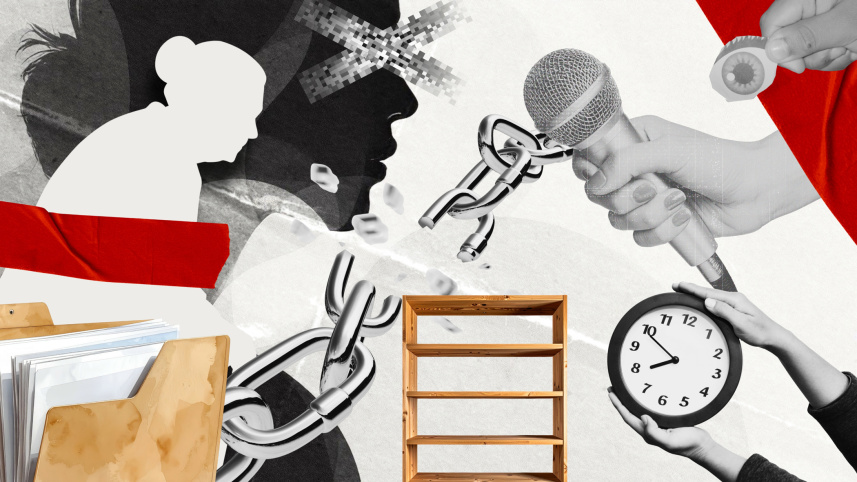
On January 14, the Ministry of Liberation War Affairs quietly made a decision that should unsettle us. About 14,640 video interviews of surviving freedom fighters, recorded as part of a state-funded project launched in 2022, were cancelled. As per the ministry’s decision, the interviews will not be archived. The contractors will not be paid. And the entire project has been shelved, leaving question marks even on the 12,788 video recordings that had been previously accepted for preservation. The official explanation for this is familiar but deeply troubling: that the testimonies did not present the “accurate history” of the Liberation War. Apparently, there were multiple inconsistencies, and freedom fighters’ experiences were not properly reflected. All this, we are told, could mislead the future generations.
In reality, what we are witnessing here is an act of silencing.

Bangladesh has never had a stable relationship with its past. Since 1971, the history of the war has been repeatedly edited, reshaped, amplified, or muted, often depending on who governs. Textbooks change. Emphasis shifts. Some figures rise, others fade. Certain narratives are foregrounded while others recede. Over time, this culture has encouraged the perception that history itself is provisional. What distinguishes the present moment, however, is not reinterpretation but removal. These interviews were not selectively archived, annotated, or contextualised; they were cancelled in their entirety. Such a step demands careful scrutiny, because once historical material is abandoned or destroyed, it may not be recovered.
First of all, the ministry’s decision raises questions about evaluation processes that go to the heart of historical integrity. In oral history, a project’s credibility is inseparable from transparency. Decisions about evaluation and preservation must be grounded in clear methodological standards and expert consultation. The question is, did the ministry consult professional historians, archivists, or trained oral historians before cancelling the interviews and the project? Oral history is a specialised field with established ethical guidelines, including the principle of shared authority, which recognises that the stewardship of public memory must involve trained experts alongside institutions. The apparent absence of such consultation suggests a departure from this standard.
Equally important is the question of provenance. What were the qualifications of those serving on the subcommittee that assessed the interviews? What historiographical or methodological expertise did they bring to the evaluation of oral testimony? Media reports indicate the presence of freedom fighters on the subcommittee, but none with a public record of historiographical expertise, so it is difficult to determine whether the eventual decision rested on scholarly judgement or administrative discretion. Equally importantly, on what scholarly basis were the 14,640 interviews discarded? In professional historical practice, when limitations are identified in a primary source, the standard response is not destruction, but contextualisation through annotation, metadata, and interpretive framing. By opting for wholesale cancellation rather than nuanced review, the ministry has bypassed academic rigour in favour of archival erasure, setting a troubling precedent.
We must recognise that the Liberation War is not a distant past yet. It is still a living memory, ageing, fragile, and finite. Every year, more freedom fighters pass away. With them disappear stories that have never been written down, never archived, never professionally documented. Once lost, they are gone forever. Historians often speak of closing archives, points at which access to lived memory disappears permanently. Bangladesh seems to be standing at that edge now. Abandoning an entire oral history project at this moment is not just careless; it could be historically irreversible.
The ministry’s justification rests on the belief that history must be tidy, consistent, and ideologically aligned in order to be valid. But history does not work that way, especially oral history which, by its very nature, captures contradiction. People remember events differently. Trauma can reshape memory. Fear, pride, regret, and silence all leave traces in it. These are not methodological flaws, but evidence of how history is lived and remembered over time. Modern historiography has long grappled with this tension. In That Noble Dream, Peter Novick demonstrated that objectivity in history is not an attainable condition of neutrality, but an ethical aspiration that disciplines historical practice. A mature historical culture understands this. It does not demand a flawless or uniform recollection of the past; it demands an honest and methodologically sound engagement with it.
One freedom fighter might recall confusion instead of clarity. Another might speak of internal disagreements, regional neglect, or post-war disillusionment. Some testimonies may complicate heroic narratives. States that prioritise control over inquiry tend to find these voices uncomfortable. But silencing ambiguity does not strengthen history—it narrows it. When a state decides which memories are acceptable before historians can properly evaluate them, the boundary between scholarship and censorship collapses.
This episode also exposes a deeper structural weakness: the fragile state of public history in Bangladesh. Unlike many post-conflict societies, the country has failed to build a strong public history culture that connects historical scholarship with everyday citizens. History here largely remains confined to textbooks, state ceremonies, and official statements. Museums are limited, while archives are difficult to access. Oral testimonies rarely move beyond symbolic recognition. When people cannot encounter history as a living, contested process, it becomes easier to revise, simplify or erase it. Public history exists to bridge this gap, bringing scholarship into public space through archives, exhibitions, oral history projects, and digital platforms.
The importance of grounding history in lived experience has been powerfully articulated by Dipesh Chakrabarty, who argues that history loses ethical depth when it is reduced to abstract national narratives detached from everyday life. It thus becomes an instrument of authority rather than a space of inquiry. Oral history restores this ethical relationship by anchoring national narratives in memory, locality, and human experience. It does not dictate meaning. It invites engagement. It allows freedom fighters, witnesses, and ordinary people to remain active participants in the making of national memory.
So, if the interviews in question were methodologically weak, the solution was scholarly review, contextualisation and correction, not blanket cancellation. If there are inconsistencies, historians know how to annotate them. If memories conflict, that conflict itself is historically meaningful. If the contracting firm responsible for the interviews has failed to meet any condition or follow the prescribed criteria, the agreement could be revoked and replaced without summarily abandoning all interviews or the project itself. So, where do we go from here?
The authorities still have a choice. The witnesses are still here. The recordings may yet be recovered. Scholars can still be engaged and trusted for necessary follow-ups. But if Bangladesh wishes to secure a durable civic future rooted in proper historical awareness, it must begin listening to history in all its complexity. The question is no longer whether those recorded voices are comfortable, and consistent. The question is whether we can afford to lose them.
Tahsina Nasir is a PhD student at Georgia State University in the US.
Views expressed in this article are the author's own.
Follow The Daily Star Opinion on Facebook for the latest opinions, commentaries, and analyses by experts and professionals. To contribute your article or letter to The Daily Star Opinion, see our guidelines for submission.
 For all latest news, follow The Daily Star's Google News channel.
Comments