


Reflections on the moral crisis of modern leadership

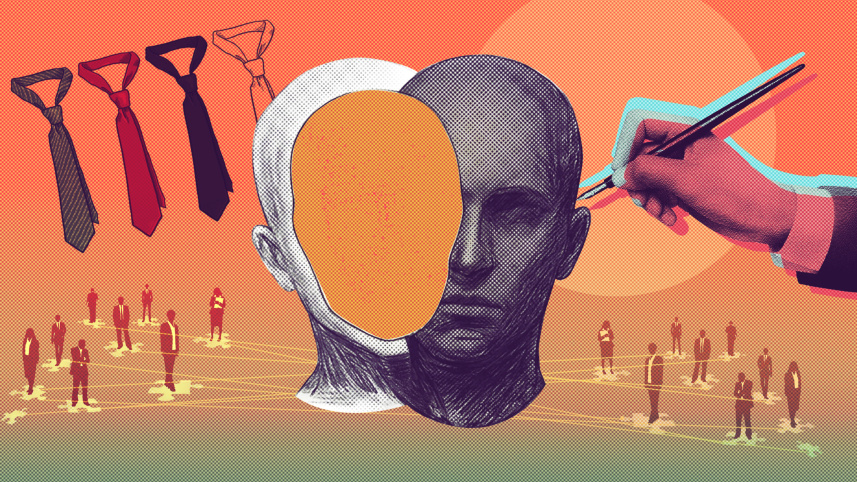
“A fish rots from the head”—this ancient proverb reminds us that when leadership loses its moral compass, the entire system begins to decay.
One of the most overlooked leadership skills among political and corporate leaders these days is not intelligence, strategy or technological expertise, but something far older and far more essential: moral values and virtues. Amid an unprecedented technological advancement that the world has been witnessing, humanity stands at a paradoxical moment in history. Nuclear weapons, artificial intelligence, and cyber warfare systems have given modern societies extraordinary power, yet our ability to manage this power wisely remains deeply uncertain.
 For all latest news, follow The Daily Star's Google News channel.
 The ongoing tensions and confrontations surrounding the US-Israel war against Iran illustrate this challenge clearly. As geopolitical rivalry intensifies in the Middle East, public discussions are often focusing on military capabilities, strategic alliances, and deterrence policies. However, underneath these calculations lie a deeper concern: the erosion of moral restraint in leadership. Pride, rivalry, and political ego are shaping decision-making these days, which means conflicts that could have been resolved through diplomacy are ending up spiralling into dangerous crises.
As history shows us, good people operating within flawed systems can still produce harmful outcomes. Leaders may believe they are defending national interests or protecting economic stability, but if institutions reward aggression, competition, and short-term advantage, even well-intentioned individuals can become agents of destructive decisions. This pattern has appeared throughout history. As societies grow more technologically sophisticated, they often continue to repeat the same moral mistakes: war, exploitation, injustice, and rivalry. Many philosophers have argued that the true struggle of civilisation is not between nations but between two forces within human nature itself: wisdom and ego.
One of the central dilemmas of modern civilisation is that technological intelligence and economic capability have evolved far faster than moral maturity. A nation may develop nuclear weapons capable of annihilating entire populations but be missing the ethical framework to prevent their use. Corporations may command enormous global influence, generating immense wealth, but some of them also exploit labour or natural resources without regard for fairness or sustainability.
Philosopher Bertrand Russell warned that humanity might achieve “technological power without moral progress.” Today, that warning feels more relevant than ever.
Part of the explanation lies in human psychology. While societies have evolved dramatically, many of our instincts remain ancient. Tribal loyalty, fear of outsiders, competition for status, and the desire for dominance once helped humans survive in small communities. In modern societies, however, these same instincts can manifest as nationalism, prejudice, corporate greed, and geopolitical rivalry. Even highly educated leaders are not immune to these impulses. When ego goes unchecked, intelligence can easily transform into arrogance, strategy into hubris, and negotiation into confrontation.
Importantly, the value of moral leadership is not merely philosophical; it is supported by research. A comprehensive review examining more than 300 books, essays, and academic studies on moral leadership published between 1970 and 2018 found that leaders who prioritise ethical values consistently build stronger and more resilient organisations. These organisations tend to see lower employee turnover, while individuals working under morally grounded leaders are more creative, proactive, engaged, and satisfied.
These findings challenge the common assumption that ethical restraint reduces competitiveness. In reality, leaders guided by integrity and responsibility often create more sustainable and effective institutions.
For leaders, ego may be the most dangerous invisible weapon. Decisions driven by pride, prestige or personal ambition can escalate small disagreements into major conflicts. By contrast, leaders guided by humility and empathy remain open to dialogue, cooperation, and peace. Ego-free leadership is, therefore, more than just a moral ideal—it is a practical necessity. Humility allows leaders to listen, learn, and adjust their strategies when circumstances change. Arrogant leaders frequently misjudge risks or underestimate adversaries, increasing the likelihood of unnecessary escalation.
Compassion plays a crucial role in responsible leadership. When leaders consider the human consequences of their decisions, they are less likely to pursue policies that cause unnecessary suffering. Justice must also guide decision-making. Short-term incentives often reward aggression or exploitation, but leaders who prioritise fairness help build societies that are more stable and less prone to conflict. Leaders must recognise that their choices echo far beyond their time in power. Ego-driven decisions may produce immediate political or economic benefits, but they can endanger future generations.
The importance of ethical leadership is not a new idea. Across civilisations and spiritual traditions, moral values have long been recognised as essential to responsible governance. In the Abrahamic traditions—Judaism, Christianity, and Islam—the sanctity of human life is a central principle. Similarly, peace and reconciliation are promoted as moral ideals across cultures. Leaders who pursue dialogue rather than domination align themselves with values that have guided civilisations for centuries.
Political and business leaders today hold unprecedented influence over global stability. Their decisions shape economies, societies, and international relations. Without humility, compassion, and ethical restraint, that power can easily become destructive. History’s lessons are clear: without moral wisdom, societies risk repeating the same catastrophic mistakes.
Therefore, the future of humanity may depend not on the power of our weapons or the sophistication of our technologies, but on the wisdom, integrity, and moral courage of those who lead.
Dr Rubaiul Murshed is a healthcare management expert and founder of Shomman Foundation. He can be reached at rubaiulmurshed@gmail.com.
Views expressed in this article are the author's own.
Follow The Daily Star Opinion on Facebook for the latest opinions, commentaries, and analyses by experts and professionals. To contribute your article or letter to The Daily Star Opinion, see our guidelines for submission.
Comments