


Can Jahanara's story be a turning point for women’s sports in Bangladesh?

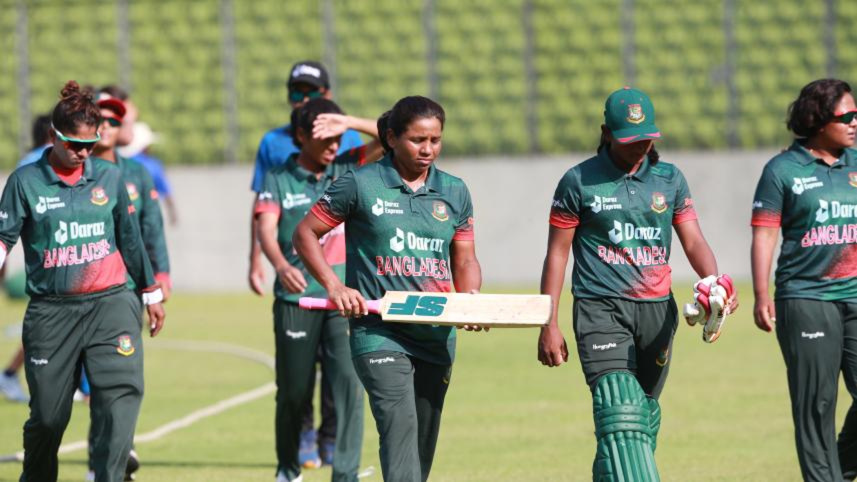
On February 2, the High Court issued an order asking the Bangladesh Cricket Board (BCB) to explain how it handled sexual harassment allegations raised by former women’s national team captain Jahanara Alam. The court directed the board to submit a report within four weeks. The ruling was issued following a writ petition filed in public interest by sport shooter Sabrina Sultana, who argued that repeated failures to address sexual harassment in sports reflect a deeper institutional problem.
The High Court’s intervention is a reminder that safeguarding cannot remain a policy slogan. By asking the BCB to explain, the court has drawn a clear line: institutions need to be judged by the efficacy of their actions rather than the existence of their protocols. This is a warning that failure to provide a safe, gender-sensitive environment for women athletes may itself be unlawful. By questioning why action was not taken earlier and directing the board to properly implement harassment prevention measures, the court has made it clear that ignoring complaints is not a neutral act. This matters because it shifts attention from personalities to systems. It asks a simple question: can women athletes in Bangladesh expect safety, fairness and dignity from the institutions that control their careers?

Jahanara Alam is not an ordinary cricketer. She is one of the most recognisable faces of women’s cricket in Bangladesh and a former captain who represented the country for years. When someone of her standing says she submitted written complaints against the chief selector of the women’s national cricket team, Monjurul Islam, and others as early as in 2022 and received no meaningful response, it forces us to face an uncomfortable reality. If this can happen to a national icon, what protection does a younger, lesser-known player really have?
What makes the story even more painful is where Jahanara is today. Out of frustration and deep disillusionment with cricket in Bangladesh, she has stepped away from the game and is now living in Australia. This is not a professional break or a sporting opportunity. It feels like self-exile, driven by a loss of trust in a system she once served with pride.
When a national team captain says she complained and was not heard, parents lose confidence. Young girls watching from schools and local clubs begin to doubt whether talent and hard work are enough. Many decide that staying quiet is safer than risking their future. Over time, women’s sports will weaken not because women lack ability, but because the environment feels unsafe and unpredictable.
At this point, we must ask what standards already exist and why they have not worked. Cricket does not run in isolation. Global cricket expects member boards to maintain safe environments, enforce codes of conduct and clear behaviour rules, provide trusted reporting mechanisms and channels, and ensure protection for those who speak up. Safeguarding is meant to work before harm occurs, not only after a crisis becomes public.
There is also a broader global principle: Protection from Sexual Exploitation and Abuse (PSEA). The logic is simple: when someone has power over another person’s career or opportunities, that power must never be misused. Organisations also have a duty to make reporting safe and to respond quickly and fairly when concerns are raised. This applies whether the setting is humanitarian work, education or sport, because the risk is the same: people stay silent when they fear consequences.
The timing of the High Court’s intervention is also significant. On January 29, 2026, the government gave final approval to the draft Prevention of Sexual Harassment at the Workplace and Educational Institutions Ordinance, 2026, alongside the Domestic Violence Prevention Ordinance, 2026, signalling that protection from harassment and abuse is now treated as a clear legal obligation, not a moral appeal.
The global safeguarding expectations, PSEA principles, and Bangladesh’s law all point in the same direction. Yet, Jahanara’s experience suggests that, in practice, these protections were either weak, unclear, or not enough to work. That is why the High Court’s recent intervention matters so much. They turn what could have remained a sports controversy into a test of governance and duty of care.
So, the way forward must focus on rebuilding trust, not just completing a process. BCB needs to clearly explain how players can report complaints safely and independently, without fear that doing so will harm their careers. It must demonstrate through action, not just words. And it must be honest about what changes it is making so that similar situations do not arise again.
Women’s cricket in Bangladesh has come too far to be pushed back by fear and silence. Progress is fragile. It depends not only on coaching and performance, but on confidence that institutions will stand with those who speak the truth. Jahanara’s story should not be remembered only as a controversy, but as a warning and, hopefully, as a turning point. Because a country cannot build women’s sport on courage alone, it must be built on protection from sexual exploitation, abuse, and harassment.
Badrul Hassan is a development and humanitarian professional. He can be reached at badrulsocial@gmail.com.
Views expressed in this article are the author's own.
Follow The Daily Star Opinion on Facebook for the latest opinions, commentaries, and analyses by experts and professionals. To contribute your article or letter to The Daily Star Opinion, see our guidelines for submission.
 For all latest news, follow The Daily Star's Google News channel.
Comments