


Can Bangladesh build a democracy that listens?

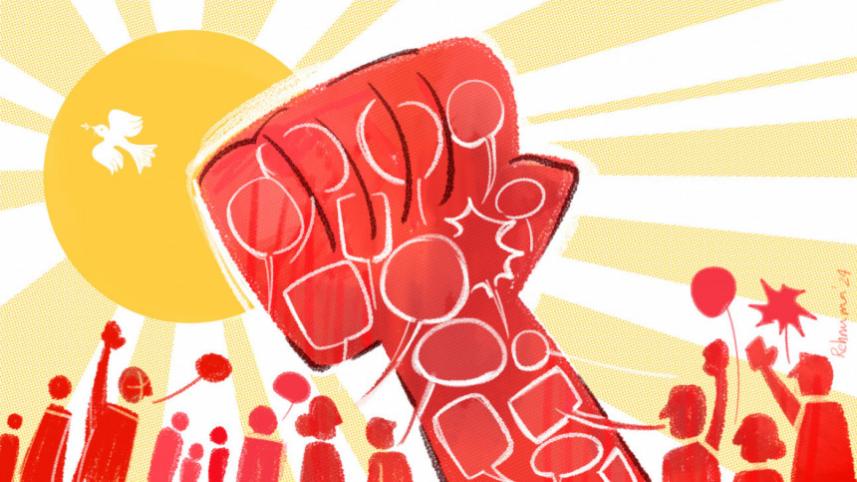
In a quiet village in Bangladesh, an elderly woman sits on a bamboo stool, her eyes half-squinting in the afternoon light. Around her stand a few men, one holding a phone camera, another asking the same question over and over: "Who gave you electricity? Who built these roads? Who made your life easier?" Their tone leaves little room for hesitation. After a few uncertain pauses, the woman says the name they seem to expect. The men smile, satisfied that her words will make a convincing video. That short clip soon travels beyond her courtyard, shared across social media as proof of development. But for those watching closely, it says something much larger about the way politics and power often operate in our time. The old woman speaks, yet her voice does not seem entirely her own.
Scenes like this are not about a single candidate or party. They are part of a larger culture that has slowly shaped the language of democracy in Bangladesh. Electricity, roads, and infrastructure have become central to our idea of unnayan, or development. These achievements matter, and no one would deny their importance. But the way they are spoken about often turns them into a script rather than a dialogue. The citizen becomes a recipient, not a participant. When the question shifts from "What do you need?" to "Who gave you this?", democracy turns into a performance.

This is where Gayatri Chakravorty Spivak's question, "Can the subaltern speak?", becomes deeply relevant in today's reality. Spivak was not suggesting that marginalised people are silent, but that the structures around them decide how and when their voices can be heard. In other words, the poor, the rural, and the unrepresented often speak, yet their words pass through filters of hierarchy, expectation, and power. By the time those words reach the public, they have already been reshaped to fit someone else's story. The old woman in the video appears to be speaking freely, but the moment is carefully arranged. The camera, the questions, the tone—all frame her voice in a way that confirms a message already written. Her agency becomes partial, her speech turned into a symbol of endorsement. In Spivak's terms, she is not voiceless, but her ability to speak on her own terms is denied.
When political campaigns rely on such imagery, they often reduce development to a spectacle rather than a lived reality. The woman's coached gratitude becomes proof that progress has arrived, yet this very gesture hides the deeper questions that define what real development means. True development is not only about electric poles or paved roads; it is about whether that electricity stays on during storms, whether a family can afford the bill, whether the road connects a village to a working market, or whether it simply ends at a political boundary. It is about whether the local health complex has medicine, whether the flood shelter has clean water, whether the schoolteacher shows up every morning, and whether a widow's stipend arrives on time. These are the quiet, everyday measures of development that never make it to campaign videos or banners. When citizens are asked to utter only lines of gratitude instead of sharing these realities, development turns into performance, and the people it claims to serve become invisible.
The habit of turning people's lives into symbols is old. South Asian political culture has long been shaped by patronage, by the idea that the leader gives and the people receive. Over time, this vertical relationship became a familiar rhythm of our public life. The modern campaign has incorporated the viral clip, but the structure of power remains unchanged. The citizen still appears through the lens of gratitude rather than agency. Spivak's theory reminds us that representation can become a form of containment. When we claim to "give voice" to the marginalised, we often end up speaking for them instead. The same happens in rural politics when a villager's story is edited into a campaign reel. Her words are there, but their meaning is framed by others.
It is tempting to think of these issues as harmless, but they shape the moral fabric of how we see citizenship itself. When development is presented as a favour rather than a right, it creates an expectation of thankfulness. The citizen's role becomes to validate, not to question. Gratitude replaces accountability. And once that shift occurs, even the idea of asking for better healthcare or fair wages begins to sound ungrateful. A more humane form of politics would look different. It would begin with listening, not prompting. It would treat the rural woman not as proof of progress but as a participant in defining it. It would ask her what electricity has changed in her life, what remains undone, and what her priorities are. It would acknowledge that people know the shape of their own needs far better than those who seek to represent them.
In this sense, democracy is not the art of being praised, but the discipline of listening. Listening is not a weakness; it is a responsibility. It requires time, humility, and a willingness to hear about discomfort. It also demands that those in power accept that true development is not measured by the number of projects completed, but by whether those projects answer real human needs. The woman in that video deserves to be remembered not for whom she named, but for what her hesitation revealed.
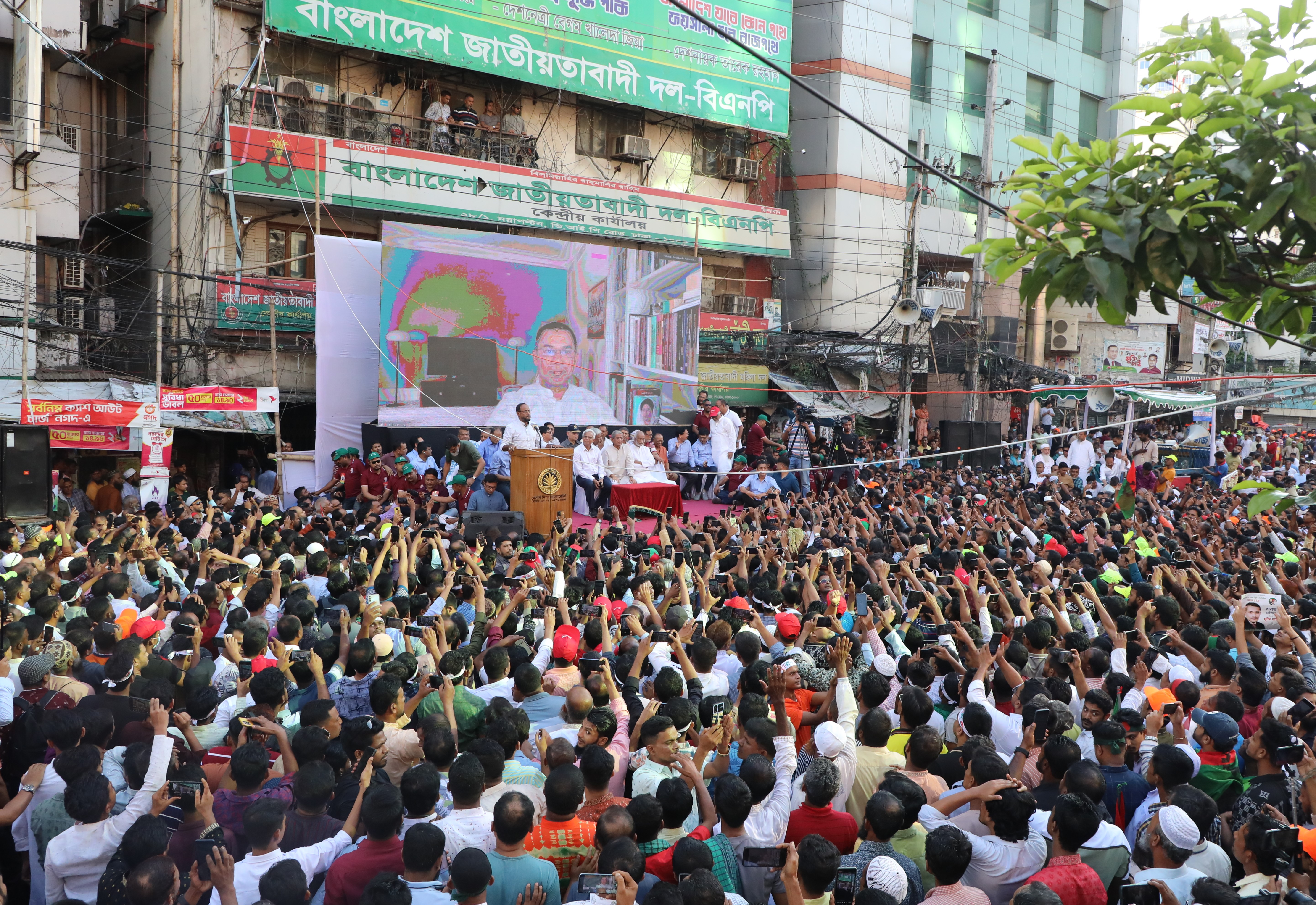
As Bangladesh approaches the national election in February, it might be worth reflecting on what kind of democracy we wish to practice. One built on rehearsed gratitude, or one grounded in real conversation? Progress cannot only be something done for the people; it must also be shaped by them. Development is not charity, and citizenship is not a favour returned. The real strength of democracy lies not in how loudly the leaders speak, but in how deeply they listen and how thoroughly they follow up.
Tahsina Nasir is PhD student at Georgia State University.
Views expressed in this article are the author's own.
Follow The Daily Star Opinion on Facebook for the latest opinions, commentaries and analyses by experts and professionals. To contribute your article or letter to The Daily Star Opinion, see our guidelines for submission.
 For all latest news, follow The Daily Star's Google News channel.
Comments