


A tough fiscal test awaits the next government

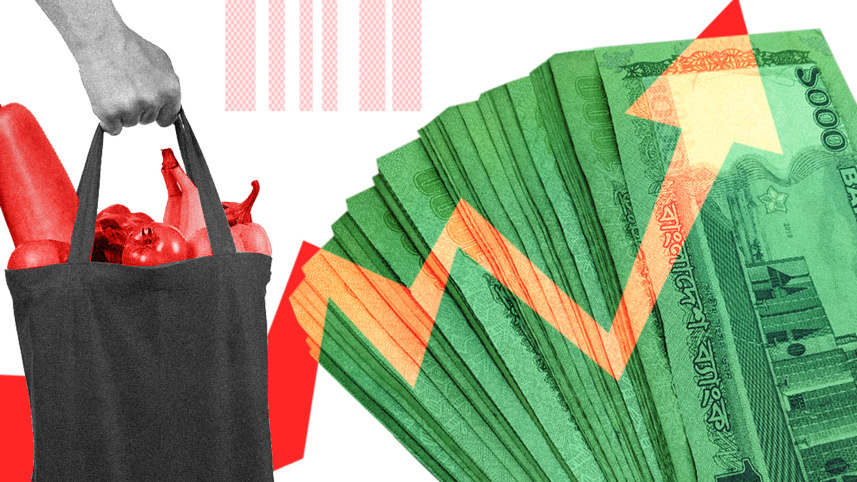
In the run-up to the national election, political parties in Bangladesh are making an array of commitments to voters, such as job creation for the youth, increased allocation for health and education, support for households, social protection, and price relief. These are attractive pledges at a time when citizens are facing prolonged economic hardship. However, in most cases, these pledges are not accompanied by detailed, fully costed fiscal plans explaining how they will be financed. What will be the timeline for implementation? How much additional cost will be required? How much revenue will be forgone if various cuts are offered? What are the implications for the budget deficit and government debt? In the absence of detailed proposals within a concrete fiscal framework, these promises remain only broad economic aspirations.
The lack of fiscal details is problematic on several fronts. The elected government will face a mounting challenge to create fiscal space in an economy already stretched to its limits. Due to weak revenue mobilisation, rising public liabilities, and growing contingent obligations, the manoeuvring space has narrowed sharply. But the demands on public funds, from development spending and social protection to debt servicing and institutional reform, are high. How the next government manages this fiscal balancing act will largely determine the country’s economic trajectory in the post-election period.

At the heart of this challenge lies an alarmingly low tax-GDP ratio. Bangladesh’s tax effort has fallen to a historic low, placing it among the lowest performers globally. In FY2025, the tax-GDP ratio was 6.8 percent, down from 7.38 percent in FY2024. During the first half (July-December) of FY2026, the National Board of Revenue recorded a shortfall of Tk 46,000 crore in revenue collection. This reflects deep structural weaknesses in the revenue system. For over a decade, revenue targets have been repeatedly missed, undermining budget credibility. This has forced the government to rely on external and domestic borrowing. Therefore, fiscal policy has increasingly become reactive rather than strategic.
Expenditure pressures are set to intensify sharply in the coming years. The government faces a growing list of financial obligations that cannot be postponed further. The Bangladesh Power Development Board needs to clear unpaid bills amounting to more than Tk 20,000 crore, largely owed to power producers. The government has also committed to injecting Tk 20,000 crore into Sammilito Islami Bank as part of its efforts to stabilise the banking sector. These fiscal burdens are likely to constrain the government’s policy choices.
Another challenge would be implementing the recommendations of the pay commission set up by the interim government. The proposal includes salary increases for government employees by 100 to 142 percent. While there is a legitimate case for adjusting wages after years of high inflation, the fiscal implications are substantial. Implementing these recommendations without adequate preparation could crowd out development expenditures and exacerbate fiscal deficits.
External vulnerabilities compound these domestic pressures. Although the foreign exchange reserves have recovered to $28.68 billion as of January 29, 2026 from $20.49 billion on July 31, 2024, they remain insufficient to comfortably meet rising import bills and external debt obligations. Though remittance increase in July-November of FY2026 is high at 17.07 percent, the growth is lower than that in July-November of FY2025. The recent trend in export income shows a worrying sign as export growth was only 0.62 percent in July- November of FY2026 compared to 9.76 percent during the corresponding period in FY2025. The country’s external debt reached $112 billion by September 2025, reflecting years of heavy reliance on foreign borrowing to finance infrastructure and budget deficits. Servicing this debt will place increasing strain on public finances, particularly as concessional financing becomes scarcer after graduation from the Least Developed Country category in November this year.
Domestic borrowing has emerged as a double-edged sword. To address persistent revenue shortfalls, the government has increasingly relied on the banking system. While this has provided short-term relief, it has also inflated domestic debt. Reduced liquidity in the banking system raises borrowing costs for businesses. Net credit to the government sector has increased by 32.19 percent between December 2024 and December 2025.
Another aspect of fiscal management is public expenditure. Political parties will also need to focus on public spending when making economic pledges. Although the allocation for the Annual Development Programme (ADP) is not necessarily at the optimal level due to resource constraints, the ADP implementation rate has declined since FY2022. In July-November of FY2026, the ADP implementation rate against the original budget allocation was 11.5 percent, the lowest in the last 10 years.
Improving the efficiency and quality of public spending is also crucial for creating fiscal space. Wasteful and low-priority spending has coexisted with the chronic underfunding of critical sectors, including health, education and social protection. A culture of fiscal discipline should replace the politics of entitlement. Misuse of public resources, such as tax-free luxury vehicles and excessive perks for MPs and ministers, has undermined public trust. Recent reports about plans to build large luxury apartments for ministers only deepen concerns. particularly at a time when the government lacks sufficient resources for urgent development activities. When hospitals lack basic equipment, schools struggle with overcrowded classrooms, social safety nets are under strain, and the line for low-priced essentials under the government’s open market sales (OMS) programme keeps getting longer, such expenditures are economically indefensible and morally shameful.
The incoming government will have to make austerity a top priority at the leadership level for fiscal consolidation. Enhancing accountability mechanisms is essential to improving expenditure efficiency. Parliamentary oversight of public funds must be strengthened, and regular sharing of budget execution data can help ensure value for money and prevent misappropriation. Medium-term fiscal planning should underpin annual budget preparation. Usually, budgets focus on the short term, overlooking future liabilities and risks.
The incoming government’s success will depend on how effectively it manages this complex fiscal transition. Restoring fiscal space involves more than just balancing budgets. The new government should redefine the social contract between the state and the people. A fair and efficient tax system and public spending that clearly benefit people could help rebuild trust and legitimacy.
Dr Fahmida Khatun is an economist and executive director at the Centre for Policy Dialogue (CPD).
Views expressed in this article are the author’s own.
Views expressed in this article are the author's own.
Follow The Daily Star Opinion on Facebook for the latest opinions, commentaries, and analyses by experts and professionals. To contribute your article or letter to The Daily Star Opinion, see our guidelines for submission.
 For all latest news, follow The Daily Star's Google News channel.
Comments