


Ensure quality medical education
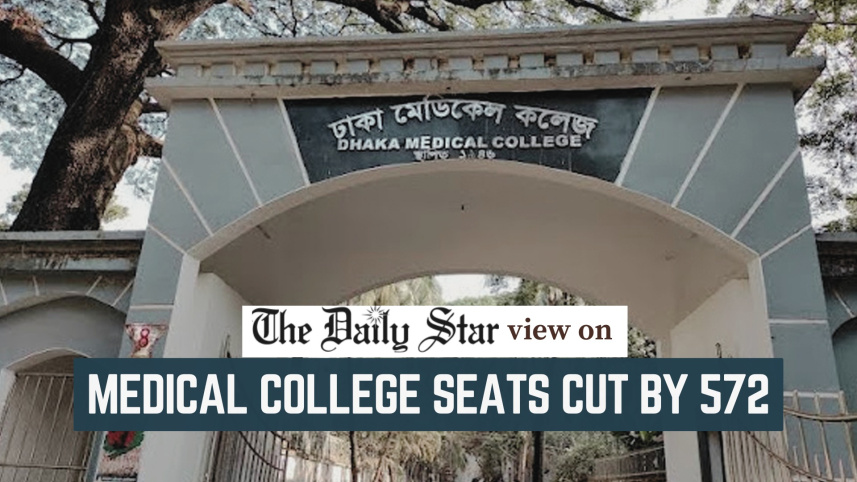
The government's decision to cut the number of seats in public and private medical colleges appears to be a well-considered move, given the long-standing crisis in ensuring quality medical education. According to the 2025–26 admission circular, the total number of seats has been reduced by 572, with 5,100 seats across 37 government medical colleges (down from 5,380) and 6,001 seats in 66 private medical colleges (down from 6,293). Reportedly, the health ministry made the decision after conducting a comprehensive assessment of all medical colleges considering their infrastructure, teacher-student ratio, hospital facilities, and other criteria. While the government's intention to improve standards is commendable, the approval of a new private medical college with 50 seats raises questions.
The country's medical colleges, both public and private, have been struggling with numerous crises for years, including a severe shortage of teachers. According to a recent report, 43 percent of teaching posts in government medical colleges remain vacant, jeopardising medical education. Earlier this year, students of Sher-e-Bangla Medical College in Barishal took to the streets protesting the acute teacher shortage. Another report revealed that a lack of classrooms, overcrowding, and insufficient hands-on training have posed major challenges for students of Habiganj Medical College. Reportedly, even after around seven years, the college has yet to provide practising opportunities for intern doctors, which is most unfortunate. Situations in private medical colleges are even worse, with many lacking the infrastructure and resources for adequate academic activities.

The previous administration increased the number of seats by 1,030 for the 2023–24 session, a move that was widely criticised. Many new colleges were also established during the Awami League's 15-year tenure. After the fall of the AL last year, the interim administration announced plans to rationalise seat allocations to uphold academic standards. Therefore, reducing seats was long overdue. The authorities have also suspended student enrolment at six private medical colleges this year, which is indeed a bold decision.
However, the quality of medical education cannot be ensured by merely cutting seats or suspending enrollments. The government must focus on addressing the persistent teacher shortage, upgrading infrastructure and laboratory facilities, and providing the necessary resources to support both students and faculty. Additionally, strict enforcement of academic standards is essential to ensure that graduates are well-trained and competent. Only through such comprehensive measures can the country build a robust healthcare system and uphold the integrity of its medical education.
 For all latest news, follow The Daily Star's Google News channel.
Comments