


Time for urgent, climate-smart reforms in agriculture

One of the biggest challenges Bangladesh is facing now—and one that is likely to intensify in the coming years due to climate change—is its food production capacity. Rising salinity in coastal areas, the depletion of groundwater, and increasing temperatures are likely to pose some of the most serious threats to our agriculture in general, and rice production in particular. We must, therefore, urgently address this issue if we are to avert a future food crisis.
In Bangladesh, the average temperature has risen by 0.24 degrees Celsius per decade since 1981, and is estimated to climb another 1.5-2 degrees by 2050, according to the Bangladesh Meteorological Department and the IPCC's Sixth Assessment Report. Agro-scientist Mohammad Kamruzzaman Milon, in a recent article published by this daily, predicts that rice yields may dip by 15-20 percent "unless irrigation, fertiliser, and varietal strategies are re-engineered" for future resilience. The author also pointed out some significant innovations already achieved by our scientists, the timely implementation of which could help significantly mitigate those critical problems.

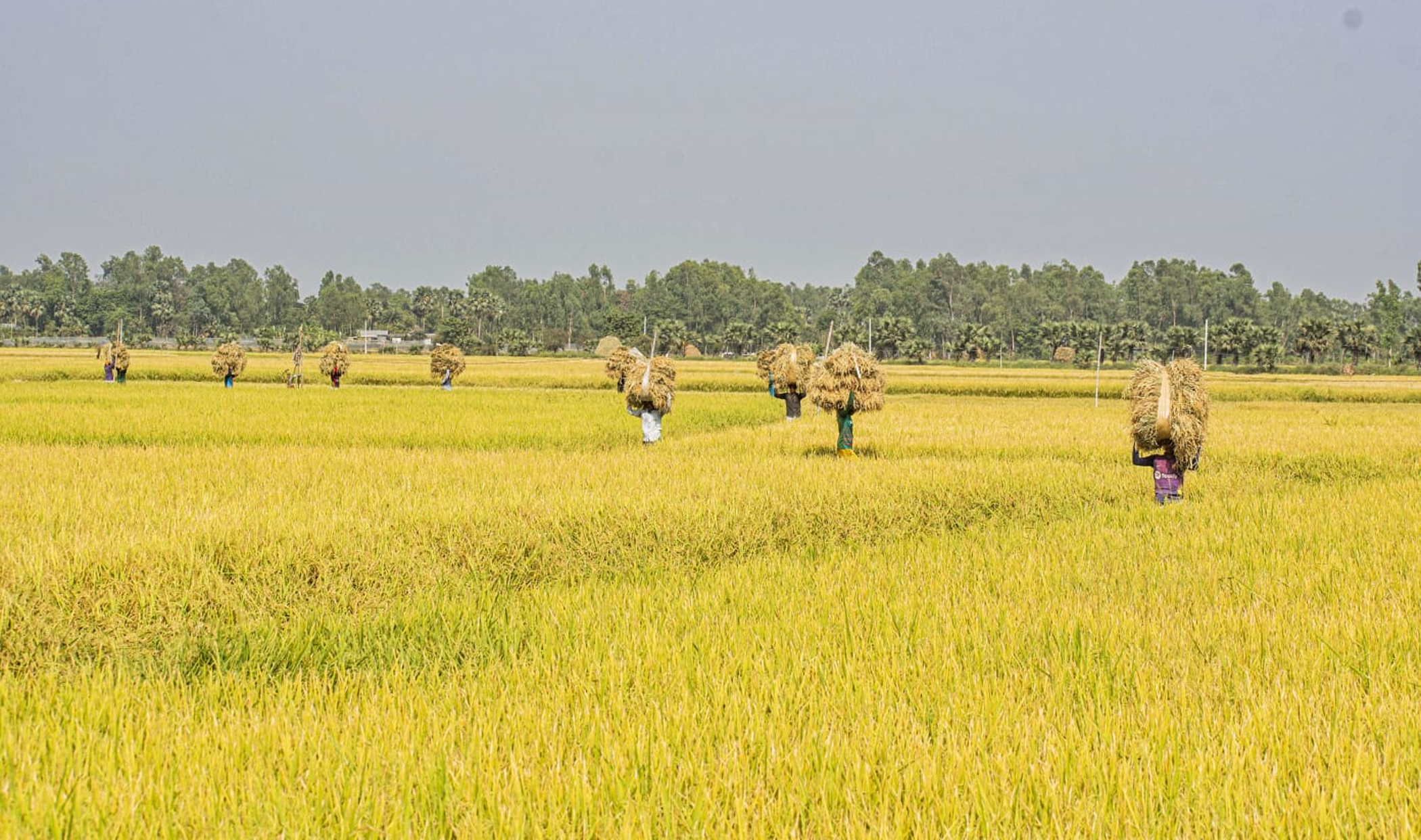
Through field research in Gazipur, Rajshahi, and Satkhira, a set of low-carbon agronomic practices has been developed that can simultaneously raise yields, conserve resources, and cut greenhouse gas emissions. The findings suggest that Bangladesh can pioneer climate-smart measures that produce more rice with less water, less energy, and a lower carbon footprint. The author identified several innovations that are already in place and can contribute significantly to combating the impact of climate change on our food production system. These are scientifically proven and have been recognised internationally as acceptable options.
What we urgently need now is the required funding as well as changes in our policy direction. The author makes five suggestions that we find worthy of consideration: making all climate and satellite datasets publicly available to enable research by universities and other competent bodies, including those interested in funding such initiatives; integrating verified efficiency and mitigation indicators into the agricultural credit scoring framework of Bangladesh Bank; introducing performance-based incentives that reward farmers for reducing carbon emissions; expanding concessional credit and capacity-building programmes for women- and youth-led agritech ventures; and building a unified monitoring, reporting and verification framework that links agronomic data with financial data.

We seldom write editorials on views expressed in our op-ed columns. However, we find the suggestions made by Mohammad Kamruzzaman to be of sufficient merit and practical value to urge the government and relevant authorities to take immediate note and attach the highest priority to their implementation. We often desperately search for solutions to the myriad problems we face. But this is a case where solutions may already be in our hands. All we need to do is focus on them, coordinate the various bodies that need to be engaged, provide the necessary funding, and expedite implementation. After all, climate challenges must be addressed urgently. We urge immediate action in this area.
 For all latest news, follow The Daily Star's Google News channel.
Comments