


How agricultural innovations can feed a nation and keep emissions low
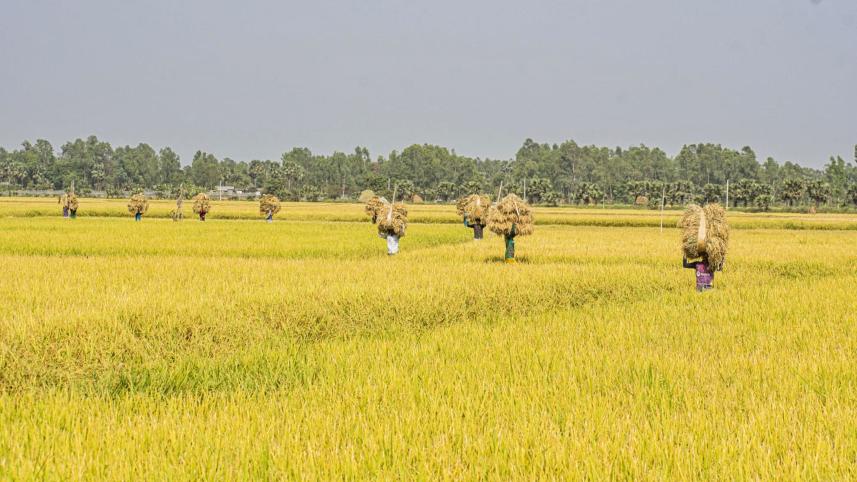
For five decades, Bangladesh's agriculture has powered food security and rural livelihoods, yet climate change now threatens that success. Average temperatures have risen by 0.24 degrees Celsius per decade since 1981 and could climb another 1.5-2 degrees Celsius by mid-century according to the Bangladesh Meteorological Department (BMD) and IPCC's Sixth Assessment Report (AR6). Rainfall is erratic, groundwater is declining, and salinity, drought, and flash floods increasingly converge. My own analyses across Bangladesh Rice Research Institute (BRRI) research stations show rice yields could fall by 15-20 percent unless irrigation, fertiliser, and varietal strategies are re-engineered for resilience.
The data are sobering, but they also reveal how transformation is possible. Over the past decade, field trials in Gazipur, Rajshahi, and Satkhira prove that a portfolio of low-carbon agronomic practices—Alternate Wetting and Drying (AWD), Direct Seeded Rice (DSR), short-duration stress-tolerant varieties, and the locally fabricated Prilled Urea Applicator (PUA)—can simultaneously raise yields, conserve resources, and cut greenhouse-gas emissions. As documented in an article in Rice Today, these innovations show that Bangladesh can pioneer climate-smart intensification: producing more rice with less water, energy, and carbon.

Precision water, smarter nitrogen
The irrigation method AWD is one of the most promising interventions for rice cultivation. In Bangladesh, multi-location experiments during 2018-19 found that AWD reduced cumulative methane (CH₄) emissions by approximately 37 percent compared to continuous flooding, while grain yields were unaffected. Meanwhile, global meta-analysis indicates AWD reduces CH₄ emissions by approximately 51.6 percent and global-warming-potential (GWP) by almost 46.9 percent, though nitrous oxide emissions increases by 44 percent. The broader water-saving potential of AWD is supported in Bangladesh: pilot work reports water savings of approximately 25-30 percent in regions where farmers pay volumetrically for irrigation. However, widescale adoption remains constrained by three critical enablers: reliable electricity for pumps, disciplined scheduling of dry-rewet cycles, and transition to volumetric water billing instead of flat per-area charges. Without these enablers, AWD's full potential will remain restricted to demonstration plots rather than scaling across the national rice landscape.
The second innovation DSR replaces labour- and fuel-intensive puddled transplanting and has been shown to reduce methane emissions by up to 47 percent and save both diesel and groundwater. Yet its national adoption rate remains below 10 percent. At pilot sites in Rajshahi and Bogura, DSR plots reduced irrigation cycles from 10 to six, but weed management and lack of mechanised seeding remain major constraints. Without affordable seed drills and technical guidance, most farmers are reluctant to risk an entire season's harvest.
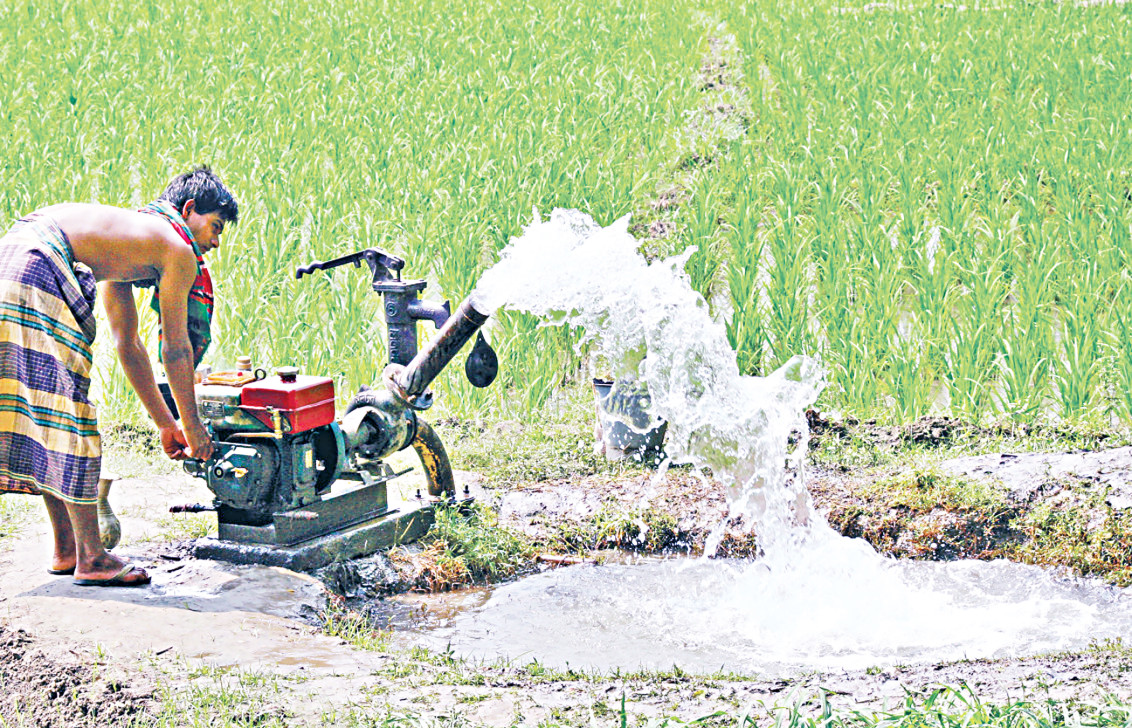
A third frontier in rice‐sector innovation is genetic adaptation. Short-duration and stress-tolerant varieties, for example, BRRI dhan74, BRRI dhan81, and BRRI dhan84 (maturing in about 120–135 days), allow farmers to escape late-season heat or flood damage. Coastal strains such as BRRI dhan97 and BRRI dhan99 have been developed for high-salinity environments. Meanwhile, submergence-tolerant varieties such as BRRI dhan51 and BRRI dhan52 have demonstrated survival for up to two weeks under water. When these genetic tools are integrated with irrigation practices like AWD or DSR, there is a dual benefit—mitigation (via reduced flooding duration) and adaptation (via risk avoidance).
Finally, the PUA exemplifies Bangladesh's capacity for frugal, high-impact innovation. Developed by BRRI engineers and refined through field trials I have supervised since 2016; this lightweight device delivers prilled urea precisely to the crop's root zone. It enhances nitrogen-use efficiency by around 30 percent, cuts nitrous-oxide emissions by 10-20 percent, and typically boosts rice yield by about 10 percent. Considering that rice cultivation uses roughly 25 lakh tonnes of urea annually in Bangladesh, nationwide deployment of the PUA could reduce fertilser demand by nearly 7.5 lakh tonnes each year—saving over $300 million while simultaneously lowering import costs and agricultural greenhouse-gas emissions.
From relief to resilience finance
Technology is not the main barrier in adopting these practices, finance and governance are. Farmers rarely profit from saving water, face frequent power outages, and lack credit for mechanisation. Although agricultural lending has grown (with a target of Tk 380 billion in FY 2024-25), climate related allocation to 25 ministries in FY2026 was lower than the previous fiscal year.
What we need is National Risk Mitigation Facility—a blended fund pooling government, banking, and donor capital to underwrite climate-smart loans and weather-index insurance. A linked digital finance dashboard between the Ministry of Agriculture and Bangladesh Bank could track every climate-smart agricultural (CSA) loan against hazard maps and gender inclusion metrics. Such integration would turn resilience data into bankable collateral.
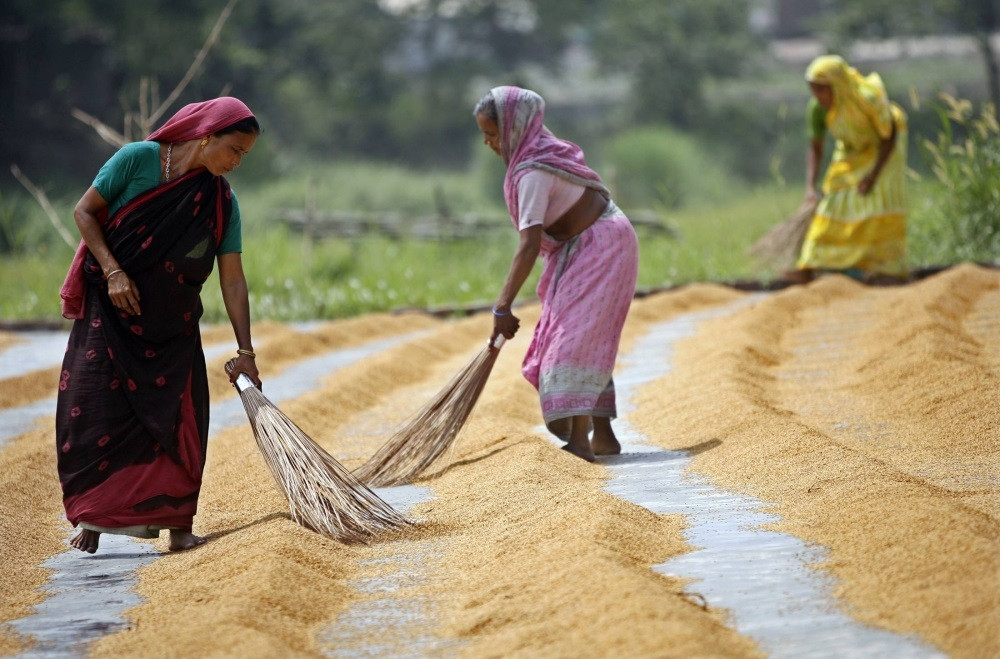
Lightweight mechanisation reduces women's labour burden, while youth-run service hubs are emerging as viable enterprises. Female farmers using the PUA reported saving roughly one-third of fertiliser labour hours. Digital advisory tools—Khamari App, Krishoker App, and e-Krishi—further improve decision-making and credit access. Embedding gender and youth indicators in national monitoring systems will ensure that participation is measurable and rewarded. For instance, the Khamari App's recommendations led to about 18 percent reduction in fertiliser cost and about six percent yield increase in Boro trials.
Evidence from the climate frontline
Crop-modelling simulations project that Boro yield can decline by about five percent by 2030s and 20 percent by 2050, with smaller but significant losses for Aman and Aus. Combining AWD, stress-tolerant varieties, improved drainage, and staggered transplanting can recover 10-15 percent of these losses. In short, smart irrigation and nutrient management can halve the climate penalty on yields.
But Bangladesh is not uniform. The Barind uplands face heat and drought; the haor basin suffers flash floods; coastal deltas battle salinity and cyclones; and southeastern hills erode under heavy rain. Each landscape requires a tailored CSA "menu": heat-tolerant rice with micro-insurance in the Barind, drainage and submergence-tolerant cultivars in the haor, salt-tolerant varieties with solar drainage in the coast, and agroforestry in the hills. One policy cannot fit all.
Five strategic measures can help tackle the challenge. First, ensure that climate and satellite datasets from the BMD and Bangladesh Space Research and Remote Sensing Organization are publicly available. Open data will empower financial institutions, insurers, and researchers to quantify risk, design climate-linked credit, and verify carbon-saving outcomes across agriculture. Second, integrate verified efficiency and mitigation indicators—such as AWD, DSR and PUA—into the agricultural credit scoring framework of the Bangladesh Bank. Linking finance to verified resource efficiency will reward innovation and accelerate low-emission farming. Third, introduce performance-based incentives that pay farmers per tonne for carbon-dioxide-equivalent reduction through climate-smart practices such as AWD, DSR, or mechanised fertiliser deep placement. A digital finance dashboard jointly managed by the Ministry of Agriculture and Bangladesh Bank could automate these payments and ensure transparent tracking. Fourth, expand concessional credit and capacity-building programmes for women mechanisation entrepreneurs and youth-led agritech ventures. Digital tools like e-Krishi, the Khamari App, and Krishoker Janala demonstrate scalable pathways to enhance financial inclusion and technology access and lastly, build a unified monitoring, reporting and verification (MRV) framework that links agronomic data from the Department of Agricultural Extension (DAE) with financial data from the Bangladesh Bank. This system will align agricultural performance measurement with national adaptation and mitigation priorities outlined in the National Adaptation Plan 2023-2050 and the Bangladesh Delta Plan 2100.
Also, traditional metrics—tonnes per hectare—must give way to emissions per tonne and resilience per taka invested. When every subsidy or credit line carries a climate-performance tag, Bangladesh can shift from counting inputs to accounting for impact. That transparency will unlock green finance and link local adaptation to global mitigation.
Bangladesh has policy blueprints, but integration is slow. What's missing is a unified delivery system connecting climate data, finance, and field adoption. Success will hinge on institutional coordination and the courage to move from demonstration to delivery. If that resolve is found, Bangladesh's rice fields could become a global example, proving that innovation, inclusion, and investment can align to feed a nation, while keeping carbon emission minimal.
Mohammad Kamruzzaman Milon is senior scientist and agro-climate change expert at the Bangladesh Rice Research Institute (BRRI). He can be reached at milonbrri@gmail.com.
 For all latest news, follow The Daily Star's Google News channel.
 Views expressed in this article are the author's own.
Follow The Daily Star Opinion on Facebook for the latest opinions, commentaries, and analyses by experts and professionals. To contribute your article or letter to The Daily Star Opinion, see our guidelines for submission.
Comments