


Spread of fungal ‘superbug’ in NICUs is quite alarming
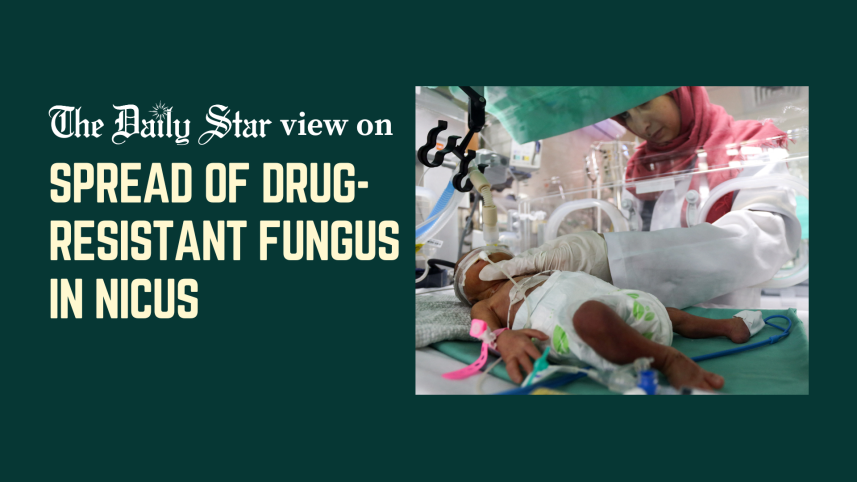
We are alarmed by the spread of the highly drug-resistant fungus Candida auris (C auris) in the neonatal intensive care units (NICUs) of hospitals, as revealed by a new icddr,b study. Between August 2021 and September 2022, researchers from the institution examined newborns admitted to the NICUs of two hospitals in Dhaka—one public and one private. Of the 374 infants studied, 32 were found to be colonised with C auris, and one developed a bloodstream infection. Given that C auris infections in low- and middle-income countries have an estimated mortality rate of around 70 percent, this is a public health emergency that requires urgent action.
Declared an urgent antimicrobial-resistant threat by the US Centers for Disease Control and Prevention (CDC), C auris can survive for weeks on hospital surfaces, spread rapidly among patients, and often resist multiple antifungal drugs. It is particularly dangerous for people with weakened immune systems, including preterm and critically ill infants, making NICU babies an extremely high-risk group. According to the icddr,b study, among the colonised patients, 44 percent were colonised at enrolment, while 56 percent became colonised after admission. Seven of the 32 colonised patients died. Alarmingly, 82 percent of the colonised patients were resistant to fluconazole, the first-line treatment for invasive fungal infections. Another crucial finding that warrants attention is that 81 percent of the colonised cases were delivered by Caesarean section and had longer hospital stays.

The heavy presence of C auris in hospitals serves as a stark warning about the broader threat of antimicrobial resistance (AMR) in the country. A recent WHO report has also revealed a worsening AMR situation, with some critical antibiotics showing resistance rates ranging from 79 to 97 percent. Health experts have previously warned that around 70 percent of deaths in our ICUs are linked to AMR infections. Bangladesh has made significant progress in combating communicable diseases over the past decades, but the rise of multidrug-resistant pathogens risks undermining those achievements. As the head of the AMR Research Unit at the Infectious Diseases Division of icddr,b has noted, this study is a necessary first step towards preventive action.

It is now up to the health authorities to act swiftly on its findings. To limit the spread of C auris within NICUs and other hospital settings, regular disinfection with chlorine-based cleaning agents, strict hand hygiene among healthcare workers, and immediate isolation of infected or colonised patients should be made mandatory. Equally important are continuous monitoring and data-sharing between hospitals and public health authorities to detect outbreaks early and prevent further transmission. Moreover, the misuse of antibiotics across the country must be urgently addressed through proper regulations and strict enforcement.
 For all latest news, follow The Daily Star's Google News channel.
Comments