


How logical is LDC graduation deferment?
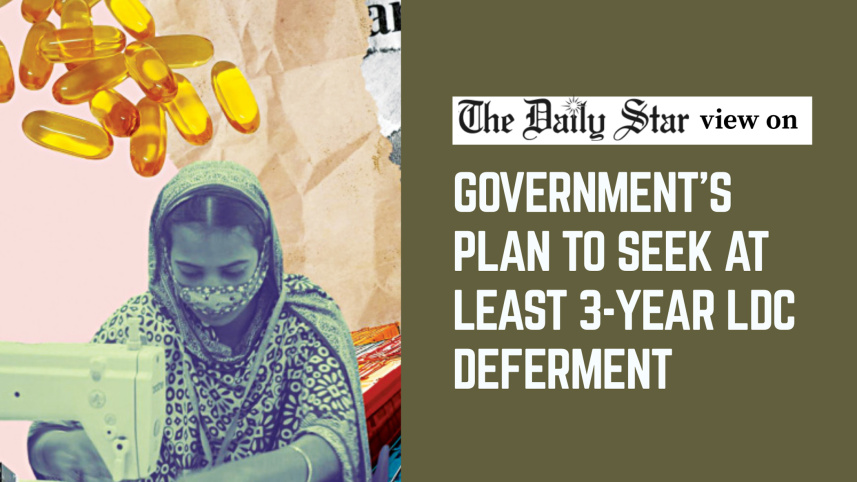
Bangladesh’s graduation from the Least Developed Country (LDC) category to developing nation status is no longer a matter of if, but when. The country has met all criteria for graduation set by the United Nations Committee for Development Policy (UN CDP). But while this may bring us prestige, we must be pragmatic about the timing, for graduation also carries significant economic and developmental implications. It is crucial to assess whether we are fully prepared to absorb the economic shock that may accompany the transition. This requires dialogue at home and careful negotiation abroad. In this context, the new government’s plan to seek a deferment of at least three years (business leaders have asked for six) seems logical.
Undoubtedly, graduation will have huge impacts on major industries such as apparel and pharmaceuticals. Currently, under LDC provisions, Bangladesh enjoys zero-duty access for 73 percent of its exports. The apparel sector alone accounts for over 80 percent of export earnings. After graduation, exporters will face tariffs of nearly 12.5 percent in the European Union once the temporary extension expires. Bangladesh could lose up to 14 percent of its exports, equivalent to $8 billion annually, once it no longer has LDC’s preferential trade benefits. In addition, there may be stricter compliance obligations in labour and environmental and intellectual property standards.

Another concern is the US trade agreement that has created an additional layer of uncertainty. The combined impact of losing LDC privileges and facing high tariff or compliance conditions imposed by the US trade policy will intensify pressure on exporters. The government should, therefore, review specific components of the US trade agreement and re-engage with the Trump administration to amend certain provisions, thereby better safeguarding Bangladesh’s economic sovereignty.
The withdrawal of the TRIPS waiver—a temporary waiver by the World Trade Organization (WTO) allowing flexibility on intellectual property patent rules—will also affect local pharmaceuticals, which currently produce affordable generic versions of life-saving medicines such as cancer treatments and HIV antiretrovirals. Once patent protections are enforced, medicine prices will rise sharply, affecting not only profits but also public health. A deferment could give local pharmaceutical companies the leeway to produce active pharmaceutical ingredients domestically. Regulatory frameworks could be strengthened, and smoother transitions in intellectual property compliance could be negotiated.
Business chambers, banking leaders, and sectoral associations have cited existing bottlenecks—such as energy shortages, high borrowing costs, and regulatory inefficiencies—that challenge graduation preparedness. A national dialogue is therefore urgently needed to bring together the voices of relevant ministries, Bangladesh Bank, export associations, pharmaceutical representatives, economists, and civil society. Preparedness must include a smooth transition strategy, trade diversification plans, bilateral trade negotiations, central bank reforms, and infrastructure improvements.
Bangladesh also needs to negotiate with the UN and coordinate with co-graduating countries such as Nepal and Laos. There are precedents for postponing graduation: Myanmar, Timor-Leste, and the Solomon Islands have all deferred under compelling circumstances. Bangladesh, too, has faced economic turbulence before and after the July uprising, which must be taken into account. Negotiations to seek deferment will require a credible roadmap backed by data and reform commitments from the government.
 For all latest news, follow The Daily Star's Google News channel.
Comments