


A blatant lack of empathy
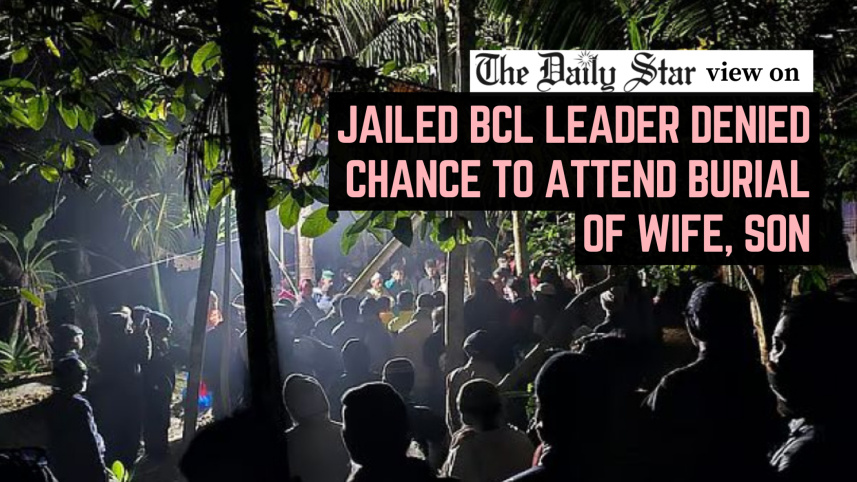
We are shocked and disturbed by the deaths of 22-year-old Kaniz Suborna Swarnali and her nine-month-old child in Bagerhat; the mother allegedly killed her infant before taking her own life. According to news reports, she was driven by prolonged mental distress while her husband, Jewel Hasan (also known as Saddam), president of the banned Chhatra League’s Bagerhat Sadar unit, remained in jail and was not granted parole. Despite family claims that they had applied for his parole, he was denied the chance to attend their janaza and could only see their bodies at the prison gate. This tragic incident exposes a serious failure of the state to show basic human compassion for prison inmates and demands proper investigation.
Reportedly, Saddam was arrested in Gopalganj following the fall of the Awami League regime and has been charged in several cases, and Swarnali had been mentally broken by despair during her husband’s prolonged imprisonment. Left without meaningful support, she struggled with emotional distress, social pressure and uncertainty. According to the family members, this despair drove her to take her own life after killing her infant. While proper investigations must determine the facts, the larger question remains: who will bear responsibility for these tragic deaths?

The incident also raises broader concerns about Bangladesh’s parole system and its implementation. Although existing rules allow emergency parole in the event of a close relative’s death, rigid procedures and a lack of compassion often undermine their purpose, as this case painfully illustrates. While the Jashore District Commissioner’s Office has stated that they did not receive any parole application, a copy circulated on social media suggests that the family did apply to the Bagerhat district authorities. It later emerged that, since Saddam had been transferred to Jashore jail last December, the application should have been submitted to the Jashore district authorities instead. Because parole was denied, Saddam was forced to bid farewell to his deceased wife and son at a prison gate. The incident demonstrates bureaucratic failure and the glaring lack of empathy on the state’s part.
We must also confront the wider political reality that this case demonstrates. Under successive governments, including the authoritarian Awami League regime, political cases kept individuals in jail for prolonged periods without following due process, often with catastrophic consequences for their families. The persistence of this practice, even under the interim government, seriously questions our collective commitment to justice.
 For all latest news, follow The Daily Star's Google News channel.
Comments