


Tarique Rahman and the burden of leadership
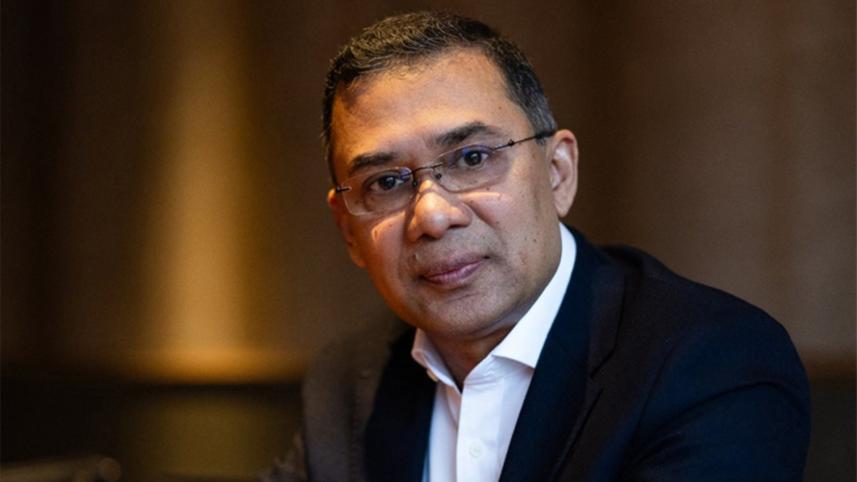
Tarique Rahman’s formal elevation to the position of the chairman of BNP confirms what has effectively been the case for several years. Since Khaleda Zia’s imprisonment in 2018, he has directed the party’s strategy and organisation. What gives this moment significance is not the announcement itself, but the political conditions under which it arrives. Bangladesh is approaching a crucial political transition amid persistent economic strain, still-floundering institutions, and growing public exhaustion with confrontational politics.
BNP has now fully entered its second generation of leadership. This carries symbolic weight, but it also concentrates responsibility. Ziaur Rahman founded the party while in power, with state institutions and public momentum working in his favour. Khaleda Zia assumed leadership during a difficult period, but it was a time when a degree of tolerance and political courtesy still shaped competition, and pro-democracy parties could unite around a common goal. Tarique Rahman takes charge in a far more fragile environment where the political landscape is saturated (with increasingly assertive pressure groups), trust in state institutions remains persistently low, and public grievances are rising alongside expectations of redress.

Coming as it does at this critical juncture, the timing of his ascension leaves little room for adjustment. With the national election barely a month away, the gap between leadership consolidation and the possibility of governing is extremely narrow. At the same time, inflationary pressures, fragile law and order, and a deteriorating economic situation constrain policy choices at the national level. Regional and global uncertainties further reduce the margin for error. Leadership at this stage demands discipline, clarity, and restraint, not rushed improvisation.
One factor that defines the present political landscape is the absence of Awami League from active competition, particularly in the election. This absence does not simplify politics; it intensifies it. Without a dominant ruling party in play, the usual mechanisms of counterbalance and shared accountability are missing. Expectations no longer disperse across multiple actors; they converge on those closest to power.
In this setting, BNP is no longer viewed as one contender among many. It is being evaluated as the central political force in waiting. Decisions and statements on dissent, law enforcement, institutional independence, and political inclusion are no longer tactical signals; they are read as indicators of future governance. Without an established governing party to absorb pressure, early missteps will carry outsized consequences.
The role of young people sharpens this pressure further. Bangladesh’s youth were central to pushing the Hasina government out, driven by frustration with closed political space, limited economic opportunity, and a sense of stalled futures. This was not a symbolic protest; it was a generational intervention. Young people now make up the largest share of the population—constituting about 44 percent of the 12.76 crore listed voters—and they are no longer willing to accept symbolic change or recycled narratives.
For many young voters, BNP represents the organisation with the scale, experience, and reach necessary to govern. This, however, does not amount to unconditional trust. It is a conditional expectation. This generation is not interested in revisiting old conflicts. It wants answers. How will jobs be created? How will the economy be stabilised? Will the persistent cost-of-living crisis be resolved? Will freedom of expression be protected? Will institutions function as they should? Will there be safety at home or on highways? Will the environmental crisis be addressed?
BNP’s leadership history adds another layer of pressure. Khaleda Zia was widely regarded as a measured leader and never lost an election (at the constituency level) while heading the party. Even under hostile conditions, she maintained the party’s electoral discipline and avoided overreach during campaigns. Her authority rested not only on legacy but also on results.
In this regard, the upcoming election represents untested ground for Tarique Rahman. This will be the first time he contests a national election as the party’s formal leader. More importantly, it is the first time he is leading an entire election from the front—shaping strategy, public messaging, alliances, and internal discipline while under intense public scrutiny. This is not only a test of electoral appeal; it is a test of judgement under pressure.
Tarique Rahman does enter this moment with one clear advantage: firm control over the party. Over the past seven or eight years, he has consolidated authority across leadership levels and grassroots networks. Organisational coherence provides stability. But party discipline does not automatically translate into governing capacity. Managing a state demands a different set of skills, particularly in a political environment without traditional counterweights.
Age and experience heighten expectations rather than reduce them. Ziaur Rahman formed BNP at 42. Khaleda Zia assumed leadership at 38. Tarique Rahman takes charge at 60, after many years outside the country. That distance offered time for reflection and reassessment, but it also raised expectations of restraint, foresight, and institutional thinking.
One reality is unavoidable. BNP is now led by a second generation, while Bangladesh is navigating a critical political transition without its oldest and longest-serving ruling party in the field. Legitimacy in such moments cannot be inherited or deferred; it must be built through conduct, early signals, and respect for institutions.
So, for Tarique Rahman, this moment cannot be defined simply by winning office. It will be defined by whether his leadership can meet the unusually concentrated expectations without any escalation or exclusion. Whether this transition marks renewal or repetition will be decided by decisions made when pressure is at its highest.
Azman Rahman is a political commentator.
Views expressed in this article are the author's own.
Follow The Daily Star Opinion on Facebook for the latest opinions, commentaries, and analyses by experts and professionals. To contribute your article or letter to The Daily Star Opinion, see our guidelines for submission.
 For all latest news, follow The Daily Star's Google News channel.
Comments