


In the backyard
High tech agriculture in Bangladesh
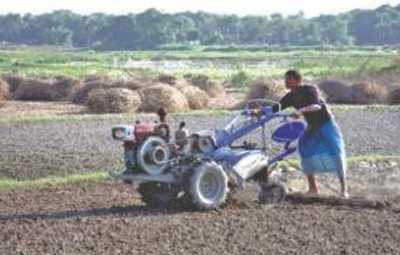
Use of modern agricultural technology in Bangladesh Photo: STAR
In 2012 the boro rice production reached such a high point that policy makers are contemplating export in limited quantity. This leap in production has been possible due to application of advanced technologies for various operations. The first breakthrough in rice production was in early 1960s when high yielding varieties (HYV) of rice was introduced during the boro season. Mechanized irrigation in the form of low lift pump, deep tube-well and shallow tube-well along with chemical fertilizers and pesticides that played a key role in increased production In the 20th century, the mechanization of farming is considered one of the top ten engineering accomplishments. In this regard, Bangladesh is no exception. Today's self-sufficiency in rice production could not be achieved without farm mechanization of some of the important operations. Irrigation was the first operation that was mechanized. For threshing rice, Japanese type pedal threshers and for weeding in wet-land weeders were introduced to a limited scale. Tillage was the next operation that was mechanized. The present cropping intensity of 181 per cent could not have been achieved without mechanization of tillage operation. At present about 85 per cent of land preparation is done mainly by power tillers and to some extent by tractors. As pedal thresher proved inadequate to thresh bulk production of rice, power thresher has been developed and it is estimated that more than 60 thousand are in use in the country. Entire maize shelling is done by power corn sheller. Though the percentage of agricultural labourers has come down to 50 per cent from 90 per cent the total number of agricultural labourers now engaged in in farming has more than doubled in comparison to what it was in 1950s. Yet labour shortage becomes acute during sowing/planting and harvesting time. These two operations need immediate mechanization. Wage of agricultural labourer is so high that use of imported rice transplanter, reaper and combine harvester became cost effective and farmers are using those in limited areas. It is expected that these two operations would be mechanized shortly throughout the country. Tissue culture for seedling multiplication and other biotechnological innovations contributed greatly in modern agriculture. Hybrid seeds of rice, maize, vegetables and other crops also have a great contribution to overall agriculture production. Many seasonal vegetables can now be grown all the year round. Development of protected agriculture in Bangladesh made it possible to produce tomato during the rainy season. Growing high value vegetables and flower in hydroponics have been demonstrated and waiting for commercial production. If all the modern high techs in agriculture that are available in Bangladesh are adopted judiciously, it is expected that in spite of 1.36 per cent population growth and one per cent reduction of cultivable land every year, farmers, agricultural scientists and extension personnel will be able to feed the growing population.
 For all latest news, follow The Daily Star's Google News channel.
Comments