


World leaders recommit to end NTDs
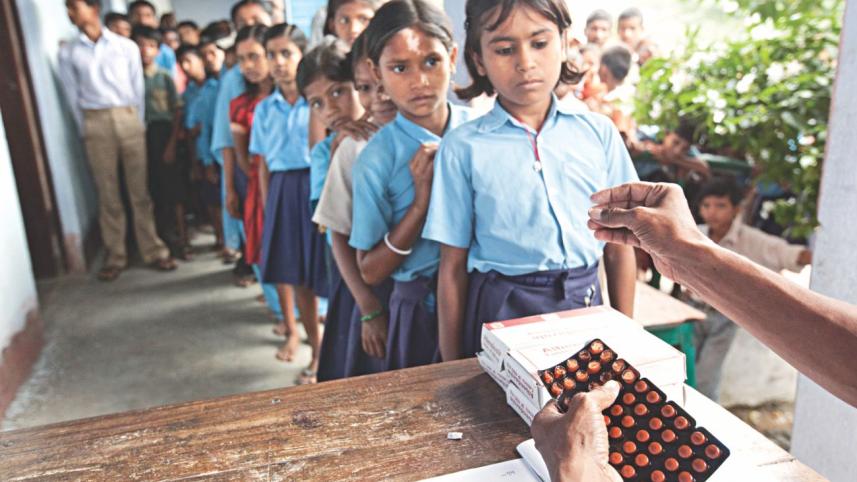
Past week, leaders from governments, pharmaceutical companies and charitable organisations convened at a five-day summit in Geneva to pledge new commitments to the collective efforts to control and eliminate neglected tropical diseases (NTDs).
The summit coincided with the launch of the World Health Organisation's (WHO) fourth report on NTDs, showing transformational progress against these debilitating diseases, and a commitment by the United Kingdom to more than double its funding for NTDs.

The meeting comes five years after the launch of the London Declaration on NTDs, a commitment by the public and private sectors to achieve the WHO goals for control, elimination and eradication of 10 NTDs.
NTDs are some of the oldest and most painful diseases, afflicting the world's poorest communities.
A new report titled Integrating Neglected Tropical Diseases in Global Health and Development by the WHO revealed that more people are being reached with needed NTD interventions than ever before. As more districts, countries and regions eliminate NTDs, the number of people requiring treatments has decreased from 2 billion in 2010 to 1.6 billion in 2015. The report highlights include:
* Lymphatic filariasis (LF) racing toward finish line: In the last year, eight countries (Cambodia, Cook Islands, Maldives, Marshall Islands, Niue, Sri Lanka, Togo and Vanuatu) eliminated LF, and 10 other countries are waiting on surveillance results to verify elimination.
* Eighty-two percent decrease in visceral leishmaniasis (VL) cases in India, Nepal and Bangladesh: Since 2008, cases of VL across India, Nepal and Bangladesh have decreased by 82% due to improvements in vector control, social mobilisation of village volunteers, collaboration with other NTD programmes and drug donations from industry partners.
Governments and other donors announced new commitments at the summit to expand the reach and impact of NTD programs around the world. The Bill & Melinda Gates Foundation committed $335 million in grants over the next four years to support a diverse group of NTD programmes focused on drug development and delivery, disease surveillance and vector control.
In the five years since the London Declaration, companies have donated over 7 billion treatments that, with the support of partners, now reach nearly 1 billion people every year. These donations, worth an estimated $19 billion from 2012 through 2020, greatly multiply the impact of donor investments; USAID estimates that each dollar invested in delivery leverages $26 worth of donated drugs.
Though tremendous progress has been made in reducing the burden of NTDs, global control and elimination targets cannot be met without increased financial support, stronger political commitment and better tools to prevent, diagnose and treat the diseases. Partners from private philanthropy, affected country governments and cross-sector partnerships recommitted to leveraging their respective resources and expertise to fill critical gaps in the past week.
Although nearly a billion people received NTD treatments in 2015, more funding is needed to ensure that NTD programmes reach all people and communities affected by the diseases. WHO estimates that 340 million people in Sub-Saharan Africa could be covered by new investments of $150 million per year through the year 2020.
Strong leadership from affected countries is vital to sustaining progress against NTDs, particularly in the face of shifting economic climates and competing health priorities. Despite these challenges, some countries are increasing financing for NTD programmes and integrating them into national health systems.
 For all latest news, follow The Daily Star's Google News channel.
Comments