


Transport workers' families in hardship

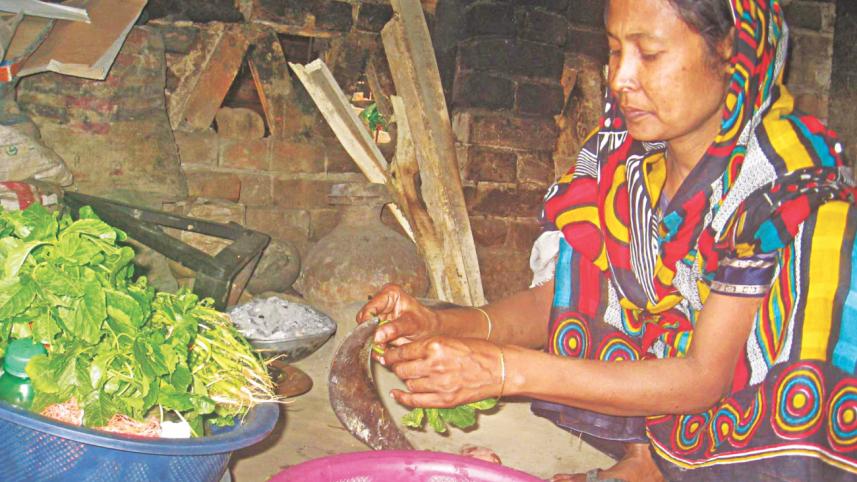
Shahanara Begum, 35, felt relieved that she could buy a cauliflower on credit from a street vegetable vendor. Her five children will get some vegetable curry in their next few meals instead of potato and pulse over the past four days.
"The grocery owner from whom we buy necessaries declined to sell me anything on credit until I pay previous dues. So I returned empty-handed, having nothing to cook on Saturday," she said while smashing spices to prepare a vegetable curry for lunch on Sunday.

Shahanara's husband is a truck driver who lives with his family in a small rented house in downtown Jessore.
Things in his family had not been as bad before the ongoing political crisis began. But once it started, things went only from bad to worse, leaving the children half-fed more often than not, even starved at times unless some neighbour extended a generous hand offering them leftovers.
The ongoing blockade and persistent hartals, enforced by the BNP-led 20-party alliance since January 6, has dwindled incomes of tens of thousands of transport workers whose lives have been hardest hit among other groups of people.
During normal days, transport workers do not usually face severe hardship. However, quite a good number of them are now struggling to provide for their families.
Many rickshaw pullers, motorized three-wheeler drivers and helpers, and construction, hotel and restaurant workers have also been found to be going through similar ordeals and hardship.
To tackle the crisis, many have already borrowed from microfinance organisations or from various informal sources while their dues to groceries are piling up for dearth of regular works.
"Many drivers are asking for rice on credit. But we are refusing them because our cash flow is already stretched," said Rabiul Islam of Apon Store, a rice trader in Jessore town.
People from lower income groups, especially drivers and transport workers, cleared their dues every week before the political unrest. Now their payments have become irregular while the credit exposure of the store has risen, he said.
To fight the deepening hardship, those working at the lower ladder of the transport sector, have found it safe to switch their jobs.
36-year old Mohammad Elias Fakir usually worked for loading and unloading goods from buses in Jessore. He used to earn Tk 300- 400 a day. As his income dwindled due to the blockade and shutdowns, Elias has begun to sell a traditional snack, known as Khaja, to cope up.
"I am the breadwinner of my family. I have no other way than earning regularly," he said.
Shahanara's husband, however, was not in a position to switch his job and had to sit idle at home for nearly one and a half months after the truck he drived was vandalised in Bogra last month. The truck owner thereafter decided not to allow his truck to ply the roads and highways.
So Shahanara, who had no savings, had no choice but to depend on buying necessaries on credit. Her dues to the shop have risen nearly to Tk 6,000 since the blockade.
The transport workers' ordeals continue to increase as there is no sign of an end to the ongoing political crisis.
"We would not have to face such hardship and humiliation if everything went normally and vehicles plied the roads," said Shahanara. "It is possible to keep the children unfed for a single meal but how can I keep them unfed for two consecutive meals?"
 For all latest news, follow The Daily Star's Google News channel.
Comments