


Road safe if laws enforced
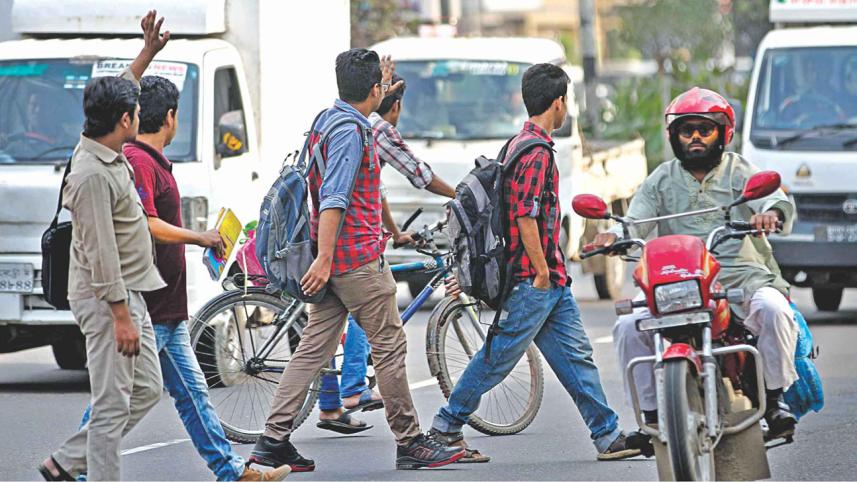
Enforcement of traffic laws, improvement of roads, and stopping the irregularities in issuing driving licenses and fitness certificates could reduce deaths and injuries on roads, speakers told a roundtable yesterday.
They also suggested that more coordinated efforts by all government bodies concerned were needed in the execution of steps taken to improve road safety.

The speakers urged transport owners to stop paying their drivers based on the number of trips they make and instead appoint them as regular employees since the trip-based payment encourages drivers to drive fast and, in cases, recklessly.
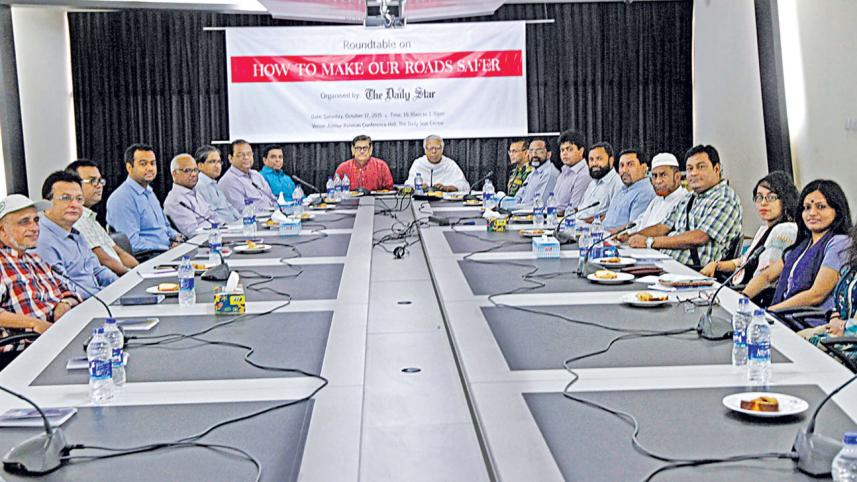
The Daily Star organised the discussion titled "How to Make Our Roads Safer" at The Daily Star Centre.
BRTA's Director (technical) Col AR Mohammad Parvez Mazumder emphasised the need for addressing three issues -- improvement of roads, quality vehicles, and building awareness among pedestrians and drivers -- to reduce the number of road accidents.
Faruk Talukder Sohel, managing director of Shohagh Paribahan (Pvt) Ltd, thinks jaywalking pedestrians were the major reasons for road accidents. Design and engineering faults in roads and their occupation by temporary markets, vendors and industrial units also play significant roles in causing accident, he said.
He said the BRTA issued licenses to around 15 lakh drivers when there are 22 lakh registered vehicles. This makes it clear that around 7 lakh vehicles were being driven by drivers without licenses.
Talukder stressed the need for developing a partnership between the BRTA and private bodies to train drivers and issue licenses to them.
Mirajul Moin Joy, international affairs secretary of Nirapad Sarak Chai Andolon, demanded the formation of National Road Safety Authority to strictly implement the laws, and coordination of different ministries for improving road safety.
Mozammel Hoque Chowdhury, secretary general of Bangladesh Passengers' Welfare Association, alleged that corruption in the process of issuing fitness certificates and driving licenses at the BRTA was a problem.
Those who have sufficient skills to drive do not get licenses while those who cannot drive manage to get licenses, he claimed.
In addition to the 7 lakh driver shortages, he said around 10 lakh Nosimon-Kariman ply the roads of the country without any registration and with unlicensed drivers.
Another representative of the association, Mohiduddin Ahmed demanded the inclusion of road-safety issue in school textbooks and wide publicity of the issue in the media to make children and people aware of road safety.
Bangladesh Sarak Paribahan Sramikw Federation Organising Secretary Moklesur Rahman said many skilled drivers in Bangladesh cannot get licenses as they do not have institutional academic certificates.
"We demand that licenses be issued with easier conditions to them after checking whether they know traffic rules, signs and signals, are physically fit and have a few years of experience in driving," he said.
Secretary General of Bangladesh Road Transport Owners Association Khandaker Enayet Ullah identified reckless overtaking and road-crossing as major reasons for accidents.
He said as per the Motor Vehicles Ordinance, 1983, drivers are supposed to work a maximum of eight hours a day, but it was not possible to maintain that under the current circumstances.
Apurba Kumar Saha, manager (technical) Brac Road Safety Programme, said most of the road safety committees at district and upazila levels were inactive. Accidents at local level would surely be reduced if those became active, he said.
Referring to a study, he said 30 percent of vehicle maintenance cost could be saved if it was operated by a skilled driver.
 For all latest news, follow The Daily Star's Google News channel.
 Barrister Sara Hossain, honorary executive director of Bangladesh Legal Aid and Service Trust (BLAST), urged law enforcement agencies to implement the existing laws to improve road safety.
AKM Fazlur Rahman, executive director of Centre for Injuries Prevention and Research, Bangladesh, suggested maintaining a proper database of accidents, deaths and injuries and the number of vehicles.
WHO representative Mostafa Zaman said the accurate figure of road fatalities was not available as all accidents were not recorded by police. He said deaths on roads could not be stopped if licenses were given to those "who could only differentiate cows and goats".
BRTA Secretary Showkat Ali said there might be some problems in issuing licenses and fitness certificates and that they were trying to give people services. He said a modern Vehicle Inspection Centre would be operational in December to minimise alleged irregularities and corruption in fitness checking.
Writer and right activist Syed Abul Maksud said unbridle corruption and political influence were the major reasons behind chaos in the transport sector. Coordinated efforts from all stakeholders, including transport operators, passengers, and authorities concerned, were crucial to bringing discipline in the transport sector, he said.
Terming the road-safety issue an urgent national concern, The Daily Star Editor and Publisher Mahfuz Anam said, "We don't want to blame anybody. We want a solution."
The issues of taking money in the name of number plates and RFID tags without giving people any benefits and mobile phone use while driving and crossing the road were also discussed at the roundtable moderated by Associate Editor of The Daily Star Shahedul Anam Khan.
Meanwhile, addressing a discussion on "Demand for Coordinated Effort to Check Road Accidents" at Prothom Alo office, Road Transport and Bridges Minister Obaidul Quader said bringing discipline on roads and in transport operations was a difficult and challenging job.
He said despite having limitations, he was trying sincerely to do his job.
Nearly half of the 144 dangerous turns across the country had been mended to reduce the risk of accidents, Quader said.
However, he said reckless driving could not be controlled unless drivers change their mindsets.
The minister claimed that road accidents reduced by a big margin due to removal of slow-moving three-wheelers from 22 highways.
Comments