


Doctor with a difference

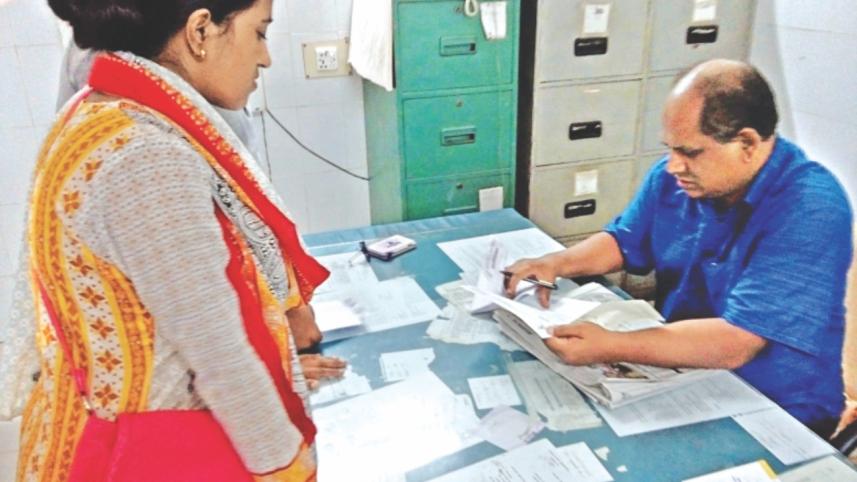
About 10 patients were still in the queue, each screaming for emergency care as the clock struck 12:30am on Saturday at Dhaka Medical College and Hospital.
The on-duty emergency medical officers could hardly breathe as most of the patients were accident victims. One of them, stabbed by a mugger, was profusely bleeding, while a woman was moaning from pain in the abdomen.

The physician who took responsibilities of treating all these patients was Dr Firoz Ahmed, 50. He was doing his shift since 9:00pm on Friday, late hours of the eid day.
He also worked for the night shift starting from 9:00pm on Wednesday and worked until 8:00am on Thursday, the day before eid.
He was the physician who treated patients on the occasion of the Eid-ul-Fitr too.
Dr Firoz, accompanied by a lady colleague, attended more than 400 patients until 8:00am on Saturday. Then he turned up again at the emergency section for the morning shift on Sunday.
"This is a very serious position to be in. Different patients have different problems and they all need emergency attention. The challenge is to examine every one and decide in a few minutes to which section to transfer them," Dr Firoz said later.
Usually, emergency medical officers of DMCH see 40-45 patients every hour and more than 400 patients during each shift.
Though the DMCH has 15 emergency medical officers, almost half of them were on leave on the occasion of Eid-ul-Azha. Only eight doctors dealt with the patients each day in three shifts.
The hospital fixes a four-day roaster for the eid vacation.
Dr Firoz has been practicing privately as a physician since 1989 and became a government doctor in 1994. He was appointed as the emergency medical officer two years ago.
"Somebody had to do it," he told The Daily Star over the phone yesterday. He sounded swamped with work as his colleagues were yet to return from home.
"Life of people depends on the attention of physicians posted here," said Dr Firoz.
Lack of resources mounts further pressure on the physicians as they cannot afford admitting more than 30 percent of the patients in need of emergency treatment.
"Since I stayed in Dhaka during Eid-ul-Fitr and Eid-ul-Azha, I thought I would fill in for my colleagues," he added.
 For all latest news, follow The Daily Star's Google News channel.
Comments