


Three Bangladeshi films make Asia’s top cinema list
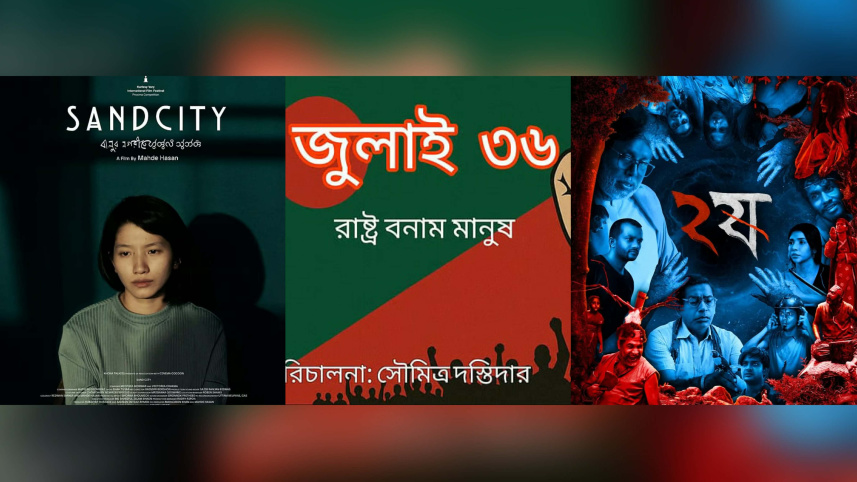
Three Bangladeshi films have secured places on the list of Asia’s 20 Best Films of 2025, compiled by film-focused website Asian Movie Pulse. Mahde Hasan’s “Balur Nogorite” ranks fifth on the list, while “July 36: Rastro Banam Nagorik” by Soumitra Dastidar stands at 17th position, and “Dui Shaw”, directed by Nuhash Humayun, is placed 19th.
Asian Movie Pulse has been working since 2009 to promote Asian cinema on the international stage through film criticism, festival coverage and interviews. Since 2019, the platform has been publishing annual lists highlighting Asia’s best films. The selection is drawn from widely discussed festival films across the continent, focusing on artistic diversity, narrative innovation, distinctive genres, socio-political movements and cultural contexts.

In its report, Asian Movie Pulse notes that contemporary Asian cinema is steadily strengthening its global presence. Filmmakers from countries once considered peripheral are now producing strong artistic works that revisit history, memory and state violence from perspectives rarely seen internationally. The report also highlights how Saudi Arabia and Turkey are refining distinct cinematic languages by bridging local realities with global audiences, while Iran continues to remain a major force despite strict controls, with filmmakers combining social realism and aesthetic ambition.
Topping the list is Iranian film “It Was Just an Accident”, which won the Palme d’Or at last year’s Cannes Film Festival. Directed by Jafar Panahi, the film tells the story of a former political prisoner seeking revenge for torture endured in jail. Ranked second is “Irqalla: Dreams of Gilgamesh”, which follows a nine-year-old child’s search for his father against the backdrop of contemporary Iraq. Another Iranian film, “Cutting Through Rocks”, directed by Mohammad Jabara Al-Daradji, is placed third, portraying the hopes and aspirations of a rural Iranian woman. Saudi Arabia’s road movie “Hijra”, directed by Shahad Ameen, ranks fourth, centring on bonds formed between women of different generations. Bangladesh’s “Balur Nogorite” completes the top five.
Bangladesh’s three films
The report states that Bangladesh’s cinematic rise in Asia can no longer be ignored, noting that filmmakers are carving out a distinct space through confident experimentation across genres and formats.
Describing “Balur Nogorite”, the report calls it “a small-scale arthouse gem that moves forward with a smooth and comforting rhythm.” The film stars Victoria Chakma as Emma, around whom the story revolves. Emma rides a scooter across the city collecting sand for her cat’s litter box, and during one such trip, she discovers a severed finger. The film had its world premiere at the Karlovy Vary International Film Festival last year, where it won the Grand Jury Prize, before travelling to several international festivals. Most recently, it received an invitation to the Glasgow International Film Festival.
On “July 36: Rastro Banam Nagorik”, Asian Movie Pulse writes that the film is “an important document of resistance,” foregrounding the voices of those who dared to reclaim history. Soumitra Dastidar’s film is set against the backdrop of anti-autocracy movements, portraying the events of the July mass uprising and how Bangladesh’s youth stepped forward to redefine their future.
Regarding Nuhash Humayun’s “Dui Shaw”, the report notes that the film “captivates audiences through several remarkable stories.” While acknowledging certain weaknesses, it describes the work as a commendable anthology. Nuhash first drew attention with “Shob”, and later directed the anthology series “2Sh” in 2024. The Chorki Original series moves away from conventional horror, instead exploring inner human desires and rage through stories of fear.
 For all latest news, follow The Daily Star's Google News channel.
Comments