


‘The Other Voice’: Rewriting the space of women’s art in Bangladesh

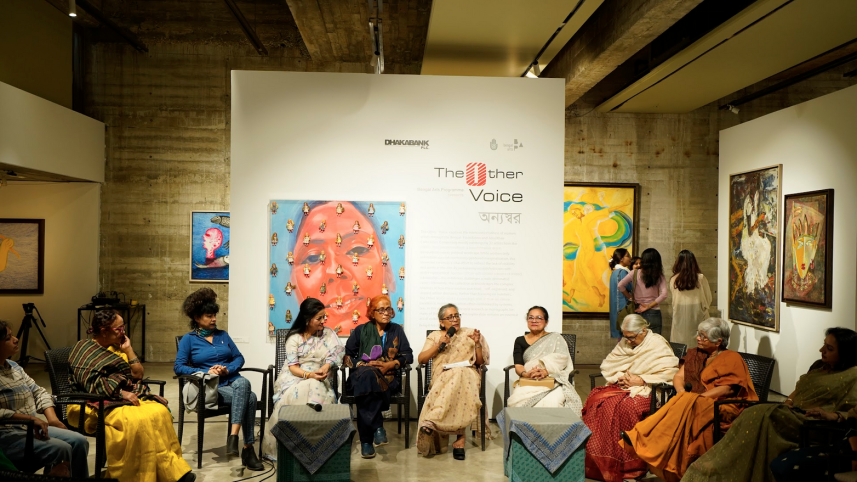
In a city where conversations around gender and representation are frequent, moments of genuine re-calibration remain rare. “The Other Voice” arrives at Bengal Shilpalay on January 28 not as a slogan-driven exhibition, but as a visual argument—one that insists women’s artistic practices in Bangladesh cannot be reduced to footnotes, themes, or exceptions.
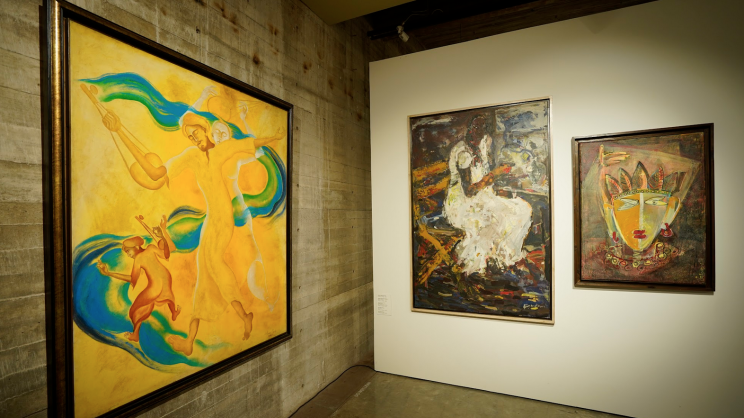
Presented by the Bengal Arts Programme, the exhibition resists framing women’s art as a singular narrative. What emerges instead is a deliberate refusal of stylistic unity. Moving through the gallery, viewers encounter fluid shifts between abstraction and representation, between the intimate and the political, often within the same canvas. This multiplicity is mirrored in the spatial arrangement itself. At times, the density of works can feel visually demanding, with contrasting languages sharing close quarters, yet this tension feels integral rather than incidental.

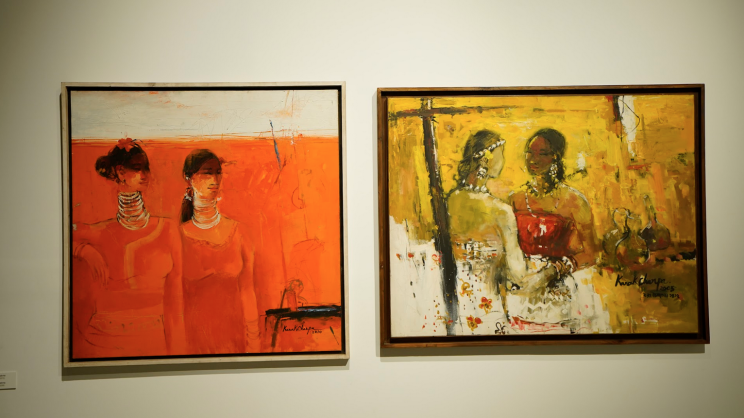
Veteran artists such as Professor Farida Zaman, Kanak Chanpa Chakma, Nazlee Laila Mansur, and Nurunnahar Kazi anchor the exhibition with practices shaped over decades. Their presence establishes continuity, not hierarchy. Positioned alongside lesser-known and emerging figures, these works resist linear narratives of progress, suggesting instead that women’s artistic contributions have always existed in parallel, though unevenly acknowledged.
Across generations, several works turn inward, drawing attention to domestic spaces, paired figures, and bodies at rest or in suspension. These are not nostalgic representations, but reflections on how private realms have historically shaped women’s ways of observing, recording, and responding to the world.
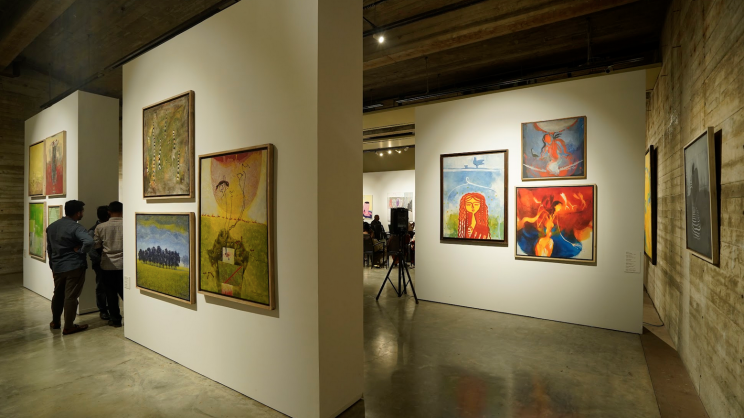
What lends “The Other Voice” its weight is its attention to uneven artistic trajectories. Some practices were interrupted, others overshadowed, and many insufficiently documented. Rather than isolating these artists as rediscoveries, the exhibition places them in conversation with more recognised figures, allowing their works to coexist without discrimination. In doing so, it raises uncomfortable but necessary questions about how art histories are written—and who is excluded when visibility becomes the primary measure of value.
A panel discussion accompanying the exhibition echoed this ethos, emphasising collaboration over competition and underscoring how shared spaces can foster solidarity rather than comparison. The exhibition itself operates in much the same way, privileging dialogue over resolution.
In a cultural moment driven by immediacy, “The Other Voice” insists on reflection. It does not claim to complete the narrative of women’s art in Bangladesh, but it makes clear that any version of that history without these voices remains fundamentally incomplete.
 For all latest news, follow The Daily Star's Google News channel.
Comments