


I dedicate my ‘Ekushey Padak’ to Lubna Marium: Arthy Ahmed

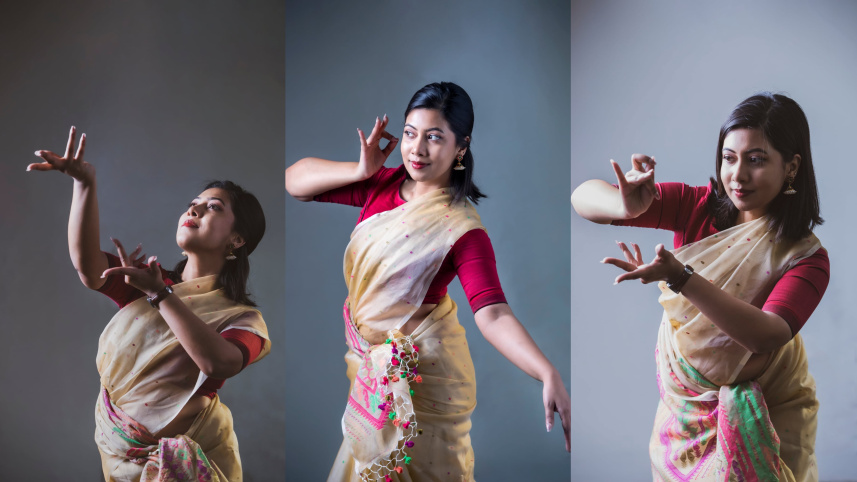
Classical dance in Bangladesh has long been associated with discipline, hierarchy and years of rigorous training. It is rarely viewed as a space for those who did not follow the traditional path from an early age. With the Ekushey Padak, the country’s second-highest ranking civilian award, in the field of dance now attached to her name, Arthy Ahmed’s work is being recognised for both her performances and her broader vision of inclusivity within classical practice.
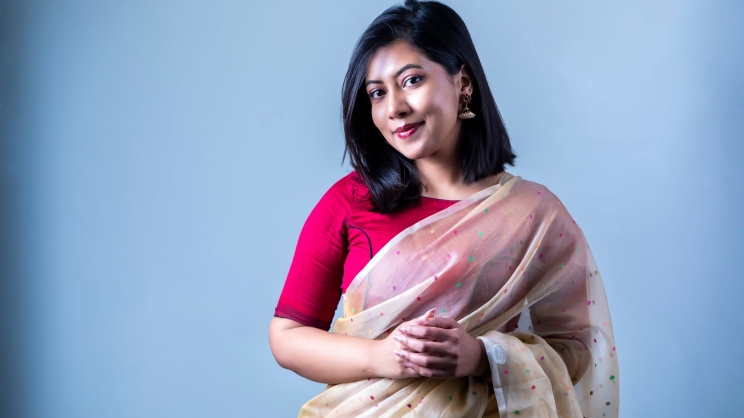
“My work is not about perfection; it’s about celebrating dreams. Even if there are mistakes, we learn and do better next time. We have never claimed we are perfect,” says Arthy Ahmed. The philosophy sits at the heart of the initiative that earned her the prestigious honour. According to her, the honour recognises the project’s social impact rather than personal achievement.

In her telling, the award belongs as much to her gurus and students as to herself. “I wholeheartedly dedicate this honour to my Guru, Lubna Marium,” she adds, a stalwart of Bangladesh’s cultural sphere whose lifelong commitment to classical and performing arts has helped nurture successive generations of dancers and cultural practitioners.
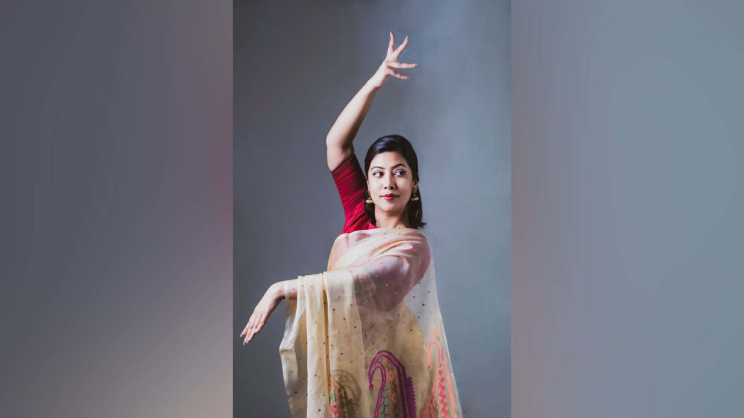
She also sees the award as opening a door for young dance artistes who might otherwise feel unseen.
Such acknowledgement reminds younger artistes that sincere and transformative work can be recognised without waiting a lifetime. Recognition at a younger age may help prevent the kind of discouragement that often pushes artistes away from their practice.
In a rather philosophical discussion, Arthy questions why only those with proper guidance and opportunity were able to learn an art form. “Not everyone has to become a ‘renowned’ artiste. First, everyone should be granted the opportunity to learn.”
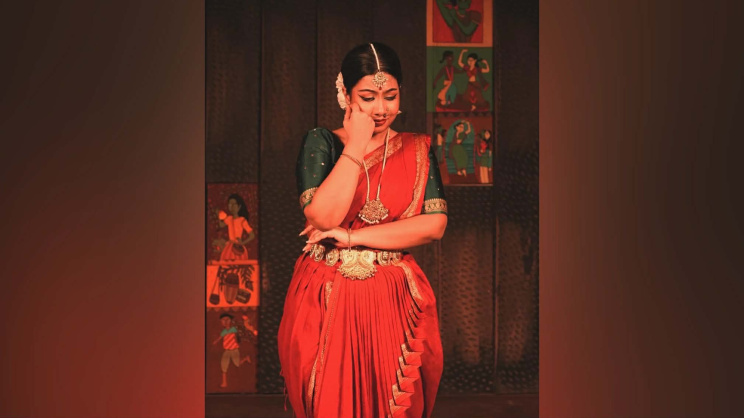
Even strong productions struggle to attract audiences beyond their usual circles. Although it is a refined art form, dance often felt distant from everyday life. She believed the real problem was limited access, even though talent was always present.
In conversations with her guru, whom she adoringly calls Lubna khala, discussions often centred on how to reach people outside the arts-and-culture bubble. She says, if 100 students are involved, 100 families become invested. Their children grow up seeing dance as part of life, rather than something exclusive.
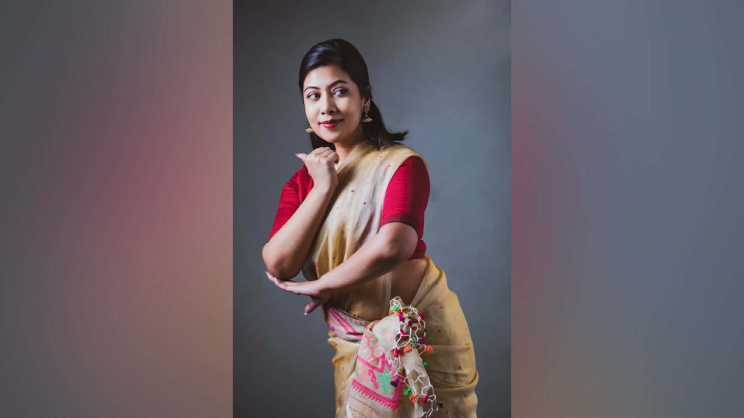
Despite the pressures of adult life, students continue their training. In some productions, audiences have been moved to tears, not only because they relate to the stories, but because they have followed these performers’ growth over time.
However, she emphasises that the standards of classical discipline have not been compromised. Adult beginners do not perform Bharatanatyam publicly until they reach a certain level. While other forms may be explored, classical grammar consistently shapes their bodies in training.
A defining part of her practice has involved adult learners, many of whom once believed their dreams were no longer relevant. “In our society, when girls grow up, they stop prioritising themselves,” she notes. “They think it was just a childhood dream. They lose confidence that they can start something new and be appreciated.”
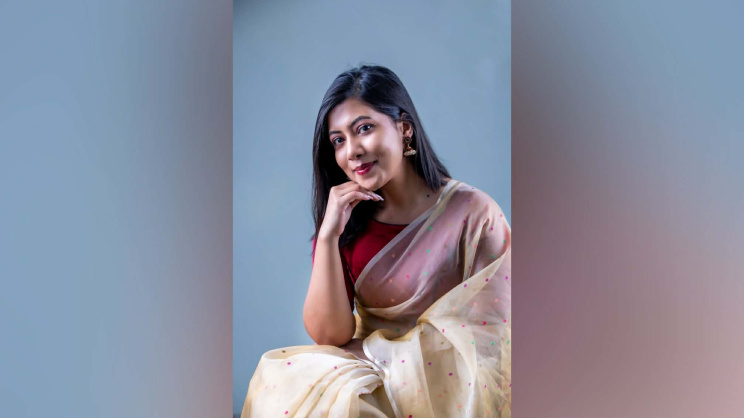
She has watched students return to an art form after years of absence. “When you practise an art form, your brain works differently. You start loving your body differently. It changes you as a person.”
“It doesn’t have to be dance,” she adds. “Any art form can bring that change. I want that to become part of our regular lifestyle.”
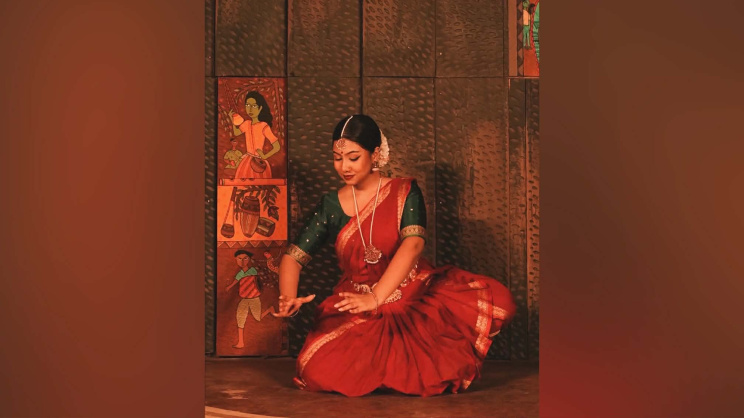
Arthy faced criticism in the beginning when “untrained artistes” were brought on stage. Some people were dismissive, but most were supportive. “Ninety per cent of what we received was appreciation,” she adds, explaining that audiences responded warmly to the courage of people returning to dreams they had once given up.
Since receiving the honour, Arthy feels her sense of responsibility has deepened. “My responsibility has increased, not only towards my students, but towards society and fellow dancers.”
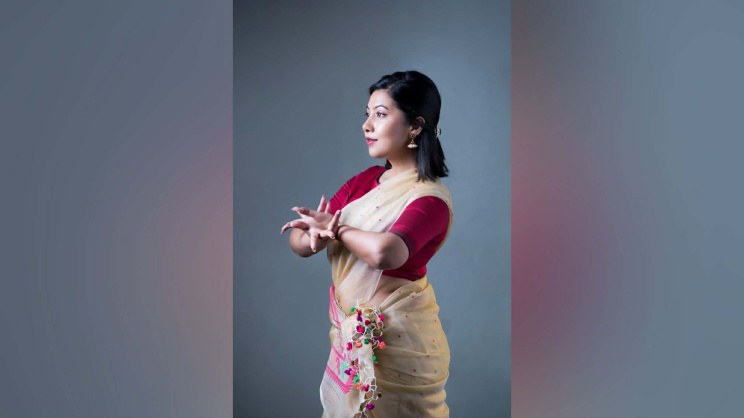
She has also received requests from outside Dhaka. Students in other districts have spoken about limited opportunities and social taboos surrounding dance education. “I want this to grow outside Dhaka and into other regions. But safe space must come first. And I can’t do it alone.”
The young dance practitioner hopes other dancers will step forward to create similar spaces for adults and ordinary people in their own regions. Yet, for her, building safe spaces across the country also raises a larger concern that whether dancers themselves are able to survive and work with respect. “As dancers, we should be able to live with dignity. We should not have to beg for support. It should be possible to practise classical dance and still sustain ourselves.”
When asked what difference she hopes her work will make, she notes, “I want people, even those who don’t dance, to feel courageous enough to attempt the art form they’ve always wanted to try.”
The recognition reflects what she has long been working towards; making art accessible, encouraging participation, and ensuring that trained dancers are treated with respect. Over time, the initiative has evolved into what she calls an “alternate universe” within Bangladesh’s dance community -- a progressive space where learners support one another despite differences in skill, a space they once only imagined as children and have now managed to build for themselves.
 For all latest news, follow The Daily Star's Google News channel.
Comments