


In Dhaka, spring and pages bloom together


At times seasons arrive as sensations.
Despite its ephemeral tenancy, spring in Dhaka comes not merely with lengthening days or brightening skies, but with an atmosphere suffused by the anticipation of a tremulous promise that something more enduring than weather itself is about to unfold.

And few events embody that aptitude more exquisitely in the city than Ekushey Boi Mela.
Books, after all, possess a peculiar immortality. They are objects that refuse obsolescence.
Unlike the evanescent glow of a digital screen, which vanishes into blankness with a touch, a printed book persists. It ages, certainly, but its ageing is dignified rather than diminished.
Its pages yellow into a soft patina of memory. Its spine creases into the quiet calligraphy of affection.
A book bears the marks of its companionship with human hands. It becomes not merely read, but lived with.
And so, when the fair opens today across the historic precincts of the Bangla Academy and the sprawling expanse of Suhrawardy Udyan, it does not simply inaugurate a commercial enterprise.
It inaugurates a sensory republic, governed by paper, ink, and imagination.
The experience begins even before one encounters the books.
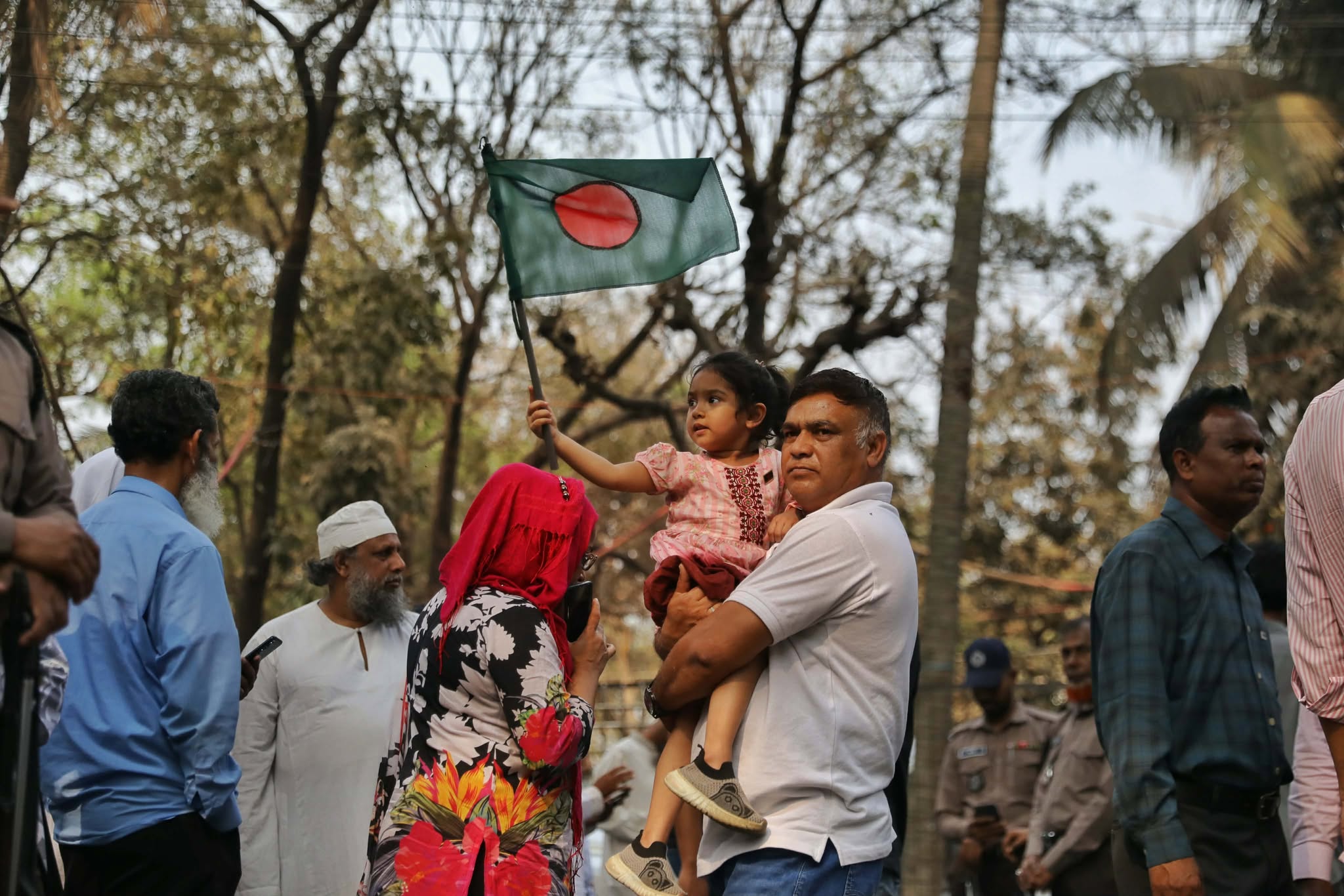
Spring in Dhaka has its own perfumed pirouette -- the faint sweetness of mango blossoms just beginning to unfurl, the earthy resignation of fallen leaves surrendering to time, and the green vitality of new growth asserting itself.
Amid this fragrant tapestry, another scent insinuates itself with quiet authority -- the unmistakable aroma of freshly printed books.
It is a smell at once intimate and expansive. There is the faint sharpness of ink, the woody whisper of paper and even the chemical pang of newly bound volumes.
Covers gleam with promise -- some austere, some flamboyant, some murmuring, some proclaiming.
Each book is an invitation, a door awaiting the turn of a curious mind.
Eminent authors and the unknown debutants share the same fragile hope -- that someone, somewhere, will pause, reach out, and choose their words.
Readers pick up books not always with intention, but with intuition. A title catches the eye. A phrase on the back cover intrigues. A page is opened. A life is altered.
In a world governed increasingly by algorithms, where one is shown only what one is predicted to desire, the book fair restores the ancient dignity of serendipity.
One discovers what one did not know to seek. One encounters unfamiliar voices. One strays into territories previously unimagined.
 For all latest news, follow The Daily Star's Google News channel.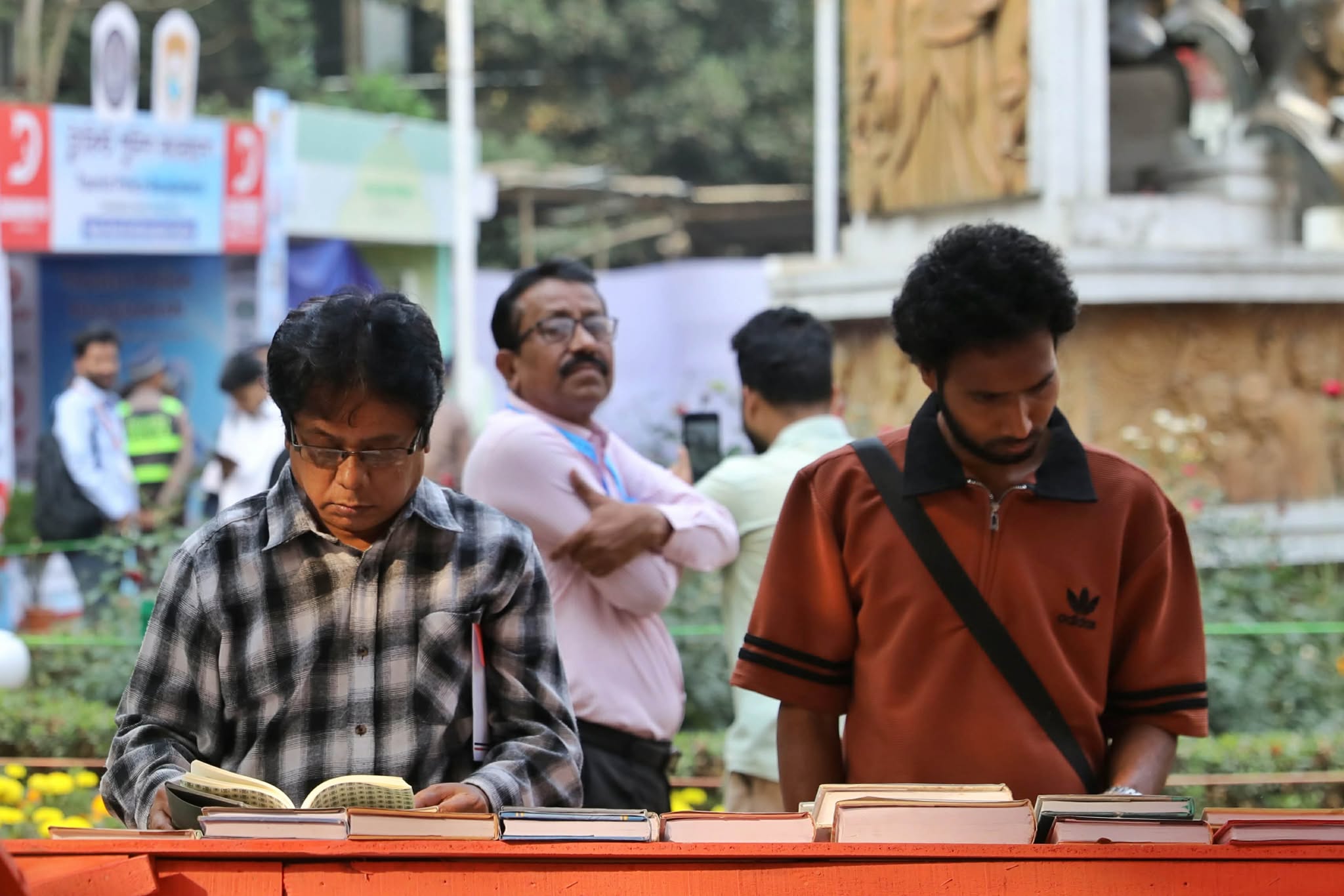
And yet, the allure of Boi Mela transcends even the books themselves. It resides in the collective ritual. Families arrive together, friends throng, young lovers wander between stalls, their conversations punctuated by shy silences and shared discoveries. Elderly visitors move more slowly, their gaze suffused with nostalgia, as though retracing corridors of their own youth.
For this fair is not merely about literature. It is about continuity, and community.
Ekushey Boi Mela is inseparable from the historical consciousness that shaped the nation’s identity. Every book purchased here is, in some ineffable sense, an affirmation that language lives, that thought endures, that culture refuses erasure.
There is also a profound tactility in the act of holding a book. One feels its weight. One senses its proportions. One turns its pages with deliberate care. These gestures, small and unremarkable in isolation, accumulate into a ritual of intimacy. A book demands presence. It rewards attention.
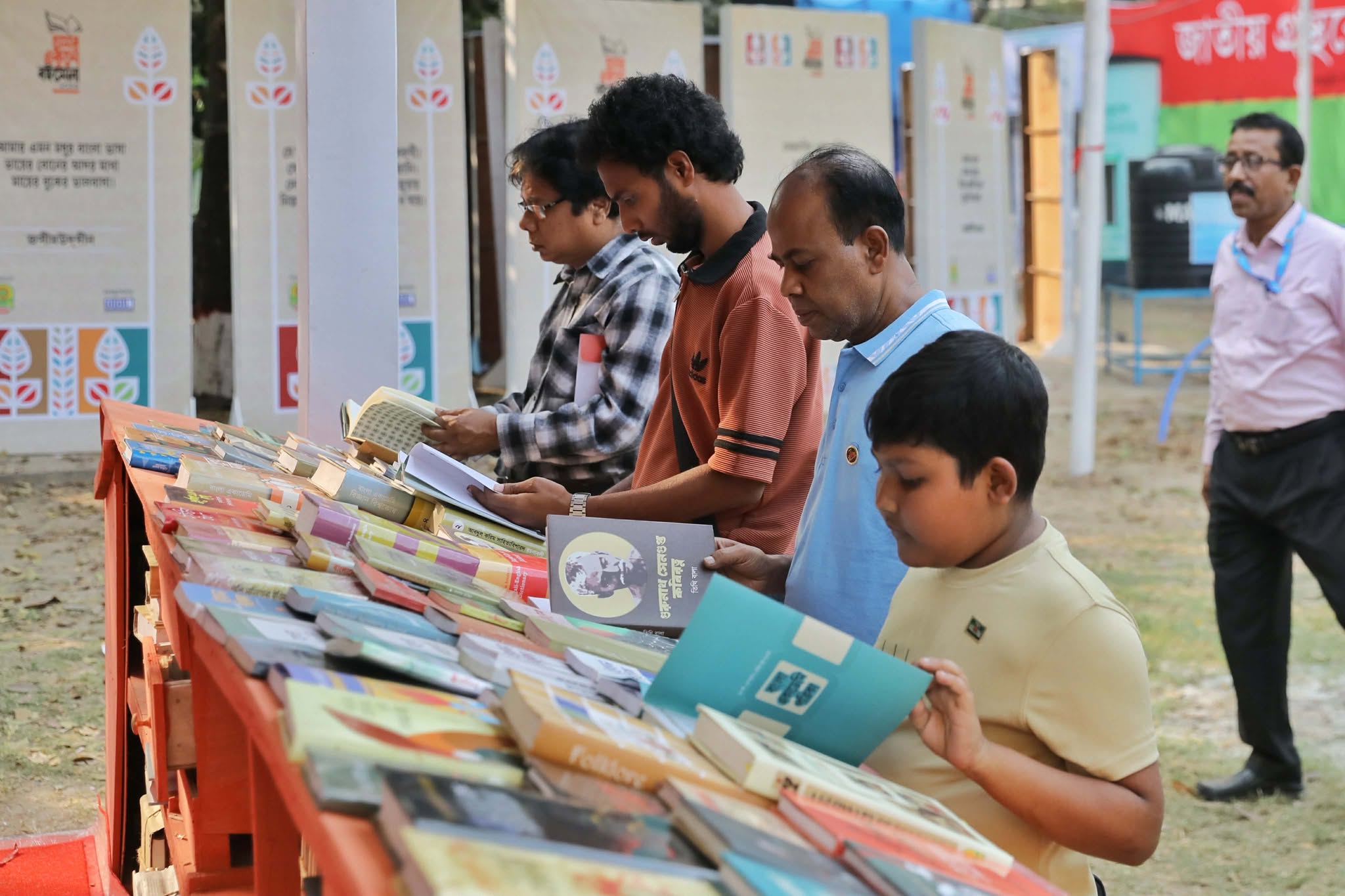
Digital text, by contrast, is perpetually provisional. It exists in flux. It may be altered, deleted, or forgotten with disconcerting ease. A physical book resists such transience. It occupies space. It insists upon remembrance.
This is why, even in an age of infinite screens and storage, people continue to flock to Ekushey Boi Mela. They come not merely to acquire content, but to acquire objects imbued with permanence.
Comments