


DIMFF opens with focus on storytelling over technology

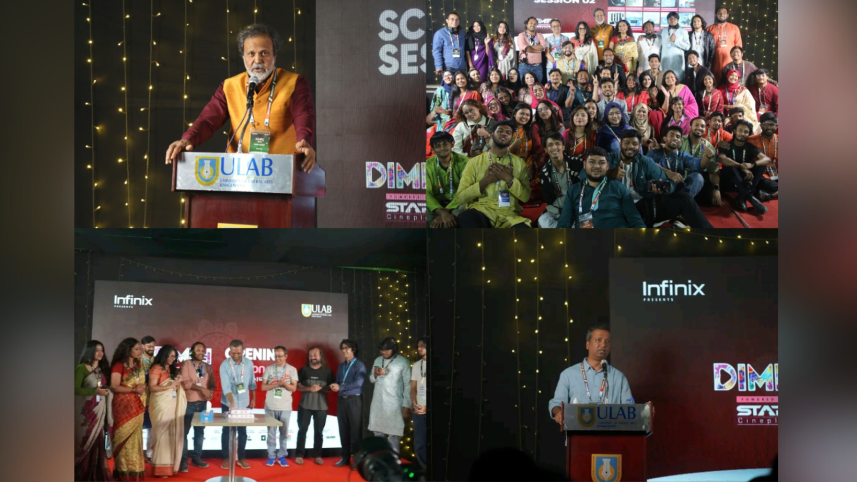
The Dhaka International Mobile Film Festival (DIMFF) 2026 kicked off on Saturday (January 31) with a clear message: mobile filmmaking is no longer a novelty, but a legitimate and growing cinematic practice with global reach.
Held at the University of Liberal Arts Bangladesh (ULAB), the festival’s opening day featured two screening sessions showcasing 15 films selected from submissions spanning 24 countries. Shot entirely on mobile phones, the films explored themes ranging from child labour and displacement to intimacy, memory and emotional alienation.

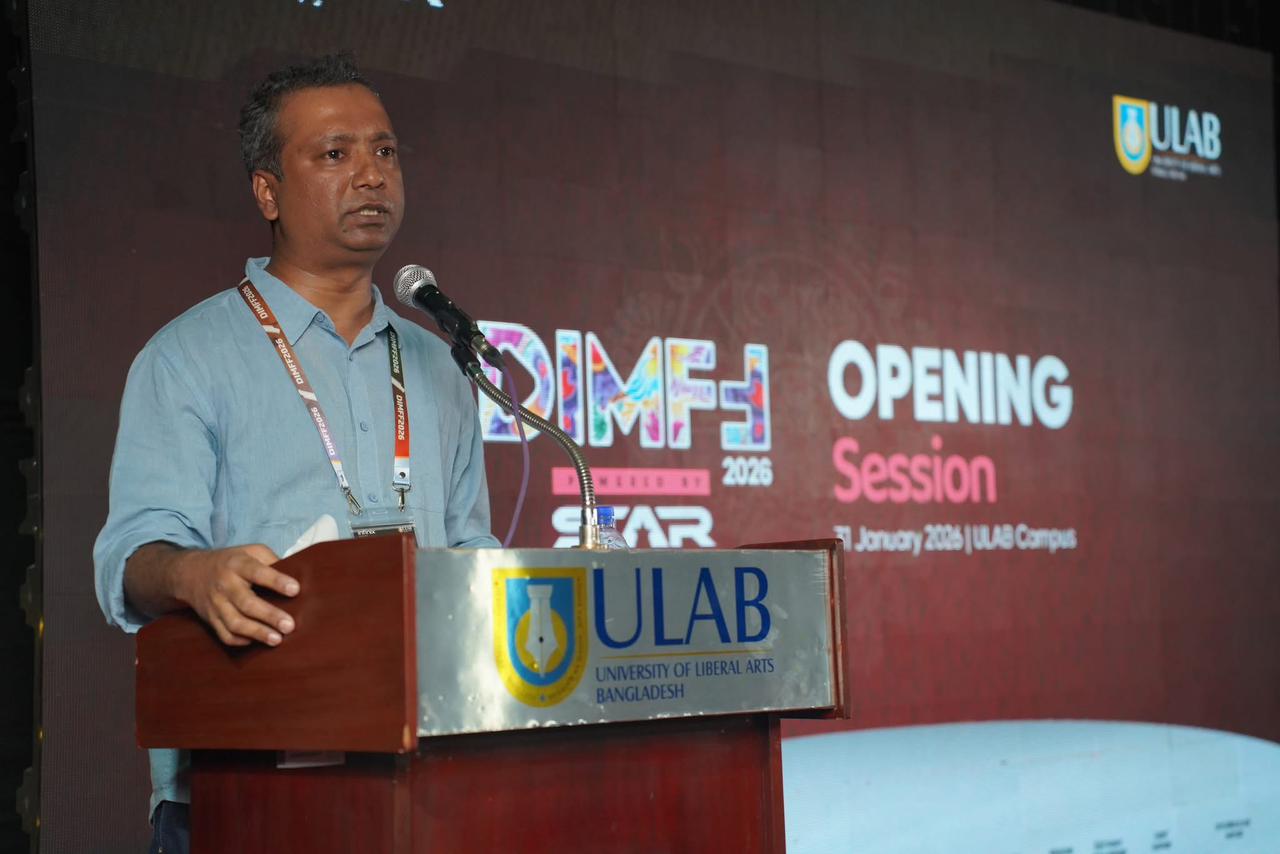
The opening ceremony opened with remarks from Professor Dr Din M Sumon Rahman, head of the Department of Media Studies and Journalism at ULAB and chief advisor of DIMFF, who spoke about mobile cinema’s growing role in democratising storytelling and opening doors for emerging filmmakers worldwide. This was followed by a video message from jury member Léon Desclozeaux, who commended the quality of the submissions and noted the festival’s increasing international profile.
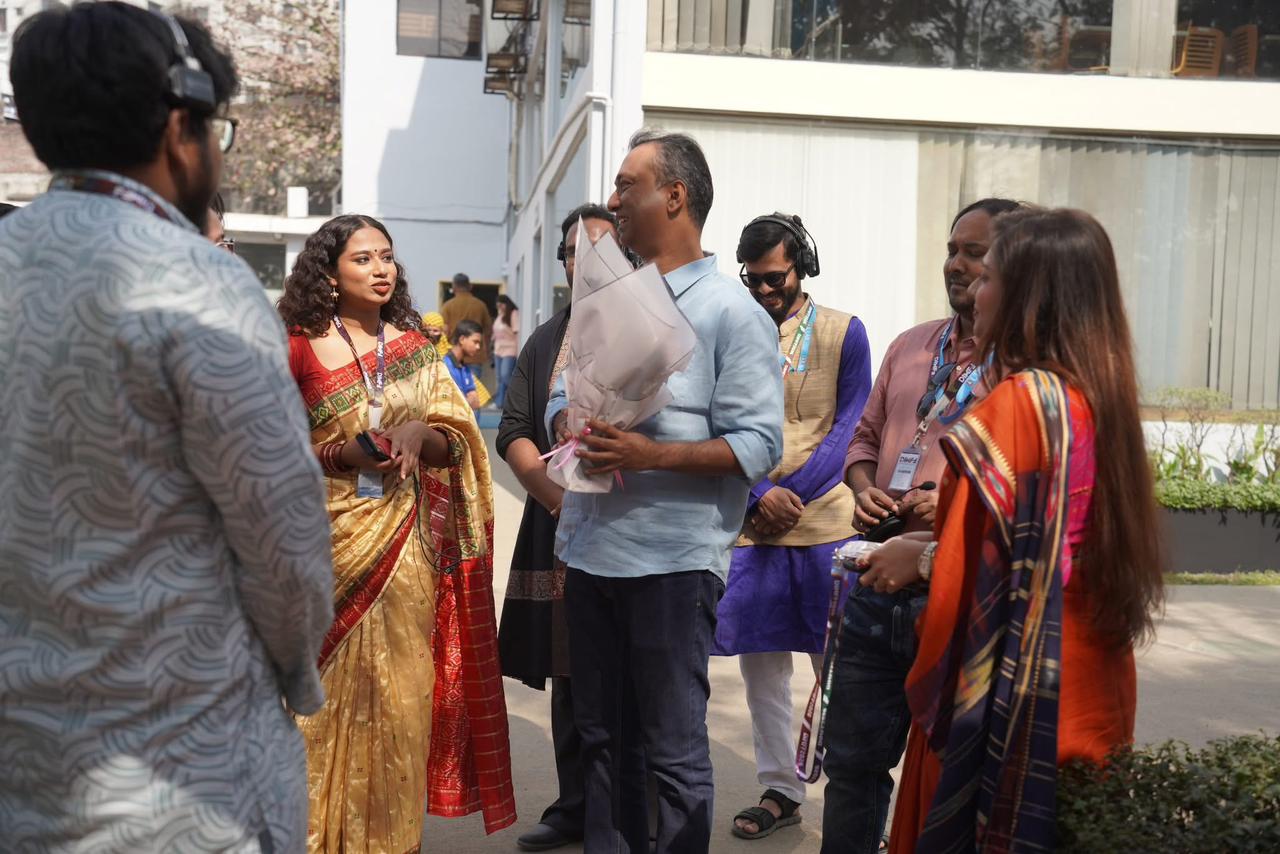
Chief guest Tanim Noor, renowned director and producer, delivered the keynote address, speaking on storytelling integrity, creative responsibility and cinema’s power to provoke dialogue. He emphasised that meaningful cinema has never been dependent on technology alone, a sentiment that resonated strongly with the festival’s ethos.
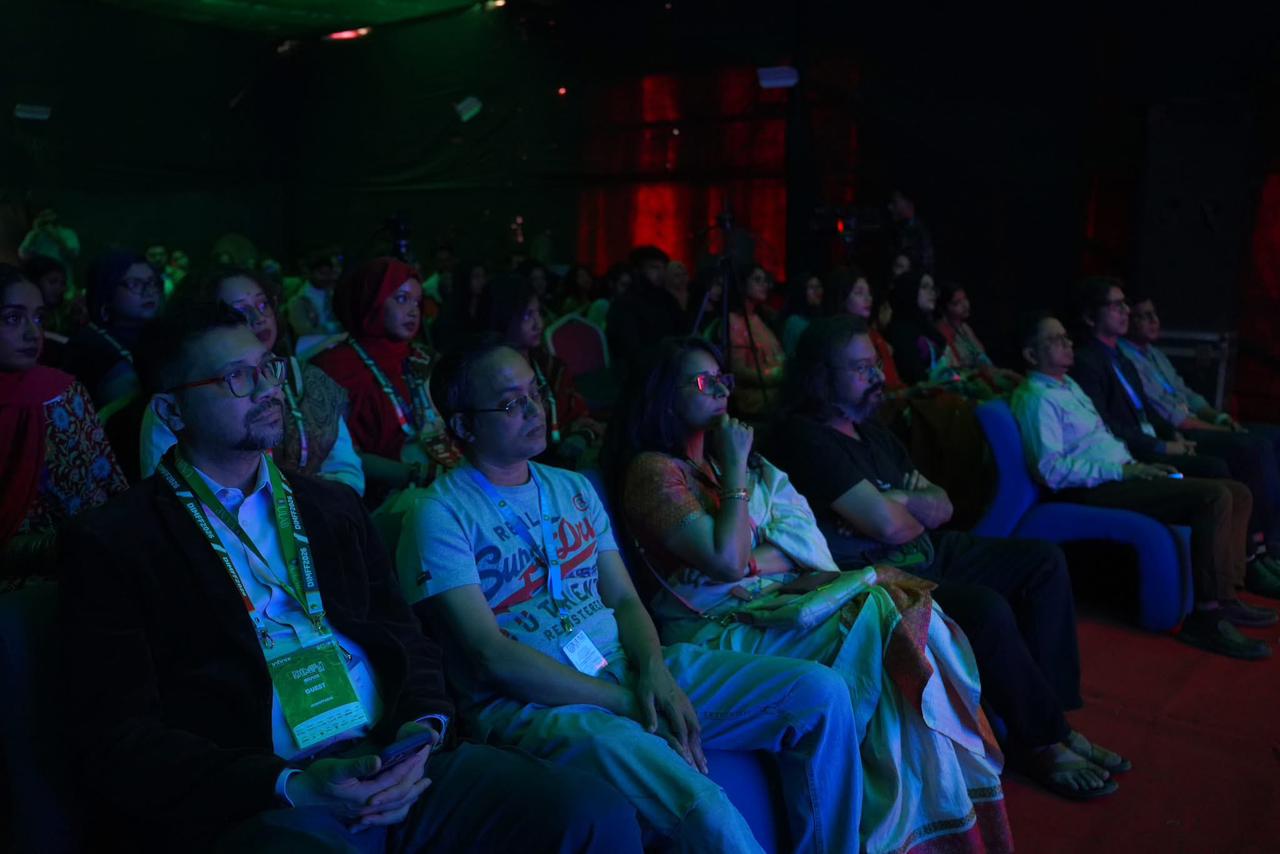
The first screening session at 11:15 am set a stark tone. “Mohammad Ayub: The Uncovered Story of a 13-Year-Old Child Labour” confronted exploitation head-on, offering an unflinching look at systemic abuse through a stripped-back visual language. It was followed by “Kata” from the United States, Bangladesh’s “The Last Ring” and India’s “In Their Own Time”.
The afternoon programme expanded both geographically and thematically. It featured “Aaloklota” (Bangladesh), “The 6th Element” (Bangladesh), “Puti” (Philippines), “Cells” (India), “Arise, My Love” (United States) and “Limerent Pittsburgh” (United States).
Despite their diversity, the films shared a common discipline. There was little visual excess, no reliance on spectacle. Instead, the strength lay in proximity—faces held in frame, everyday spaces rendered with precision, and stories allowed to unfold without manipulation. The limitations of mobile devices appeared more as editorial choices rather than constraints.
Beyond screenings, the festival hosted a panel discussion on film distribution in Bangladesh, addressing access, platform dominance and the challenges faced by independent filmmakers outside mainstream circuits. Panellists emphasised the need for sustainable exhibition spaces and institutional support as production tools become more accessible.
Speakers during the opening ceremony reinforced the festival’s position as a platform for emerging voices rather than polished commercial outputs. The emphasis remained on storytelling integrity, not technology.
By the end of the day, DIMFF 2026 had avoided the trap that often shadows mobile film festivals—the urge to justify the medium. The films screened did not ask for permission to be taken seriously. They simply were.
In foregrounding content over equipment and intention over polish, the festival’s opening day made a claim: the future of cinema may be small in scale, but it is not small in ambition.
 For all latest news, follow The Daily Star's Google News channel.
Comments