A wetland losing its farmers

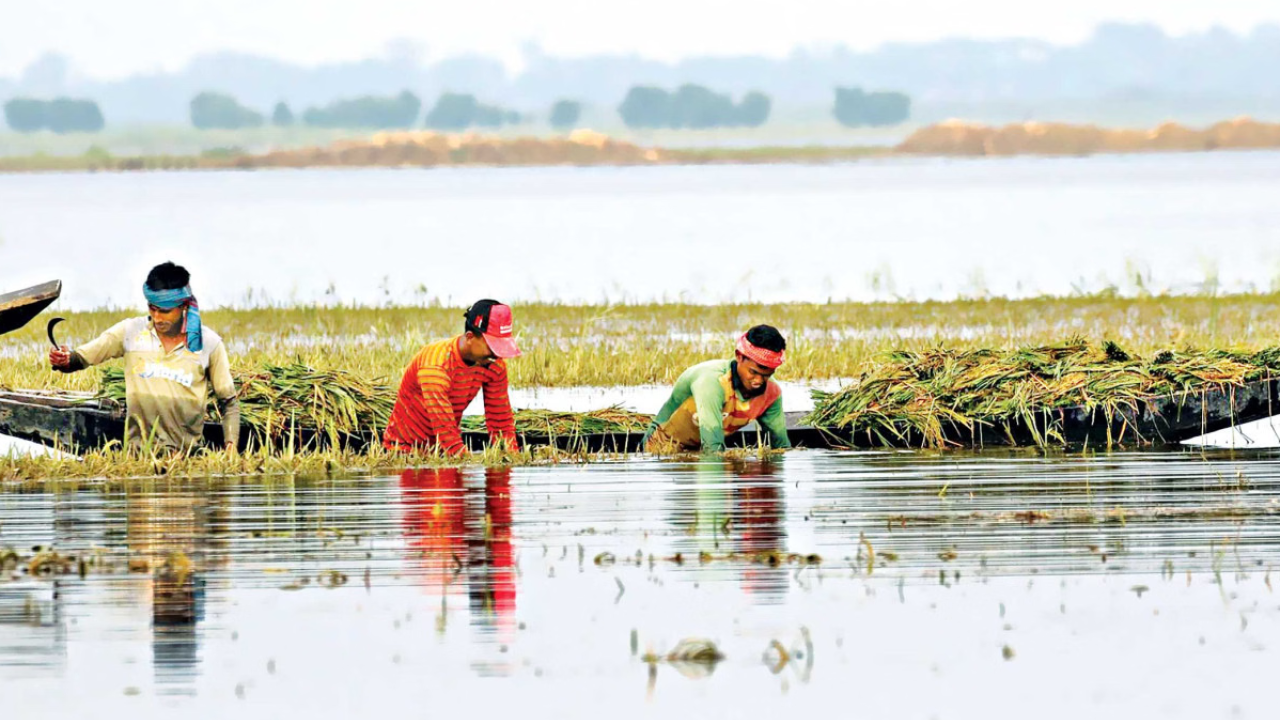
On a humid July evening, I met Majed bhai at Chamtaghat, a small river port where boats jostle with auto-rickshaws at the gateway to the Haor wetlands. He was hurrying to catch a ride back to his home in Kurigram, some 200 kilometres north. Majed bhai drives an auto-rickshaw between Mithamoin and Austagram. But he was not always an auto-rickshaw driver. For two decades, he was a seasonal farmhand in the Haor, involved in ploughing rented plots, transplanting paddy, and harvesting in the brief, frantic window before the floods rolled in.
Floods are natural to the Haor region and a crucial part of its economic and ecological setting. However, flash floods are not. The cost of the globalised nature of development has been a complete misreading of the locals. These 'denatural' disasters have directly influenced the resilience strategies of people belonging to the Haor.
In 2022, after yet another flash flood submerged the ripening boro paddy overnight, Majed bhai left the fields for good. He still comes south each year, but now to drive a rented three-wheeler, ferrying tourists across newly paved roads that cut through the watery expanse. His passengers no longer carry sacks of rice but selfie sticks and packets of snacks.
In Dhaka, rickshaw pullers speaking northern dialects are a common sight. But Majed's story is different — a man who migrates seasonally not to the city but from one rural area to another. When I asked him why he did not seek work in Dhaka or other larger cities like other northern migrants, he laughed.
"In Dhaka, I would sleep on the pavement and pull a rickshaw among thousands. Here, at least the air is fresh, and people come to enjoy the water. I can make more in one tourist season than I did in three harvests."
Majed's trajectory encapsulates the shifting currents of life in the Haor, where seasonal migrants once tethered their livelihoods to agriculture but now increasingly find themselves absorbed into tourism, construction, and transport.
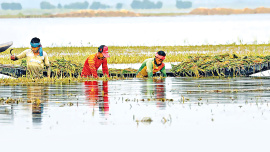
For centuries, the Haor basin—Bangladesh's vast bowl-shaped wetlands stretching across Kishoreganj, Sunamganj, and Netrokona—has sustained a fragile agrarian economy. During the dry months (November–April), the wetlands recede, exposing fertile land where villagers rush to plant a single crop of boro rice. But come May, torrential rains and upstream flows from Meghalaya refill the basin, turning villages into islands and fields into inland seas.
It was always a risky cycle, but it used to work. Now, it is unravelling. Flash floods arrive earlier and with greater force, sweeping away crops before harvest. In 2017, one such flood destroyed over 850,000 tonnes of rice, triggering local food shortages. Farmers speak of "the water coming two weeks early"—a small shift with devastating consequences.
The rising costs of agricultural inputs compound the problem. Fertiliser and diesel prices eat into razor-thin margins, while middlemen capture much of the profit. Landless labourers—once hired en masse for harvesting—find their services less in demand as mechanised harvesters spread. What was once a "hungry season" between crops has become, for many, a year-round state of uncertainty.
One elderly farmer in Austagram told me: "In my father's time, we feared storms, but we trusted the land. Now, we fear both the sky and the market. A single sack of fertiliser costs as much as a month's food. How can the poor survive on this land?"
Environmental degradation has accelerated this collapse. Roads and embankments built to protect fields often obstruct natural water flows, intensifying floods rather than preventing them. The Haor's hydrology—once a delicately balanced rhythm of inflow and outflow—has been disrupted by infrastructural interventions that privilege connectivity over ecology.
Economic theory calls this process de-peasantisation—the gradual erosion of smallholder farming as a viable way of life. In Haor villages, it is visible in abandoned paddies, pawned ploughs, and men like Majed who trade in sickles for steering wheels.
If floods and market forces are the push, government policy has been the pull—redirecting the Haor's workforce into new, informal livelihoods.
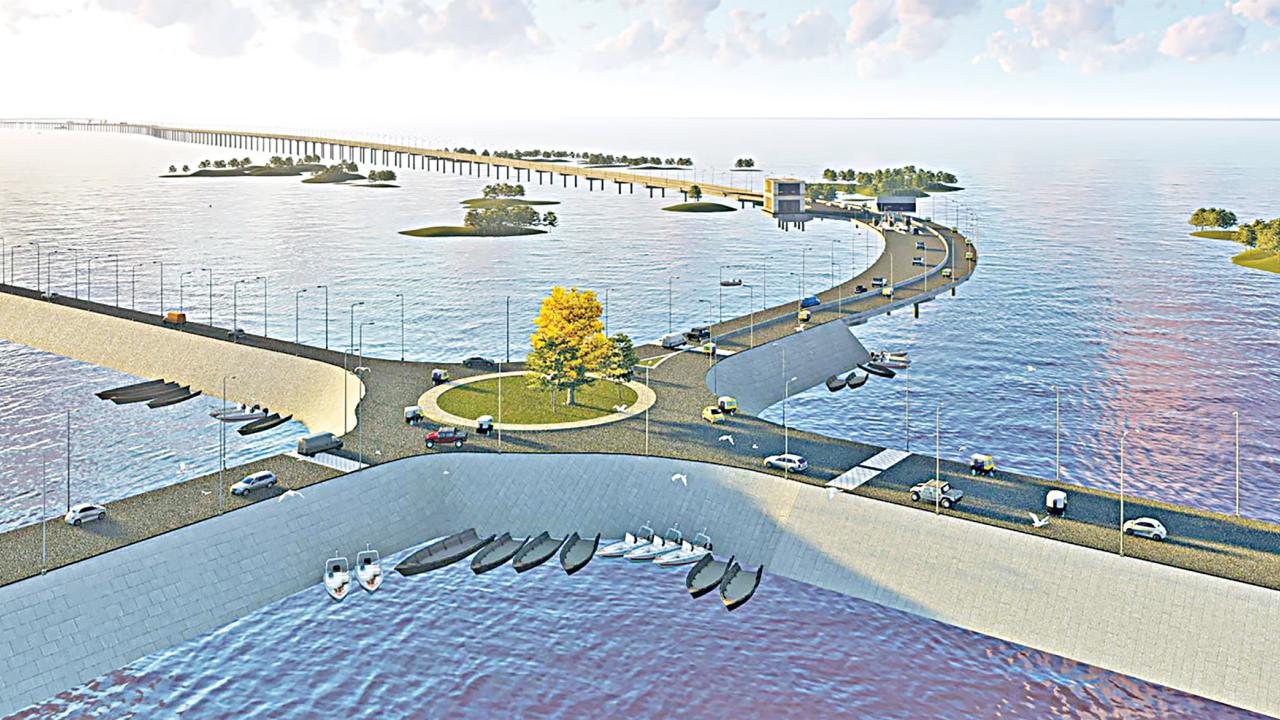
The emblem of this transformation is the 29.7-kilometre all-weather road inaugurated in 2020 between Austagram, Mithamoin, and Itna. At a cost of over BDT 874 crore, the road was presented as a vital link for connectivity and development. It quickly became a tourist magnet, with families from Dhaka driving four hours just to cruise through "Bangladesh's Venice."
One tea-seller in Mithamoin explained the change vividly: "Before, my husband worked as a day labourer in harvesting. We would wait for the season. Now, every Friday, people come with cars and boats. I set up a stall by the road. I sell tea, fried hilsa, and snacks. In two days, I earn what we once made in a whole week of farming."
For peasants, the road has created an alternative to farming. Men who once harvested rice now drive auto-rickshaws along the asphalt. Young men act as tour guides or rent boats. Tourism has, in short, informalised the rural economy, spawning jobs that are seasonal, precarious, but immediate.
Yet the same road has exacerbated flooding. Constructed without adequate drainage, it blocks natural water flows, leading to waterlogging that destroys crops and fish. Although environmentalists warned of such consequences, their concerns were largely ignored.
A fisherman in Tanguar Haor told me with frustration: "The road brings people with cameras, but it stops the fish from moving. Our nets come back empty, but the tourists eat fried fish by the roadside. Who benefits?"
This paradox—of infrastructure simultaneously enabling livelihoods and undermining them—is emblematic of what scholars call neoliberal development: policies that prioritise growth, connectivity, and capital accumulation while externalising ecological and social costs. In the Haor, the state's investments have been less about securing farming futures than about integrating the wetlands into a wider tourism economy.
The tourism boom is not an accident; it is policy. Bangladesh's Ministry of Civil Aviation and Tourism has explicitly targeted Haor wetlands like Tanguar Haor as eco-tourism hubs. Local administrations promote festivals, boat races, and scenic "Haor drives." The government frames tourism as diversification—yet for many peasants, it is less a choice than a necessity, forced upon them by the collapse of farming.
Construction work provides another pull. Government contracts for embankments, schools, and rural housing schemes generate short-term jobs for migrant peasants. These projects, often tied to election cycles, are labour-intensive but temporary, feeding the churn of seasonal migration.
The irony is stark: government policy, designed to "secure" agrarian livelihoods, has in practice accelerated informalisation—a shift to insecure, non-farm labour with little protection. The Haor Master Plan of 2012 envisioned "sustainable livelihoods" and "climate resilience." But in practice, infrastructure has commodified the landscape, attracting capital and tourists while eroding the ecological foundations of farming.
Economic growth has been achieved, but unevenly. Those with access to tourist hotspots benefit, while interior villages see their fields waterlogged and their youth depart. As development theorist David Harvey reminds us, capitalism thrives through "uneven geographical development"—creating prosperity in one place by displacing costs elsewhere. The Haor exemplifies this: asphalted prosperity for some, flooded despair for others.
Khairul Hassan Jahin is a young research professional. He can be reached at khairulhassanjahin@gmail.com.
Send your articles for Slow Reads to slowreads@thedailystar.net. Check out our submission guidelines for details.
The Price of Labour
Those who remain invisible in Bangladesh’s political imagination

Interview / “Don’t reduce garment workers to victims—recognise their struggles”
The weight of untouchability: Rabidas community in Bangladesh
Bengali and Non-Bengali Riots at Karnaphuli Paper Mills
What the government can really do for returnee women migrants
Unthreading Partition: The politics of jute sharing between two Bengals

The hands that clean, the Harijans we refuse to see
Bound by dadan
Fish stocks collapse in the Bay of Bengal, fishermen at risk
Shifting lives in the haor / A wetland losing its farmers