


Trauma of 2007 cyclone Sidr still strong
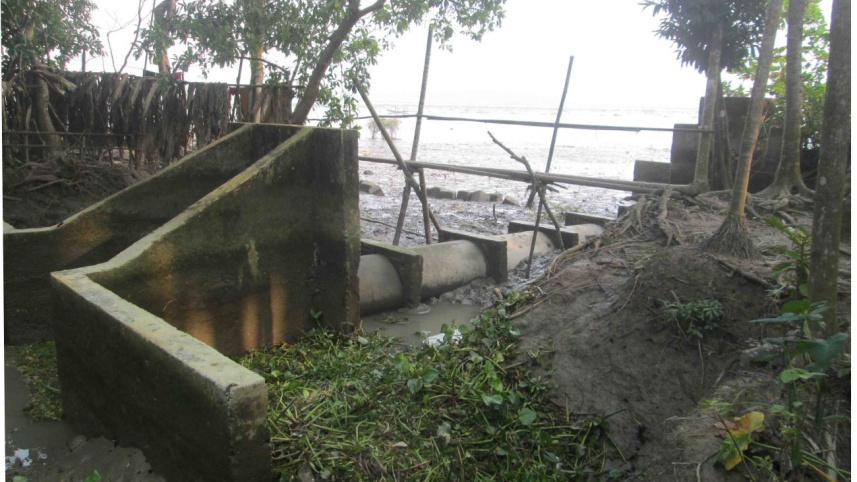
Still now Tulshi Rani, 35, from Chandipur village in Pirojpur's Zianagar upazila feels frightened to remember the night of 15 November 2007. It was the night when cyclone Sidr hit coastal districts including Pirojpur, leaving at least 3,000 people dead and 55,000 injured. Some agencies put the death toll as high as 10,000. The psychological scars of such a calamity, meanwhile, run long and deep. They are much more difficult to quantify.
"From the evening it was raining," Tulshi says to remember that night. "The water level in the rivers and canals was rising, and the wind started to blow. At that time my husband Krishna Chandro told me to leave the house as it was unsafe to stay. I left for a neighbour's house carrying our eight-month-old son in my arms."

In Tulshi's yard, the water level had risen to chest height, thanks to the nearby Kacha River. "The strong current of water swept my child from my arms," she says. "Fortunately another man also seeking shelter caught him." Her son Dipto Chandro is now ten years old; and although Tulshi was lucky not to lose her child as many other mothers did, the trauma of that night still troubles her.
With wind speeds of up to 240 kilometres per hour and a tidal surge as high as 6 metres all of Pirojpur's seven upazilas were affected by the catastrophe.
In several areas breached coastal and river embankments compounded the problem, especially in villages beside the Kacha, Baleshwar and Sandha rivers where many died for inadequate embankments. Along with children, the elderly were particularly vulnerable. "Twelve people including my aunt died in our village when Kacha River water washed them away," says Romis Sheikh, also from Chandipur.
"Any news of bad weather makes our hearts leap with fear," says another of Chandipur's survivors, Habibur Rahman, 88. "Even during the monthly king tides water enters the village for a few days. Our village isn't safe. In my whole life I never saw a cyclone as devastating as Sidr."
"If there had been a suitable river embankment," says neighbour Abdul Awal Mridha, 63. "The villages here would have been protected and many lives saved."
Though nine years have passed, few steps have been taken by the government to protect coastal dwellers in Pirojpur, according to survivors. Damaged sluice gates and embankments are yet to be repaired. "Still now, riverside villages are unprotected," says Md Shahidul Islam, another Sidr survivor, demanding damaged embankments be properly repaired and new ones constructed as a matter of urgency.
According to the Pirojpur office of the water development board, of the around 230 kilometres of embankments in Mathbaria, Bhandaria and Zianagar upazilas, along the Kacha and Baleshwar rivers, most are in poor condition such that they effectively offer no protection to villagers.
Locals say that while now and then repair work on the embankments is carried out the quality of the work is often very low, and because it is mostly undertaken during the monsoon months, the benefit to inhabitants is negligible.
The water development board's executive engineer in Pirojpur, Sayeed Ahmed, could not be reached at his locked office or by phone last Sunday for comment.
 For all latest news, follow The Daily Star's Google News channel.
Comments