


Spotted deer fall prey to poachers
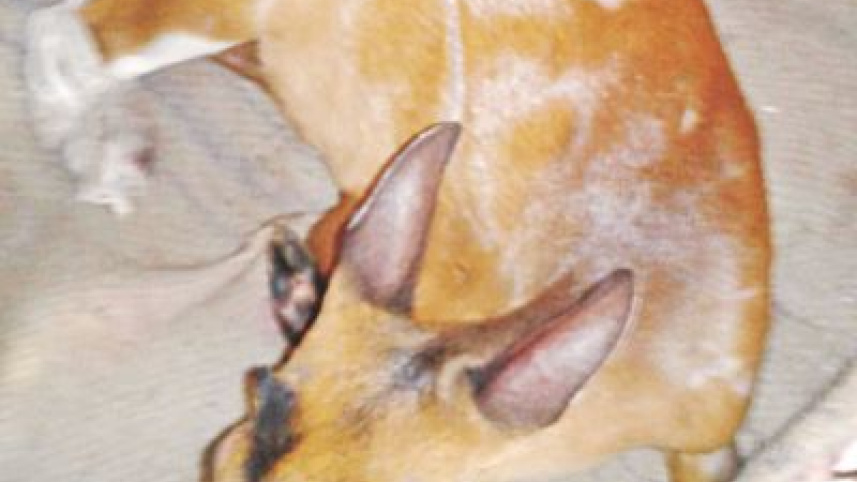
In the northeast, the forests of Srimangal and Kamalganj in Moulvibazar are among the last vestiges of wild country. For many species of plants and animals the forests are a refuge; forest ecosystems are rich. But increasingly, the spotted deer which shelter in the forest face a daunting threat: poachers.
Poachers are proactive in the Lawachara, Adampur, Rajkandi and Kamarchara forest areas, with at least four organised gangs out to catch deer. Armed with guns and knives they often succeed.

On 22 September an injured deer, in a critical condition, was rescued by the forest department from Champarai village in the vicinity of Kurma Reserve forest in Kamalganj. "We gave primary treatment," says Rajkandi range officer Sakhor Chowdhury, "Some locals had been chasing the deer in an attempt to slaughter it."
The deer was sent to the Bangladesh Wildlife Services Foundation for treatment. Unfortunately, its injured leg required amputation. "The deer's right leg was broken and it had several other injuries," says foundation director Sajal Deb. "It will take time for the animal to return to normal life."
Just twelve days earlier another deer was slaughtered at Saitula village in Srimangal's Sindurkhan union. Despite forestry officer efforts it proved impossible to seize the venison; only its skin was recovered as evidence. In this instance a case has been filed under the Wildlife Protection and Safety Act.
However, according to wildlife conservation department officials there is often pressure from various sources not to proceed with prosecutions.
"Deer are very docile," says assistant conservator of forests Tabibur Rahman. "The killings are continuing unabated, causing the species to become endangered." He says the deer slaughtered in Saitula was killed by Ataur Rahman and Jia Uddin, with locals Monir, Nur Islam and Jamshed also connected to the incident. He says they will be prosecuted.
"They did it only due to a lack of awareness," says Sindurkhan union chairman Abdullah Al Helal, who confirmed the matter to The Daily Star.
Meanwhile another deer was rescued by Border Guard Bangladesh paramilitaries on 7 September in the Adampur area. They handed the injured animal to the wildlife services foundation for treatment, but two days later it died. "The deer had been hacked in the throat by a knife and its breathing passage was seriously injured," says foundation chairman Sitesh Ranjan Deb.
Such incidents have become regular. There are many more. Locals allege deer hunters are active year-round. "Some of the locals earn their livelihood poaching deer and selling the venison," reports one villager on condition of anonymity. "They go to Lawachara, Adampur, Rajkandi and Kamarchara forests, often posing as visitors."
Other villagers allege the targets of the criminal activity are the deer horns and hides which are in high demand. Venison meanwhile, according to locals, is being sold openly in high range hotels in the area, with a single deer sold to the hotels for up to Tk 30,000.
Keeping watch over the forest to stamp out poaching is no easy task. "Our manpower is too small to cover the vast forest area, and they are not well equipped," says divisional forest officer Mihir Kumar Doe. "To be successful we would need more and better trained personnel."
The divisional forest officer for Sylhet, RFM Monirul Islam, confirmed to The Daily Star that the problem of poaching exists. "We will pursue legal action against the poachers," he says.
 For all latest news, follow The Daily Star's Google News channel.
Comments