


Yarn import restriction to risk buyers and employment: BGMEA

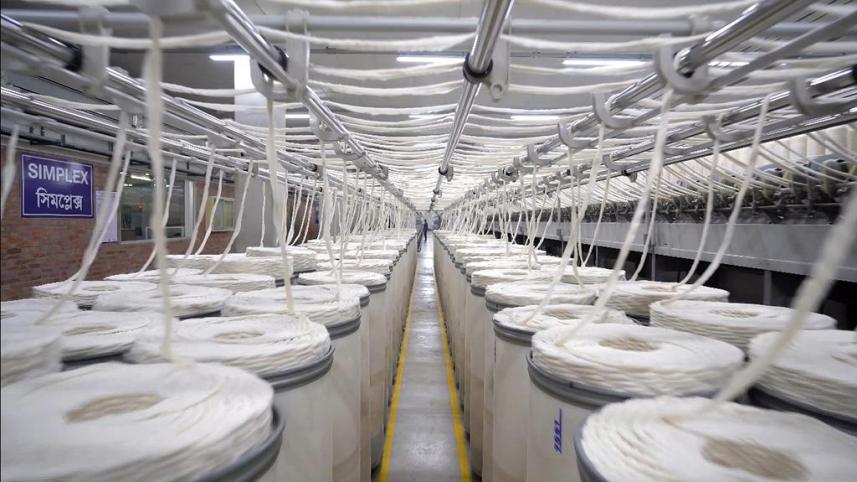
Any kind of import restriction or severe tariff measure on yarn will create a supply constraint, resulting in the loss of buyers and risks to employment, said the Bangladesh Garment Manufacturers and Exporters Association (BGMEA).
The BGMEA sent a note to the Bangladesh Trade and Tariff Commission (BTTC) on January 31 clarifying the consequences of the proposed withdrawal of the duty-free import facility on yarn, which was recommended by the commerce ministry to the National Board of Revenue (NBR) last month.

Earlier, upon a plea from the Bangladesh Textile Mills Association (BTMA), the BTTC suggested the commerce ministry withdraw the duty-free import facility for 10 to 30 count cotton yarn to protect the $25 billion domestic primary textile sector, as Indian traders are selling cotton yarn at dumping prices in local markets.
Meanwhile, the finance ministry is expected to hold a meeting tomorrow at its office in Dhaka, involving senior officials from the commerce ministry, leaders from the BTMA, BGMEA, and Bangladesh Knitwear Manufacturers and Exporters Association (BKMEA), to decide on yarn imports.
In its letter to the BTTC, the BGMEA also said yarn imports are not driven by a lack of competitiveness in domestic spinning, but by the structural requirements of export production, which include product and fibre diversity, certified and traceable fibre sourcing, specialty and compact yarn categories, rapid lead-time flexibility, and buyer-specific compliance requirements.
Within total knit exports of approximately $21.16 billion, an estimated $17 billion worth of locally produced fabric is consumed in export manufacturing.
The implied yarn requirement behind this production is approximately $6 billion, of which about $4 billion is supplied by domestic spinners, while approximately $2 billion remains structurally import-dependent due to product mix constraints.
The import-dependent yarn is sourced from Indonesia, Türkiye, Vietnam, India, and to a lesser extent Pakistan, with India being a major supplier due to price competitiveness and the availability of certified fibre.
India’s position is reinforced by the fact that it produces approximately 51 percent of global organic cotton, making it a primary source of certified yarn demanded by international buyers, the BGMEA letter also said.
The BGMEA further stated that yarn is the primary cost transmission channel in knit production. With an implied yarn spend of approximately $6 billion, any policy shock affecting yarn availability or pricing directly escalates export costs.
A 40 percent yarn price shock generates an incremental burden of approximately $2.4 billion, while a 20 percent shock produces a burden of approximately $1.2 billion. These costs are materially beyond the absorption capacity of current operating margins.
BGMEA said buyers routinely reallocate orders for 1 to 2 percent freight on board (FOB) differences, often amounting to only a few cents per garment.
Cost shocks of this magnitude therefore materially weaken competitiveness and initiate a snowball effect of order diversion and long-term buyer exit.
BGMEA Acting President Salim Rahman, in his letter, also said knit exports support approximately 1.8 million direct garment workers and an estimated 2.5 to 3 million indirect workers across spinning, knitting, dyeing, finishing, logistics, and ancillary services.
Even a 5 to 10 percent contraction due to cost- or supply-induced order diversion exposes 90,000 to 180,000 direct jobs annually. A physical production shock of 10 to 15 percent propagates through the entire value chain.
 For all latest news, follow The Daily Star's Google News channel.
Comments