


Over 75% voters see roads, bridges as face of development: CPD survey
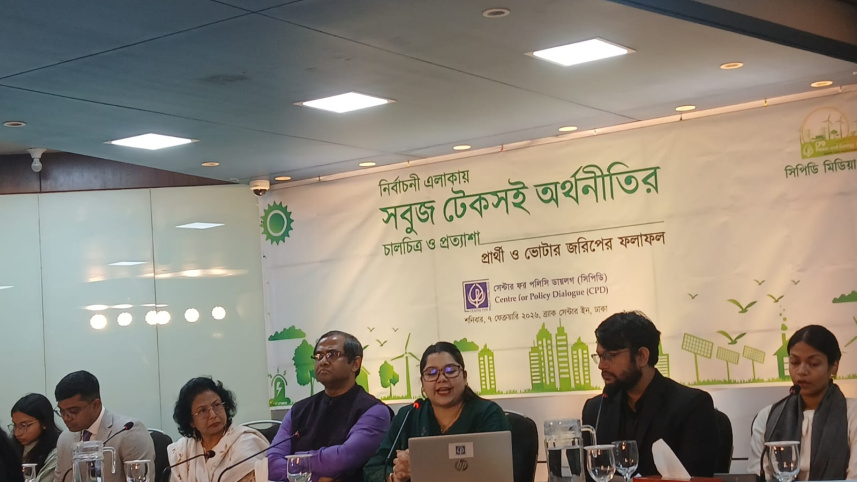
More than three-fourths of voters in Bangladesh perceive development primarily as the construction of roads and bridges and the creation of employment, rather than improvements in social indicators or environmental outcomes, according to a new survey.
The Centre for Policy Dialogue (CPD) conducted the survey among 1,200 voters and 450 political candidates across the country.
 For all latest news, follow The Daily Star's Google News channel.
 The survey shows that 76.7 percent of respondents believe development mainly revolves around building roads and bridges. Similarly, 77.1 percent of voters said development means a situation where everyone is employed.
The findings were unveiled by the CPD at an event in Dhaka today.
The results suggest that visible infrastructure and job creation continue to dominate public imagination when it comes to economic and social progress. The emphasis on physical infrastructure is particularly strong in urban and climate-vulnerable regions.
Helen Mashiyat Preoty, senior research associate at the CPD, said around 95 percent of voters are optimistic about the possibility of building a green society in Bangladesh.
However, a large share of voters and political candidates still view road, bridge, and culvert construction, along with employment generation, as the main indicators of development.
She noted that this one-dimensional perception of development could, in the long run, overshadow critical issues such as sustainable development, environmental protection, and climate adaptation.
According to the CPD, discussions on development need to give greater importance to education, healthcare, the environment, and quality of life, alongside infrastructure and employment.
About 86 percent of urban voters, along with 79 percent of respondents from the Chattogram Hill Tracts (CHT) and coastal zones, identified roads and bridges as a key indicator of development.
This perception becomes even more pronounced in regions where climatic risks overlap. In Barind-urban areas, 90 percent of voters equated development with road and bridge construction, while the figure rose to 92 percent in coastal-river system-urban zones.
In contrast, voters in other ecological zones placed relatively greater emphasis on employment generation when defining development, reflecting regional differences in economic priorities and livelihood challenges.
This highlights variations in economic opportunities and exposure to climate stress, where job security often takes precedence over large-scale infrastructure.
Among party respondents, development is seen as a combination of building roads and bridges, increasing employment opportunities, and ensuring that everyone earns a living.
In urban areas, both voters and party representatives overwhelmingly point to visible infrastructure as the clearest indicator of development.
Comments