


Govt forms committee to prepare crisis plan amid global war risks
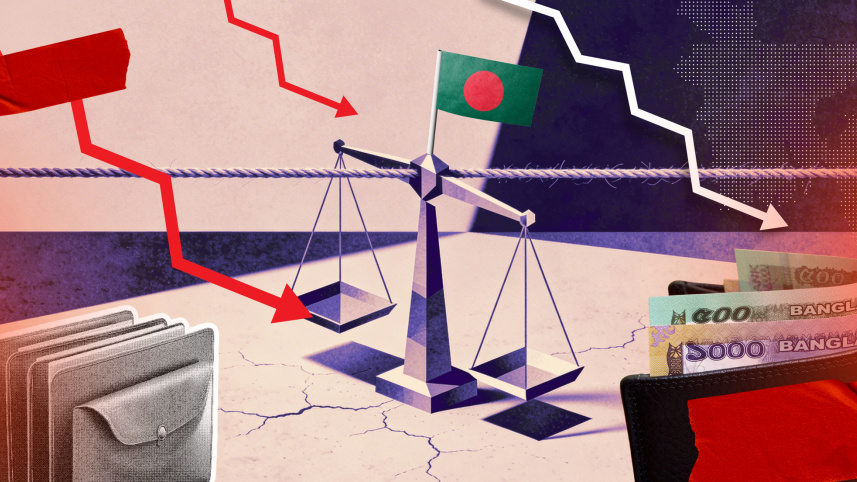
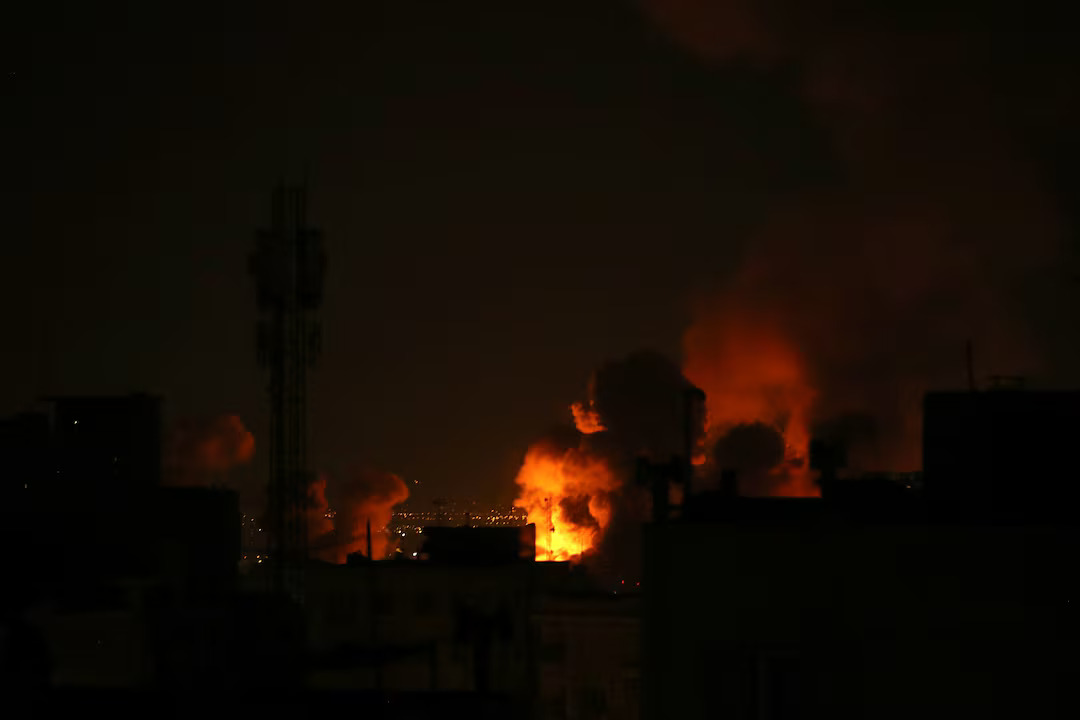
The government has formed a high-level committee to formulate a crisis management plan aimed at maintaining economic stability amid the ongoing Israel-US war against Iran.
According to a gazette notification issued by the Cabinet Division on Monday, the committee will review policy and administrative measures and recommend steps to safeguard Bangladesh’s economy from potential global disruptions arising from the war.

The adviser to the finance ministry will chair the committee, with members including representatives from the ministries of local government, rural development and cooperatives; foreign affairs; industries; commerce; power, energy and mineral resources; and food, the notification said.

It added that the committee may invite representatives from other ministries, divisions, or agencies if necessary.
The move comes as the US-Israel war on Iran has heightened concerns about a broader global confrontation that could disrupt trade, energy supplies, and financial markets.
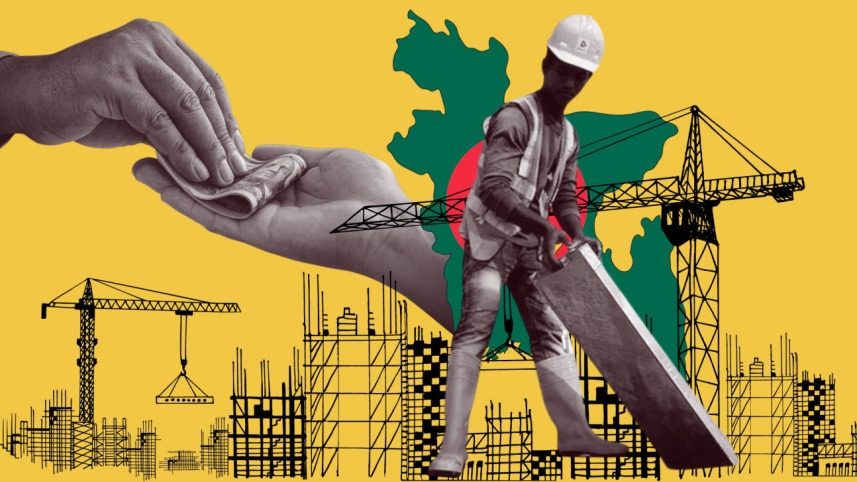
Economists said Bangladesh, as a heavily import-dependent economy, remains vulnerable to such shocks, particularly in fuel and commodity markets.
Inflation has already remained stubbornly high for nearly three years, hovering above 9 percent in recent months, driven largely by rising food prices, currency depreciation, and higher import costs, said M Masrur Reaz, chairman and chief executive officer of Policy Exchange Bangladesh.
He pointed out that private investment has also weakened, falling to about 22.5 percent of GDP in fiscal year 2025 — the lowest level in five years — raising concerns about future growth and job creation.
At the same time, risks in the energy sector — including high generation costs and large capacity payments — have created a significant fiscal burden for the government, he said.
Reaz warned that the risk of a wider global conflict could further intensify these vulnerabilities.
Geopolitical tensions could disrupt export shipments, affect overseas migration, and create uncertainty for remittance inflows, he noted.
According to him, energy markets remain the most immediate concern, as any escalation in global conflicts could push up fuel prices and disrupt supply chains, sharply increasing Bangladesh’s import bill.
In this context, economists say the government’s decision to form a ministerial committee to prepare a crisis management framework is a timely step.
Given that the potential impacts of a global conflict would cut across multiple sectors — including energy, trade, finance, and migration — effective coordination among different ministries and agencies will be essential.
Reaz said a ministerial-level platform could strengthen monitoring, speed up decision-making, and ensure a coordinated response if global conditions deteriorate.
However, he emphasised that the committee must act quickly.
“The government needs to immediately assess the risks and prepare appropriate responses with stakeholders within and outside the government, as well as global partners,” he said.
 For all latest news, follow The Daily Star's Google News channel.
 “With growing geopolitical tensions, there is little room for delay.”
According to the notification, the committee will examine relevant policies, assess emerging risks, and recommend measures to strengthen economic management and inter-ministerial coordination.
The committee will hold meetings as required and submit its recommendations to the government, while the Finance Division will provide secretarial support for its activities.
Comments