


Govt drafts 25-year plan for agriculture
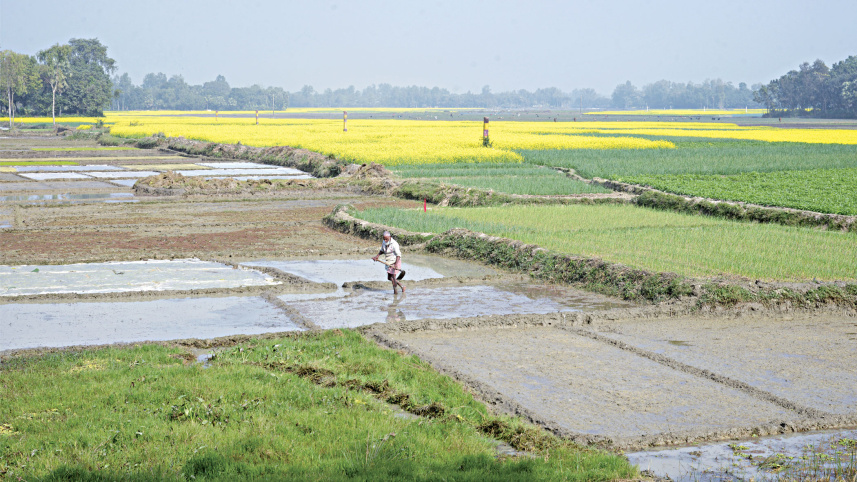
The interim government has set out to formulate the Agriculture Outlook 2050, a comprehensive long-term strategic framework designed to guide agricultural transformation over the next 25 years.
It aims to improve the use of land, water, soil, and biological resources as pressures on these resources continue to grow.

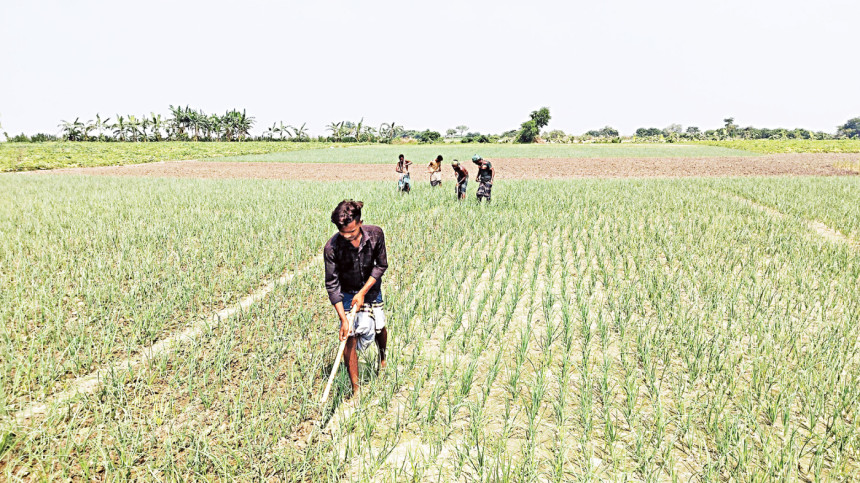
To be composed by the Ministry of Agriculture, the outlook will be designed to support efficient resource mobilisation, policy continuity, and accountability beyond short-term project cycles, said Md Mahmudur Rahman, additional secretary at the ministry, at a workshop.
The workshop titled “Transforming Bangladesh Agriculture: Outlook 2050” was organised by the agriculture ministry at the InterContinental Dhaka yesterday.
The sector is facing growing challenges, including climate change-induced floods, droughts, salinity, cyclones, and heat stress, alongside population growth, rising food demand, land scarcity, urbanisation, and changing dietary needs towards more diverse and nutritious food, he said.
The additional secretary noted that the outlook would tackle such issues by enabling climate-smart agriculture, promoting sustainable management of natural resources, and ensuring policy coherence across agriculture, water, environment, trade, and health sectors.
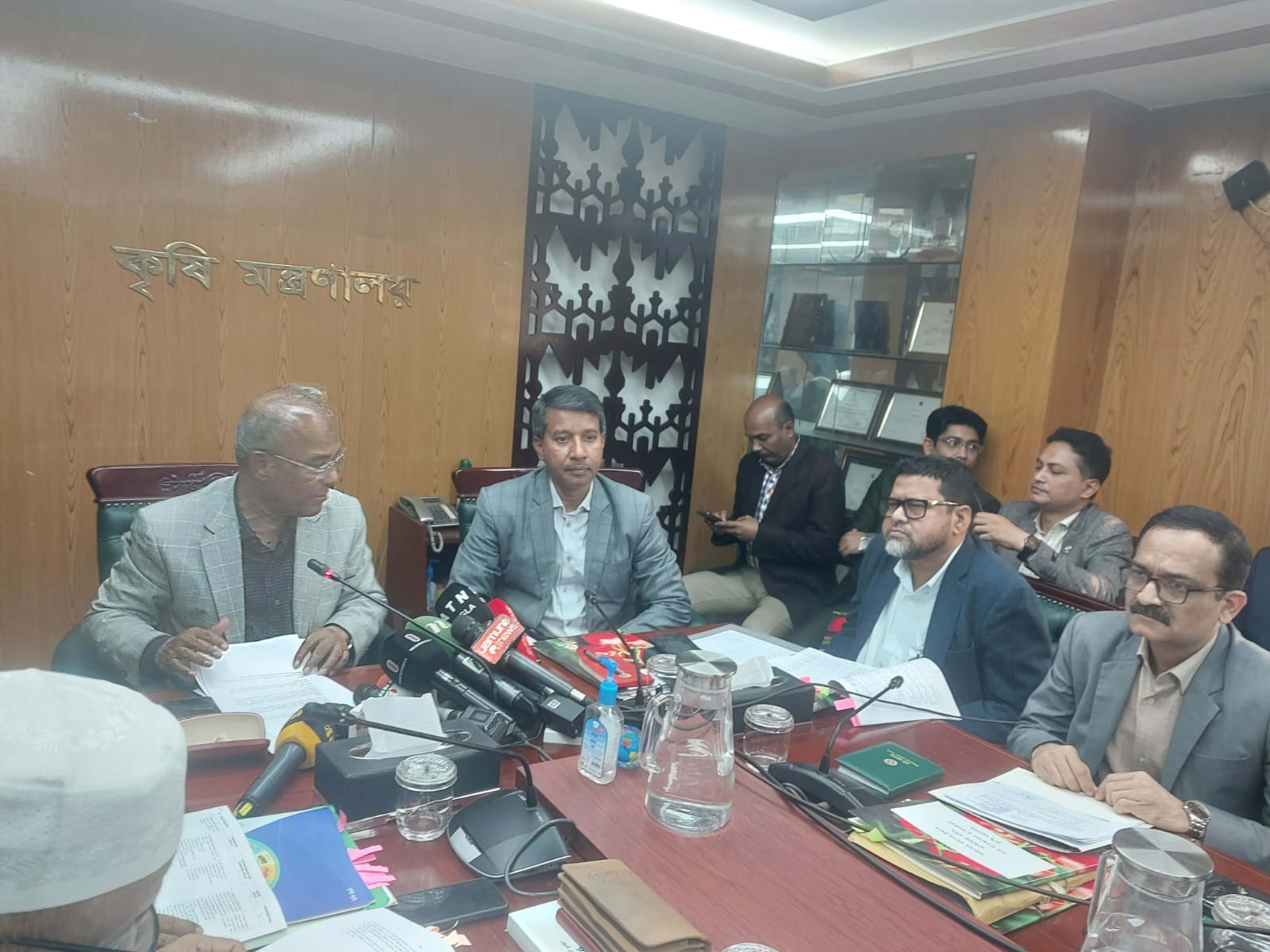
Agriculture Adviser Lt Gen (retd) Md Jahangir Alam Chowdhury said that the sector now faces increasingly complex challenges, including climate change, pressure on land and water resources, population growth, and fluctuations in global markets.
“Short-term measures are not enough to address these challenges,” he said, highlighting the importance of a long-term, strategic vision such as the outlook.
On the thematic framework, Agriculture Secretary Mohammad Emdad Ullah Mian said the plan is a “living document” designed for regular updates.
“It covers 13 thematic areas, 35 sub-sectors, and six agricultural hotspots, factoring in climate change and regional potential,” he said.
On internal capacity, he explained that separate 25-year plans are being developed for each of the Ministry’s 17 departments and agencies, clearly defining roles and responsibilities.
The outlook emphasises balancing human and non-human consumption needs, promoting diversification, and strengthening value addition and agro-processing to enhance farm incomes and national competitiveness.
Jiaoqun Shi, representative of the Food and Agriculture Organization of the United Nations (FAO) in Bangladesh, emphasised that the timing of this initiative is critical as Bangladesh advances towards LDC graduation and as the agricultural sector undergoes structural transformation.
“This outlook provides a forward-looking, flexible framework to support informed, evidence-based decision-making amid climate change, market volatility, and social transformation,” he said.
He further stressed the need for stronger investment in big data, robust information systems, and high-quality neutral data across institutions.
 For all latest news, follow The Daily Star's Google News channel.
Comments