


Bangladeshi garments fetch over 10% higher prices in EU than US
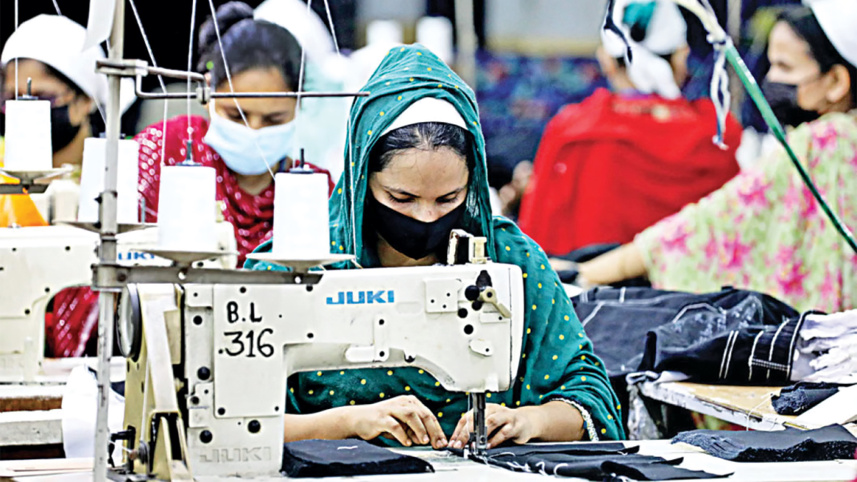
Bangladeshi apparels are fetching over 10 percent higher prices in European markets on average compared to the United States, even for similar products, according to a recent study by the Research and Policy Integration for Development (RAPID).
The study, unveiled yesterday by the local think tank in Dhaka, links the price gap to differences in tariff structures and trade preferences, with exporters benefiting from lower tariffs in Europe while facing higher barriers in the US.
 For all latest news, follow The Daily Star's Google News channel.
 RAPID said the research was based on transaction data from nearly 3,000 exporting firms collected by the customs department of the National Board of Revenue between 2010 and 2023.
It found that about 45 percent of these garment factories export to both the US and EU markets. For major products, prices in the EU consistently exceed those in the US.
On average, leading exporters fetch 5-18 percent higher prices in the EU than the US for major 10 apparel products, it states. T-shirts, for instance, earn 20-27 percent higher prices in Germany than in the US, while trousers fetch 9-15 percent more.
Presenting the findings, Jillur Rahman, deputy director at RAPID and lecturer in development studies at Dhaka University, said, “The gap remains significant even after accounting for product type, firm size, and technological intensity.”
He also highlighted differences in pricing strategies across preferential and non-preferential markets.
“High US tariffs compel exporters to absorb a significant share of the tax burden within their own margins to remain competitive at the border,” Rahman noted.
“The findings are particularly important as Bangladesh prepares to graduate from the least developed country (LDC) category,” he added.
Currently, duty-free access to the EU helps exporters secure better prices. But once Bangladesh graduates, some of these trade preferences may gradually erode, he said.
“The industry will need to strengthen competitiveness by improving product quality, diversifying into higher-value apparel segments and enhancing technological capabilities,” he noted.
Without such upgrades, he said exporters may face growing pressure on prices and margins in global markets, especially in destinations where Bangladesh lacks preferential trade access.
Abdur Rahim Khan, additional secretary of the Ministry of Commerce, said in the past 50 years, the country has failed to develop alternative markets or product competition, and now needed export-driven investment
“If we graduate from LDC status without proper preparation and preferential market access, it will deal a major blow to both the country’s economy and social structure,” he added.
Doulot Akter Mala, president of the Economic Reporters Forum, added, “The biggest problem of our ready-made garments industry is that we have put all our eggs in one basket. Lack of diversification in products and markets makes us vulnerable whenever instability arises in the US or European markets.”
Md Hafizur Rahman, adviser on trade policy and trade facilitation at the World Bank, said, “Bangladesh needs to move from being a low-cost or low-price brand to a high-price brand. This will increase pricing power and competitiveness in international markets.”
Comments