


Actual export, NPL data to be available from now: governor
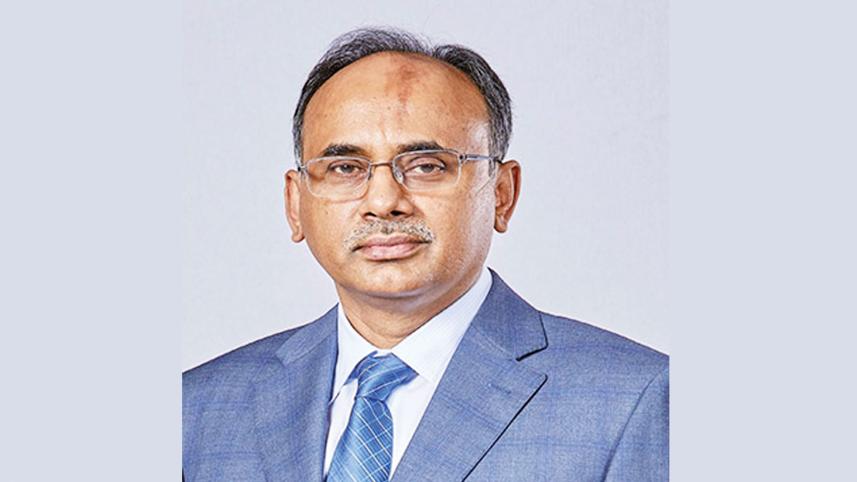
The actual data on exports and non-performing loans (NPLs) will be available from now onwards as the central bank emphasises releasing real figures, said Bangladesh Bank Governor Abdur Rouf Talukder yesterday.
The comments from the governor came a week after the central bank corrected the export figure, which showed that actual shipments in July-April of fiscal year 2023-24 were nearly $14 billion below the sales value published by the Export Promotion Bureau (EPB). The magnitude of the data mismatch took many by surprise.

"The export data has been corrected. Now the release of accurate export figures will continue," said Talukder in a meeting.
Speaking about NPLs, the governor said there was window dressing on the part of banks that made attempts to hide the actual bad loans.
"However, we don't want that, and we want the truth to come out," a meeting source quoted the governor as saying.
The governor was speaking at a consultation meeting with different stakeholders at the central bank headquarters in Dhaka as the BB is preparing to unveil the monetary policy for the first half of the new fiscal year, which begins on July 1.
According to Talukder, soon after joining the central bank in July 2022, he noticed the gap between the export figure reported by the EPB and the actual receipts.
He claimed that he had complained to the prime minister and the finance minister that exporters were not bringing in export receipts to the country despite enjoying significant benefits.
"Then, we found out the real reason for the gap," he said.
The central bank discovered six types of statistical wrongdoing that inflated export data. Anomalies range from serial duplication errors to miscalculations of the value of fabrics to repeated miscounts of sample items as exports.
A new methodology has been developed by the EPB, the National Board of Revenue (NBR), and the BB to report the actual export earnings.
The government has initiated moves to introduce a platform to publish real-time data on exports in order to ensure data accuracy and make policies evidence-based.
Under the planned platform, the NBR will supply the daily export data to the EPB, and the BB will compute it on the basis of the real-time exchange rate. This is because the customs department sends the figures on the volume of exported goods in the local currency, and the EPB converts them into US dollars.
"Now, we will get the actual figure," the governor said.
The governor said that the banking regulator has put pressure on banks so that they report the actual defaulted loans, the source said.
In March, the total disbursed loans stood at Tk 16,40,855 crore. Of which, Tk 1,82,295 crore were default loans, the highest in history. This means around 11 percent of the loans have turned sour.
Talukder said banks in Bangladesh make long-term loans on the basis of short-term deposits whereas large borrowers in other countries go to the stock market to raise funds while they turn to the banking system for working capital.
"Both happened in Bangladesh," said the governor. "If we can't get out of this, it will be difficult to reduce the NPLs."
The central bank has unveiled a roadmap to reduce the bad loans.
The BB has fixed a target to reduce bad loans at the state-run banks to 10 percent by 2026. The target for private commercial banks is 5 percent.
 For all latest news, follow The Daily Star's Google News channel.
 The meeting source said that the central bank is going to announce a contractionary monetary policy again to lower the inflation rate to 6.5 percent.
The BB has taken some measures to curb price pressure, but the steps are yet to yield the expected results. Thus, inflation averaged 9.73 percent in the just-concluded fiscal year, meaning it remained above 9 percent for the second year in a row.
Selim RF Hussain, managing director of BRAC Bank, Md Afzal Karim, managing director of Sonali Bank, Sayema Haque Bidisha, a professor of the economics department under the University of Dhaka, representatives from the business community and the Economic Reporter's Forum, and senior officials of the central bank were present at the meeting.


Comments