


UK PM defends actions after surviving party revolt
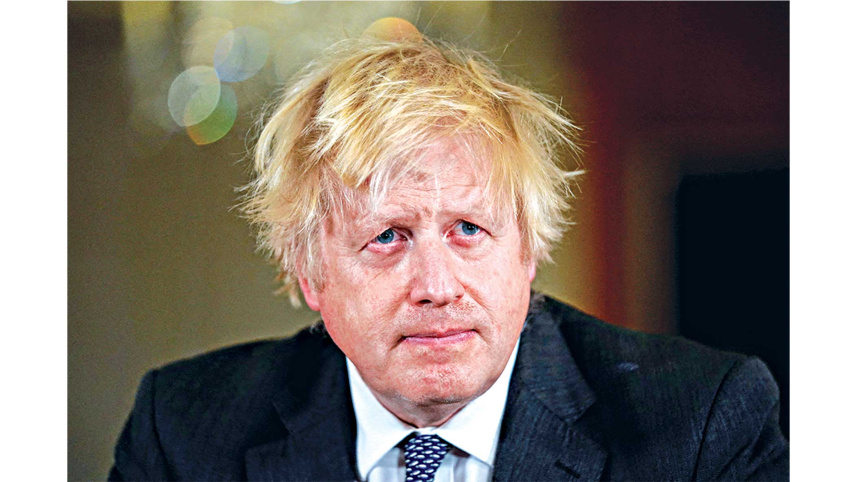
British Prime Minister Boris Johnson yesterday defended his record on tackling the coronavirus pandemic, after nearly 100 of his own MPs broke ranks and rebelled against new restrictions.
The rebellion was the second biggest by Conservative lawmakers since they voted against his predecessor Theresa May's Brexit deal in 2019.

The new rules - which kick in yesterday- require proof of double-vaccination, or a recent negative test, to enter certain venues like nightclubs and sports. Despite the revolt by Tory MPs, the plans passed thanks to Labour support.
Even though the measures to combat the spread of the Omicron variant passed, the scale of the resistance surprised many and gave a clear message about Johnson's leadership and authority.
In parliament, main opposition Labour leader Keir Starmer said Johnson was "the worst possible prime minister at the worst possible time" and "too weak to lead".
"His own MPs have had enough. They won't defend him. They won't turn up to support him. They won't vote for basic public health measures," he said.
Johnson, who has warned of a "tidal wave" of Omicron that could overwhelm health services, said he understood the "legitimate anxieties" of colleagues.
But he added: "I believe the approach we are taking is balanced and proportionate and right for this country."
Johnson will be well aware of the implications for such a haemorrhaging of support: Tory MPs forced an internal vote of no confidence in Theresa May and she had to quit.
Conservative MP Geoffrey-Clifton-Brown said Johnson, who secured the Tories an 80-seat majority at the last general election, needed to listen.
If he failed to do so, he could face a leadership challenge in the new year, he added.
The Tory rebellion could not have come at a worse time, with the party having taken a battering in recent weeks by a series of scandals.
But it could get worse if the they lose a by-election in the safe seat of North Shropshire, in central England, on Thursday.
 For all latest news, follow The Daily Star's Google News channel.
Comments