


Rembrandt’s Painting: Restorers discover hidden sketch
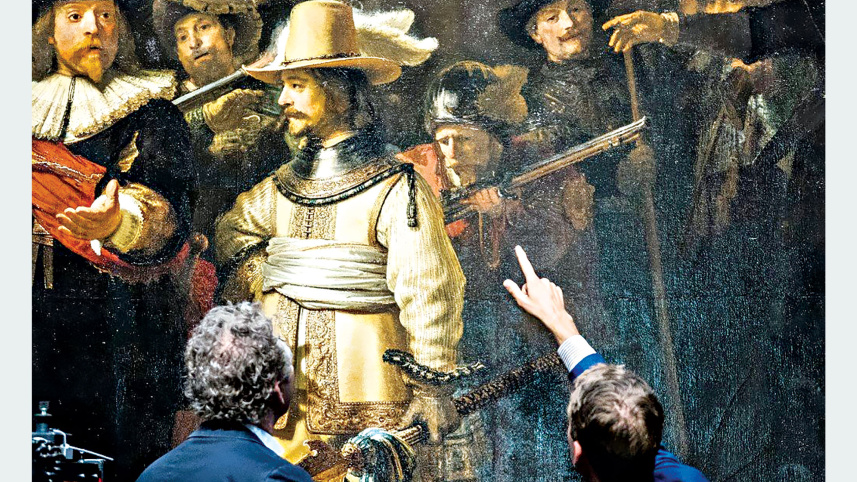
A sketch that has lain hidden for centuries under the thick layers of paint Rembrandt applied to create "The Night Watch" offers new insight into the Dutch master's creative process, museum officials said Wednesday.
Hailing a "breakthrough" in the understanding of Rembrandt's most famous work, Rijksmuseum director Taco Dibbits told reporters: "We always suspected Rembrandt must have made a sketch on the canvas before embarking on this incredibly complex composition, but we didn't have the evidence."

The sketch reveals that the artist initially planned to paint feathers on one militiaman's helmet, and that he decided against including a sword that he had drawn between the two main figures.
"On the sketch, the feathers are clearly visible, on the painting not," said Pieter Roelofs, the Amsterdam museum's head of paintings. "
"Why did Rembrandt change his mind? ... We don't know," he said. "But probably he removed the feathers because they drew too much attention as Van Cruijsbergen (the militiaman) is in the centre of the painting."
Around 30 experts have been working on the 1642 masterpiece for two and a half years using cutting-edge imaging techniques and computer technology.
At Wednesday's news conference, the Rijksmuseum unveiled the findings of a first phase of the project aimed at understanding the artist's technique as well as restoring the massive work to its original brilliance.
"It is fascinating to see Rembrandt searching for the right composition" of the work, which is 3.8 metres high and 4.5 metres wide (12.5 x 14.8 feet) and weighs 337 kilos (740 pounds), Dibbits said. "We have discovered the genesis of 'The Night Watch'."
Rembrandt van Rijn painted "The Night Watch" in 1642 after a commission by Frans Banninck Cocq, the mayor and leader of Amsterdam's civic guard, to depict the officers and other members of the militia.
 For all latest news, follow The Daily Star's Google News channel.
Comments