


10 times more funding needed: UN
Developing countries need up to 10 times more funding to protect themselves from increasingly ferocious effects of climate change than the world has currently earmarked, the UN said yesterday.
While the COP26 meeting tries to wrestle down emissions and keep warming within the Paris deal target of 1.5 degrees Celsius, a new report from United Nations Environment Programme highlights the need to prepare countries for effects that are already starting to be felt.

"Even if we were to turn off the tap on greenhouse gas emissions today, the impacts of climate change would be with us for many decades to come," said Inger Andersen, Executive Director of UNEP.
"We need a step-change in adaptation ambition for funding and implementation to significantly reduce damages and losses from climate change. And we need it now."
Slammed by storms, floods and droughts intensified by global warming, the world's poorest nations have put at the heart of the COP26 climate negotiations calls for richer countries to honour a pledge to provide $100 billion annually.
But only a part of that funding promise -- which is now not set to be met until next year at the earliest -- is set aside for adaptation measures that would help nations reduce the exposure of people and property to the growing threats of climate change.
The UNEP report found that developing countries alone will need to spend up to $300 billion a year on such measures by 2030, and up to $500 billion annually by 2050.
"Overall, estimated adaptation costs in developing countries are five to 10 times greater than current public adaptation finance flows, and the gap is widening," UNEP said.
In 2019, wealthy countries provided $79.6 billion in climate assistance to developing countries -- but two-thirds of that was for efforts to reduce emissions, with adaptation given lower priority.
With 1.1C of warming since the mid 19th Century, the world has seen a torrent of deadly weather disasters intensified by climate change in recent months, from asphalt-melting heat waves to flash floods and untameable wildfires.
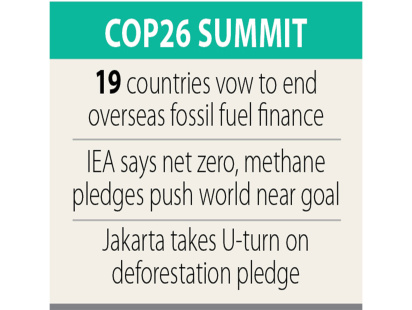
Nineteen countries, including the United States, yesterday vowed to end direct funding for all unabated overseas fossil fuel projects by 2022, though major coal, oil and gas funders China, Japan and South Korea were absent from the pledge.
G20 nations last month agreed to end financial support for new unabated coal plants abroad, but yesterday's commitment is the first of its kind to include oil and gas projects.
Unabated fossil fuel projects are those that do not deploy technology to absorb the carbon pollution they produce.
However, for the International Energy Agency, there were enough to be optimistic.
"New @IEA analysis shows that fully achieving all net zero pledges to date & the Global Methane Pledge by those who signed it would limit global warming to 1.8 C," IEA chief Fatih Birol wrote on Twitter.
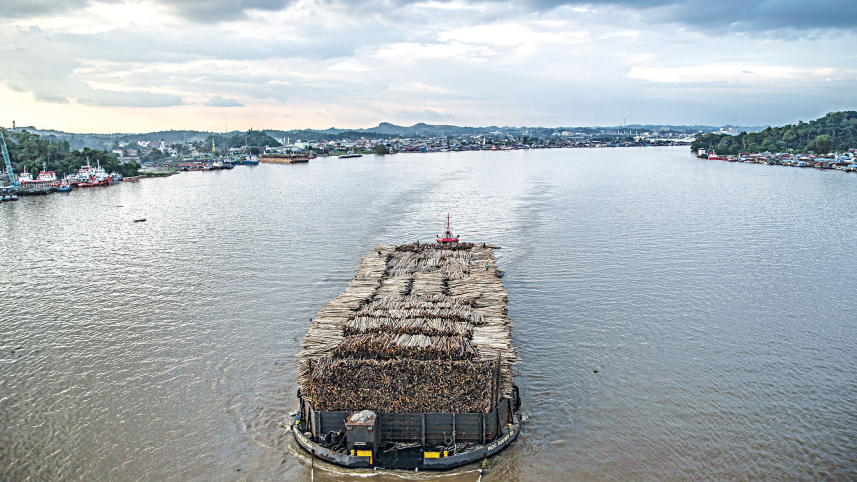
Meanwhile, Indonesia's environment minister Siti Nurbaya Bakar has dismissed as "inappropriate and unfair" a global plan to end deforestation by 2030, days after her country, home to a third of the world's rainforests, joined 127 other nations in making the deforestation pledge.
Her comments so soon after the pledge underline the challenges ahead over global deforestation goals, with just three countries - Indonesia, Brazil and the Democratic Republic of Congo - collectively accounting for 85% of the world's forests.
 For all latest news, follow The Daily Star's Google News channel.
Comments