


Rewriting global development through a feminist lens

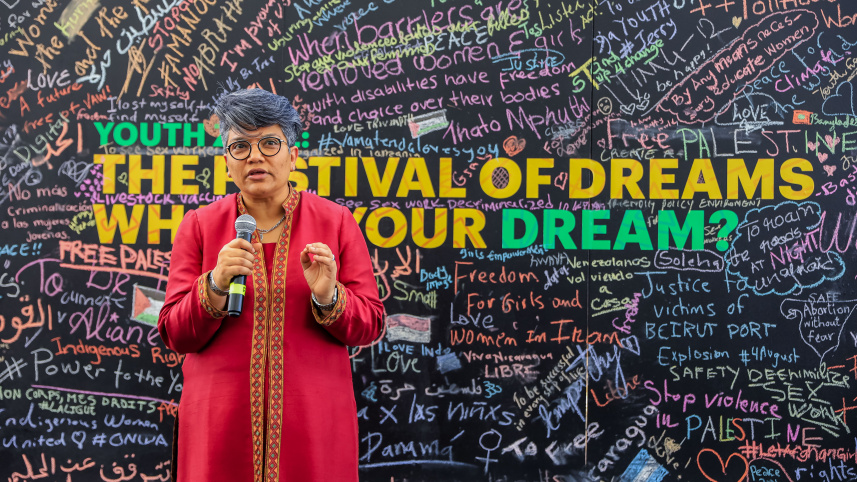
Dr Maliha Khan, President and CEO of Women Deliver, speaks to Dr Tareq Salahuddin of The Daily Star about decolonising aid, defending gender justice, and why the next decade could redefine global cooperation.
Women Deliver stands at a crossroads. With official development assistance shrinking, geopolitical tensions rising, and gender equality facing renewed backlash, the global advocacy organisation finds itself navigating what its President and CEO, Maliha Khan, describes as a moment of “crisis—but also opportunity”.

Khan’s journey into feminist leadership began not in conference halls but in remote rural communities in Pakistan. Speaking to women about their daily struggles and aspirations shaped her professional philosophy. “I always ask myself,” she says, “what difference will this make to the woman sitting in a remote area whose concerns are her children’s health, her daughters’ education, and her family’s future?” That question continues to anchor her leadership.
An organisation evolving with the times
Since joining Women Deliver in 2022, Khan has overseen the organisation through a period of institutional reckoning and global turbulence. She resists framing this as a comparison with the previous leadership, describing it instead as an evolution.
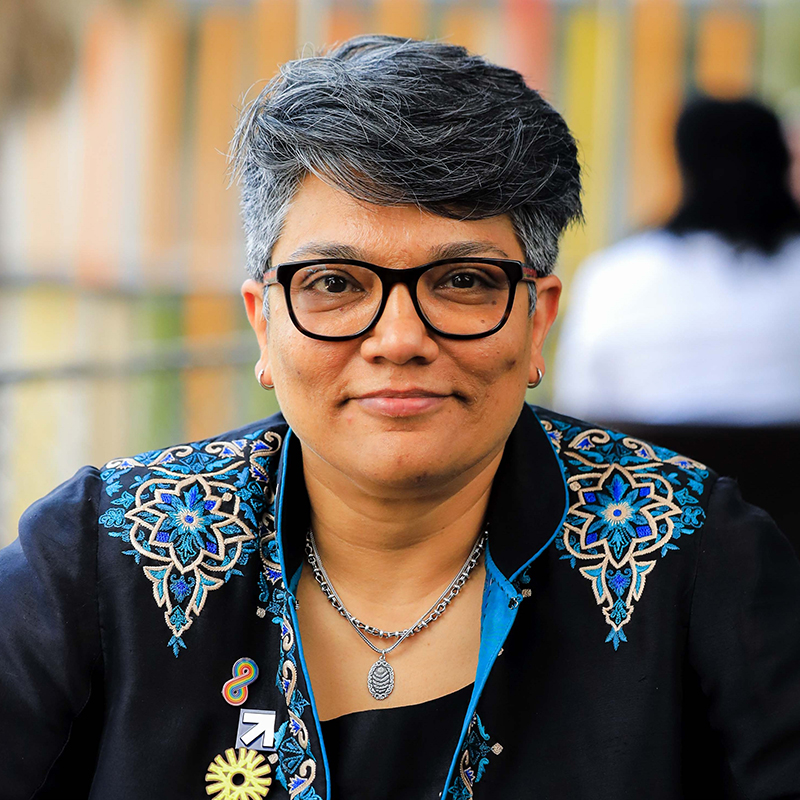
Women Deliver has moved from a founder-led model under Jill Sheffield to a scaled global platform convening thousands. But the context has shifted dramatically. The COVID-19 pandemic, accelerating climate crises, and what Khan calls a “crisis of the international development sector” have reshaped priorities. According to her, official development assistance flows have dropped by nearly 60 percent, affecting institutions across the board.
Despite increasing political hostility towards feminist and LGBTQI rights advocacy, Women Deliver has chosen not to dilute its stance. “We will stand for our principles,” Khan says firmly. “Gender equality, feminism, and the rights of all people are non-negotiable.”
Decolonising development practice
Central to Khan’s leadership is dismantling colonial and racist legacies embedded within international development structures. She argues that while post-colonial aid frameworks may once have reflected global realities, many Global South countries today possess robust capacity, educated populations, and clear aspirations. “The sector has not changed,” she says. “It is still based on 20th-century norms.”
At Women Deliver, this has translated into concrete reforms: restructuring compensation to ensure global equity regardless of location; decentralising hiring; re-examining programme design; and reshaping narratives to reflect the voices of the “global majority”.
Khan is candid about the organisation’s role. “We do not directly change the life of a woman in Sylhet or Nepal,” she admits. “What we do is connect activists, technical experts, and policymakers across borders. We are the glue.”
The Feminist Playbook
In response to the current funding and political pressures, Women Deliver has launched consultations worldwide to develop what Khan calls a “Feminist Playbook”. This initiative combines a political declaration rooted in international law with a practical blueprint for reforming global cooperation architecture.
Nearly 30 consultations have already taken place, with more planned ahead of the next Women Deliver Conference. Alumni of the organisation’s Young Leaders programme have played a central role in shaping these discussions.
“If we do not define the future of this sector, others will,” Khan warns.
Technology: risk and opportunity
On artificial intelligence, Khan advocates engagement rather than avoidance. She acknowledges that major technology corporations are driven primarily by profit rather than justice. Yet she insists that feminist organisations must shape the agenda.
She outlines three priorities: using AI to improve institutional efficiency; leveraging technology for new forms of outreach and analysis; and advocating for gender-sensitive governance of digital systems.
From accessibility applications assisting visually impaired users to data-driven advocacy, Khan believes technology can serve feminist goals—if approached strategically.
 For all latest news, follow The Daily Star's Google News channel.
 Climate justice and adolescent girls
Women Deliver is also pushing for a more nuanced understanding of climate impacts. Current climate analyses, Khan argues, focus on the household as the smallest unit of measurement, masking intra-household inequalities.
When floods strike Bangladesh or water scarcity intensifies in Pakistan, adolescent girls often bear disproportionate consequences: increased care burdens, school dropout, early marriage. These losses, she argues, must be incorporated into “loss and damage” frameworks debated at global climate forums.
“We cannot speak only of damaged infrastructure,” she says. “We must speak of damaged futures.”
Rethinking aid and accountability
With many donor governments reducing aid budgets—save for a few such as Ireland and Spain—Khan suggests a fundamental reframing. Official development assistance, she contends, should not be seen as charity but as reparative justice tied to colonial histories, climate responsibility, debt restructuring, and multilateral reform.
“This is no longer about politely asking for increases,” she says. “It is about renegotiating relationships.”
Investing in youth leadership
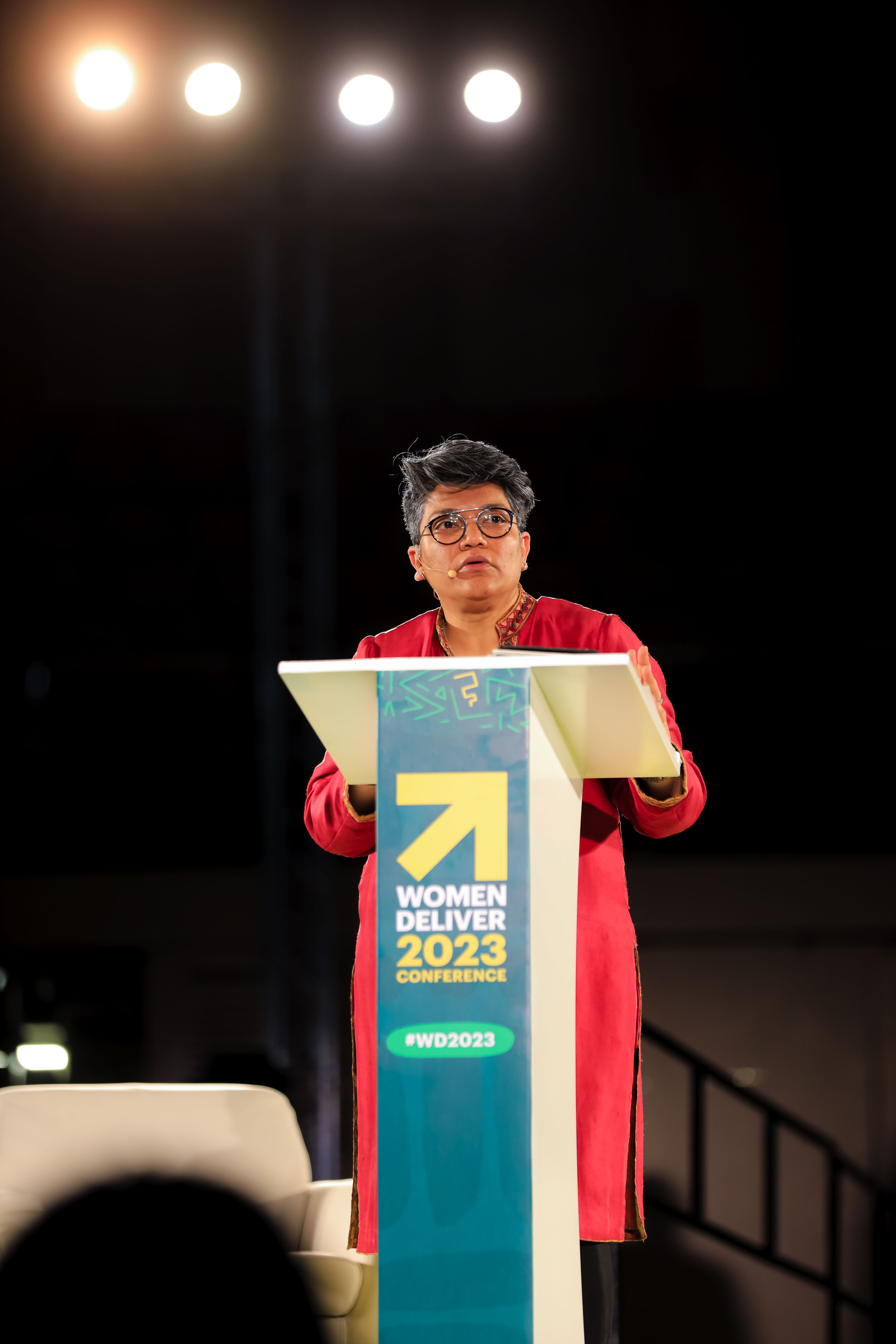
Women Deliver’s network of more than 1,000 Young Leader alumni across 130 countries remains, in Khan’s words, one of its greatest assets. Many now occupy influential roles globally. The organisation continues to engage them as partners, incorporating alumni into governance structures and global consultations.
“The generational shift is real,” she observes. “Every decade, young people have clearer aspirations and stronger demands for autonomy.”
A cautious optimism
Acknowledging the difficulties ahead, Khan remains hopeful. The next few years may be turbulent, she concedes, but transformative change often emerges from disruption.
“You are agents in your own right,” she says in a message to young activists in the Global South. “We must engage across generations to build the future we want. And I believe what we achieve in the next decade will surprise everyone.”
At a time when global development is being questioned at its core, Maliha Khan is not simply defending the status quo. She is arguing for its reinvention—through justice, solidarity, and a distinctly feminist lens.
___
Comments